-
Chinese (Simplified)
-
English
-
German
-
Korean
-
Spanish
Chinese (Simplified)
English
German
Korean
Spanish
Sign up for an account to enjoy easy online shopping and instant order tracking.
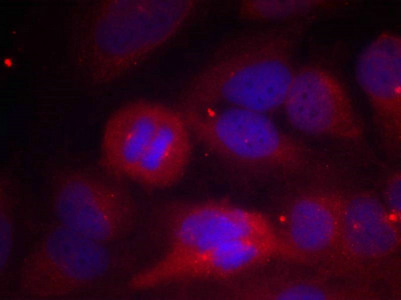
The antibody against TH was raised in rabbit using the Peptide sequence around phosphorylation site of serine 40 (R-Q-S(p)-L-I) derived from Human Tyrosine Hydroxylase (TH). as the immunogen. Antibodies were produced by immunizing rabbits with synthetic phosphopeptide and KLH conjugates. Antibodies were purified by affinity-chromatography using epitope-specific phosphopeptide. Non-phospho specific antibodies were removed by chromatogramphy usi This antibody has been validated on ELISA, IF.
$360.00
| Cat.No | ADC-43676A | Clonality | Polyclonal |
|---|---|---|---|
| Host Species | Rabbit | Target Name | th |
| Form | Liquid | Species Reactivity | Human, Mouse, Rat |
| Storage Buffer | PH 7.4, 0.02% sodium azide and 50% glycerol., 150mM NaCl, Supplied at 1.0mg/mL in phosphate buffered saline (without Mg2+ and Ca2+) | Application | ELISA, IF |
| Storage | Upon receipt |
| Immunogen Description | Peptide sequence around phosphorylation site of serine 40 (R-Q-S(p)-L-I) derived from Human Tyrosine Hydroxylase (TH). | Target Species | Human |
|---|---|---|---|
| Immunogen Sequence | Complete sequences for the immunogen, target protein, and peptides are available upon request. | Uniprot ID | P07101 |
Uniprot Id
P07101
Target Species
Human
Target Name
TH
Target Full Name
Tyrosine 3-monooxygenase
Target Function
Plays an important role in the physiology of adrenergic neurons. Positively regulates the regression of retinal hyaloid vessels during postnatal development.
Target Involvement
Segawa syndrome autosomal recessive (ARSEGS)
Target Subcellular Location
Cytoplasm, perinuclear region.
Target Protein Families
Biopterin-dependent aromatic amino acid hydroxylase family
Target Tissue Specificity
Mainly expressed in the brain and adrenal glands.
Target Synonyms
Dystonia 14; DYT14; DYT5b; EC 1.14.16.2; OTTHUMP00000011225; OTTHUMP00000011226; ple; Protein Pale; TH; The; TY3H_HUMAN; TYH; Tyrosine 3 hydroxylase; Tyrosine 3 monooxygenase; Tyrosine 3-hydroxylase; Tyrosine 3-monooxygenase; Tyrosine hydroxylase
Target Background
The protein encoded by this gene is involved in the conversion of tyrosine to dopamine. It is the rate-limiting enzyme in the synthesis of catecholamines, hence plays a key role in the physiology of adrenergic neurons. Mutations in this gene have been associated with autosomal recessive Segawa syndrome. Alternatively spliced transcript variants encoding different isoforms have been noted for this gene.
Notification