-
Chinese (Simplified)
-
English
-
German
-
Korean
-
Spanish
Chinese (Simplified)
English
German
Korean
Spanish
Sign up for an account to enjoy easy online shopping and instant order tracking.
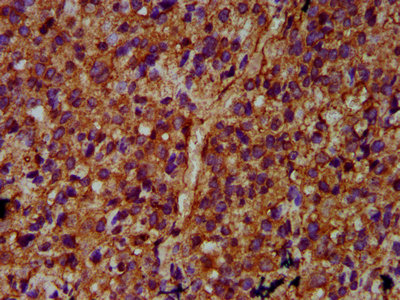
The antibody against ULK2 was raised in rabbit using the Recombinant Human Serine/threonine-protein kinase ULK2 protein (211-276AA) as the immunogen. This antibody exists as a non-conjugated isotype IgG, purified by protein G with a purity greater than 95%. This antibody has been validated on ELISA, WB, IHC.
$299.00
| Cat.No | ADC-04780A | Clonality | Polyclonal |
|---|---|---|---|
| Host Species | Rabbit | Target Name | ULK2 |
| Form | Liquid | Species Reactivity | Human |
| Isotype | IgG | Storage Buffer | 0.01M PBS, 0.03% Proclin 300; Constituents: 50% Glycerol, PH 7.4 |
| Purification Method | >95%, Protein G purified | Conjugate | Non-conjugated |
| Application | ELISA, IHC, WB | Storage | Upon receipt |
| Immunogen Description | Recombinant Human Serine/threonine-protein kinase ULK2 protein (211-276AA) | Target Species | Human |
|---|---|---|---|
| Immunogen Sequence | Complete sequences for the immunogen, target protein, and peptides are available upon request. | Uniprot ID | Q8IYT8 |
Uniprot Id
Q8IYT8
Target Species
Human
Target Name
ULK2
Target Full Name
Serine/threonine-protein kinase ULK2
Target Function
Serine/threonine-protein kinase involved in autophagy in response to starvation. Acts upstream of phosphatidylinositol 3-kinase PIK3C3 to regulate the formation of autophagophores, the precursors of autophagosomes. Part of regulatory feedback loops in autophagy: acts both as a downstream effector and a negative regulator of mammalian target of rapamycin complex 1 (mTORC1) via interaction with RPTOR. Activated via phosphorylation by AMPK, also acts as a negative regulator of AMPK through phosphorylation of the AMPK subunits PRKAA1, PRKAB2 and PRKAG1. May phosphorylate ATG13/KIAA0652, FRS2, FRS3 and RPTOR; however such data need additional evidences. Not involved in ammonia-induced autophagy or in autophagic response of cerebellar granule neurons (CGN) to low potassium concentration. Plays a role early in neuronal differentiation and is required for granule cell axon formation: may govern axon formation via Ras-like GTPase signaling and through regulation of the Rab5-mediated endocytic pathways within developing axons.
Target Subcellular Location
Cytoplasmic vesicle membrane; Peripheral membrane protein. Note=Localizes to pre-autophagosomal membrane.
Target Protein Families
Protein kinase superfamily, Ser/Thr protein kinase family, APG1/unc-51/ULK1 subfamily
Target Synonyms
ATG1B; KIAA0623; Serine/threonine protein kinase ULK2; Serine/threonine-protein kinase ULK2; ULK2; ULK2_HUMAN; Unc 51 (C. elegans) like kinase 2; Unc 51 like autophagy activating kinase 2; Unc 51 like kinase 2; Unc-51-like kinase 2; Unc51.2
Target Background
This gene encodes a protein that is similar to a serine/threonine kinase in C. elegans which is involved in axonal elongation. The structure of this protein is similar to the C. elegans protein in that both proteins have an N-terminal kinase domain, a central proline/serine rich (PS) domain, and a C-terminal (C) domain. The gene is located within the Smith-Magenis syndrome region on chromosome 17. Alternatively spliced transcript variants encoding the same protein have been identified.
Notification