• Contact info@abtriva.com for inquiries and orders.
  • Chinese (Simplified)

  • English

  • German

  • Korean

  • Spanish

United States (English / $ USD)

Rabbit anti-Human USP8 Polyclonal Antibody

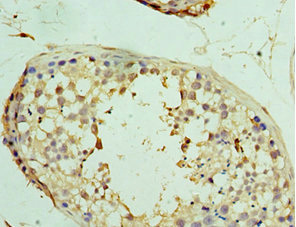
The antibody against USP8 was raised in rabbit using the Recombinant Human Ubiquitin carboxyl-terminal hydrolase 8 protein (1-270AA) as the immunogen. This antibody exists as a non-conjugated isotype IgG, Antigen affinity purified. This antibody has been validated on ELISA, WB, IHC.

ADC-40125A

The antibody against USP8 was raised in rabbit using the Recombinant Human Ubiquitin carboxyl-terminal hydrolase 8 protein (1-270AA) as the immunogen. This antibody exists as a non-conjugated isotype IgG, Antigen affinity purified. This antibody has been validated on ELISA, WB, IHC.

$299.00

Number
Order Exclusive Products Now

Request a Quote
High Purity LevelsPrecision and ReliabilityCustomization Options

Specifications


Cat.No ADC-40125A ClonalityPolyclonal
Host SpeciesRabbitTarget NameUSP8
FormLiquidSpecies ReactivityHuman
IsotypeIgGStorage Buffer50% Glycerol, PBS with 0.02% sodium azide, pH7.3.
Purification MethodAntigen affinity purifiedConjugateNon-conjugated
ApplicationELISA, IHC, WBStorageUpon receipt

Immunogen Information


Immunogen DescriptionRecombinant Human Ubiquitin carboxyl-terminal hydrolase 8 protein (1-270AA)Target SpeciesHuman
Immunogen SequenceComplete sequences for the immunogen, target protein, and peptides are available upon request.Uniprot IDP40818
Background Information
  • Uniprot Id

    P40818

  • Target Species

    Human

  • Target Name

    USP8

  • Target Full Name

    Ubiquitin carboxyl-terminal hydrolase 8

  • Target Function

    Hydrolase that can remove conjugated ubiquitin from proteins and therefore plays an important regulatory role at the level of protein turnover by preventing degradation. Converts both 'Lys-48' an 'Lys-63'-linked ubiquitin chains. Catalytic activity is enhanced in the M phase. Involved in cell proliferation. Required to enter into S phase in response to serum stimulation. May regulate T-cell anergy mediated by RNF128 via the formation of a complex containing RNF128 and OTUB1. Probably regulates the stability of STAM2 and RASGRF1. Regulates endosomal ubiquitin dynamics, cargo sorting, membrane traffic at early endosomes, and maintenance of ESCRT-0 stability. The level of protein ubiquitination on endosomes is essential for maintaining the morphology of the organelle. Deubiquitinates EPS15 and controles tyrosine kinase stability. Removes conjugated ubiquitin from EGFR thus regulating EGFR degradation and downstream MAPK signaling. Involved in acrosome biogenesis through interaction with the spermatid ESCRT-0 complex and microtubules. Deubiquitinates BIRC6/bruce and KIF23/MKLP1. Deubiquitinates BACE1 which inhibits BACE1 lysosomal degradation and modulates BACE-mediated APP cleavage and amyloid-beta formation.

  • Target Involvement

    Pituitary adenoma 4, ACTH-secreting (PITA4)

  • Target Subcellular Location

    Cytoplasm. Nucleus. Endosome membrane; Peripheral membrane protein. Cell membrane; Peripheral membrane protein.

  • Target Protein Families

    Peptidase C19 family

  • Target Synonyms

    Deubiquitinating enzyme 8; FLJ34456; hUBPy; HumORF8; KIAA0055; MGC129718; SPG59; Ubiquitin carboxyl-terminal hydrolase 8; Ubiquitin isopeptidase Y; ubiquitin specific peptidase 8; Ubiquitin thioesterase 8; Ubiquitin-specific-processing protease 8; UBP8_HUMAN; UBPY; Usp8

  • Target Background

    This gene encodes a protein that belongs to the ubiquitin-specific processing protease family of proteins. The encoded protein is thought to regulate the morphology of the endosome by ubiquitination of proteins on this organelle and is involved in cargo sorting and membrane trafficking at the early endosome stage. This protein is required for the cell to enter the S phase of the cell cycle and also functions as a positive regulator in the Hedgehog signaling pathway in development. Pseudogenes of this gene are present on chromosomes 2 and 6. Alternate splicing results in multiple transcript variants.

Inquire Rabbit anti-Human USP8 Polyclonal Antibody Now


AbTriva respects your privacy and protects your personal data in accordance with AbTriva. For more information, please see our data protection statement. *

Notification