-
Chinese (Simplified)
-
English
-
German
-
Korean
-
Spanish
Chinese (Simplified)
English
German
Korean
Spanish
Sign up for an account to enjoy easy online shopping and instant order tracking.
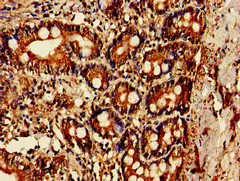
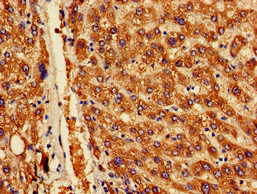
The antibody against OAS1 was raised in rabbit using the Recombinant Human 2'-5'-oligoadenylate synthase 1 protein (296-395AA) as the immunogen. This antibody exists as a non-conjugated isotype IgG, purified by protein G with a purity greater than 95%. This antibody has been validated on ELISA, IHC.
The antibody against OAS1 was raised in rabbit using the Recombinant Human 2′-5′-oligoadenylate synthase 1 protein (296-395AA) as the immunogen. This antibody exists as a non-conjugated isotype IgG, purified by protein G with a purity greater than 95%. This antibody has been validated on ELISA, IHC.
$299.00
| Cat.No | ADC-10385A | Clonality | Polyclonal |
|---|---|---|---|
| Host Species | Rabbit | Target Name | OAS1 |
| Form | Liquid | Species Reactivity | Human |
| Isotype | IgG | Storage Buffer | 0.01M PBS, 0.03% Proclin 300; Constituents: 50% Glycerol, PH 7.4 |
| Purification Method | >95%, Protein G purified | Conjugate | Non-conjugated |
| Application | ELISA, IHC | Storage | Upon receipt |
| Immunogen Description | Recombinant Human 2'-5'-oligoadenylate synthase 1 protein (296-395AA) | Target Species | Human |
|---|---|---|---|
| Immunogen Sequence | Complete sequences for the immunogen, target protein, and peptides are available upon request. | Uniprot ID | P00973 |
Uniprot Id
P00973
Target Species
Human
Target Name
OAS1
Target Full Name
2'-5'-oligoadenylate synthase 1
Target Function
Interferon-induced, dsRNA-activated antiviral enzyme which plays a critical role in cellular innate antiviral response. In addition, it may also play a role in other cellular processes such as apoptosis, cell growth, differentiation and gene regulation. Synthesizes higher oligomers of 2'-5'-oligoadenylates (2-5A) from ATP which then bind to the inactive monomeric form of ribonuclease L (RNase L) leading to its dimerization and subsequent activation. Activation of RNase L leads to degradation of cellular as well as viral RNA, resulting in the inhibition of protein synthesis, thus terminating viral replication. Can mediate the antiviral effect via the classical RNase L-dependent pathway or an alternative antiviral pathway independent of RNase L. The secreted form displays antiviral effect against vesicular stomatitis virus (VSV), herpes simplex virus type 2 (HSV-2), and encephalomyocarditis virus (EMCV) and stimulates the alternative antiviral pathway independent of RNase L.
Target Subcellular Location
Cytoplasm. Mitochondrion. Nucleus. Microsome. Endoplasmic reticulum. Secreted.
Target Protein Families
2-5A synthase family
Target Synonyms
OIAS; IFI-4; OIASI; IMD100; E18/E16; OAS1
Target Background
This interferon-induced gene encodes a protein that synthesizes 2', 5'-oligoadenylates (2-5As). This protein plays a key role in innate cellular antiviral response, and has been implicated in other cellular processes like cell growth and apoptosis. Alternative splicing results in multiple transcript variants with different enzymatic activities. Polymorphisms in this gene have been associated with susceptibility to viral infection, including SARS-CoV-2, and diabetes mellitus, type 1. This gene is located in a cluster of related genes on chromosome 12.
Notification