• Contact info@abtriva.com for inquiries and orders.
  • Chinese (Simplified)

  • English

  • German

  • Korean

  • Spanish

United States (English / $ USD)

Rabbit anti-Human AKR1D1 Polyclonal Antibody

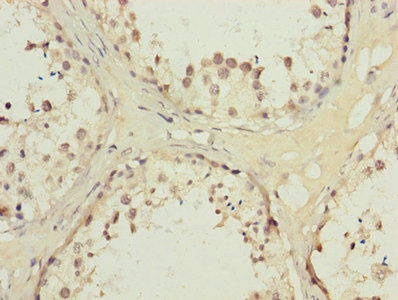
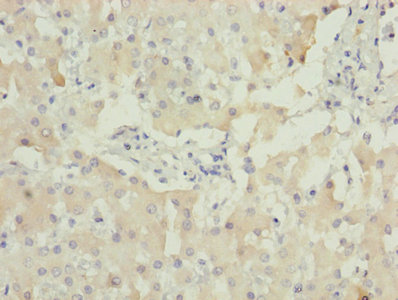
The antibody against AKR1D1 was raised in rabbit using the Recombinant Human 3-oxo-5-beta-steroid 4-dehydrogenase protein (1-200AA) as the immunogen. This antibody exists as a non-conjugated isotype IgG, purified by protein G with a purity greater than 95%. This antibody has been validated on ELISA, IHC.

ADC-22231A

The antibody against AKR1D1 was raised in rabbit using the Recombinant Human 3-oxo-5-beta-steroid 4-dehydrogenase protein (1-200AA) as the immunogen. This antibody exists as a non-conjugated isotype IgG, purified by protein G with a purity greater than 95%. This antibody has been validated on ELISA, IHC.

$299.00

Number
Order Exclusive Products Now

Request a Quote
High Purity LevelsPrecision and ReliabilityCustomization Options

Specifications


Cat.No ADC-22231A ClonalityPolyclonal
Host SpeciesRabbitTarget NameAKR1D1
FormLiquidSpecies ReactivityHuman
IsotypeIgGStorage Buffer0.01M PBS, 0.03% Proclin 300; Constituents: 50% Glycerol, PH 7.4
Purification Method>95%, Protein G purifiedConjugateNon-conjugated
ApplicationELISA, IHCStorageUpon receipt

Immunogen Information


Immunogen DescriptionRecombinant Human 3-oxo-5-beta-steroid 4-dehydrogenase protein (1-200AA)Target SpeciesHuman
Immunogen SequenceComplete sequences for the immunogen, target protein, and peptides are available upon request.Uniprot IDP51857
Background Information
  • Uniprot Id

    P51857

  • Target Species

    Human

  • Target Name

    AKR1D1

  • Target Full Name

    Aldo-keto reductase family 1 member D1

  • Target Function

    Catalyzes the stereospecific NADPH-dependent reduction of the C4-C5 double bond of bile acid intermediates and steroid hormones carrying a delta(4)-3-one structure to yield an A/B cis-ring junction. This cis-configuration is crucial for bile acid biosynthesis and plays important roles in steroid metabolism. Capable of reducing a broad range of delta-(4)-3-ketosteroids from C18 (such as, 17beta-hydroxyestr-4-en-3-one) to C27 (such as, 7alpha-hydroxycholest-4-en-3-one).

  • Target Involvement

    Congenital bile acid synthesis defect 2 (CBAS2)

  • Target Subcellular Location

    Cytoplasm.

  • Target Protein Families

    Aldo/keto reductase family

  • Target Tissue Specificity

    Highly expressed in liver. Expressed in testis and weakly in colon.

  • Target Synonyms

    3-oxo-5-beta-steroid 4-dehydrogenase; 3o5bred ; AK1D1_HUMAN; AKR1D1; aldo keto reductase family 1 member D1 (delta 4 3 ketosteroid 5 beta reductase); Aldo keto reductase family 1 member D1; Aldo-keto reductase family 1 member D1; CBAS2 ; Delta(4) 3 ketosteroid 5 beta reductase; Delta(4) 3 oxosteroid 5 beta reductase; Delta(4)-3-ketosteroid 5-beta-reductase; Delta(4)-3-oxosteroid 5-beta-reductase; SRD5B1; steroid 5 beta reductase beta polypeptide 1 (3 oxo 5 beta steroid delta 4 dehydrogenase beta 1); steroid 5 beta reductase

  • Target Background

    The enzyme encoded by this gene is responsible for the catalysis of the 5-beta-reduction of bile acid intermediates and steroid hormones carrying a delta(4)-3-one structure. Deficiency of this enzyme may contribute to hepatic dysfunction. Three transcript variants encoding different isoforms have been found for this gene. Other variants may be present, but their full-length natures have not been determined yet.

Inquire Rabbit anti-Human AKR1D1 Polyclonal Antibody Now


AbTriva respects your privacy and protects your personal data in accordance with AbTriva. For more information, please see our data protection statement. *

Notification