• Contact info@abtriva.com for inquiries and orders.
  • Chinese (Simplified)

  • English

  • German

  • Korean

  • Spanish

United States (English / $ USD)

Rabbit anti-Human TECR Polyclonal Antibody

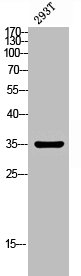
The antibody against TECR was raised in rabbit using the Synthesized peptide derived from the C-terminal region of Human GPSN2. as the immunogen. This antibody exists as a non-conjugated isotype IgG. The antibody was affinity-purified from rabbit antiserum by affinity-chromatography using epitope-specific immunogen. This antibody has been validated on WB, IHC, ELISA.

ADC-33285A

The antibody against TECR was raised in rabbit using the Synthesized peptide derived from the C-terminal region of Human GPSN2. as the immunogen. This antibody exists as a non-conjugated isotype IgG. The antibody was affinity-purified from rabbit antiserum by affinity-chromatography using epitope-specific immunogen. This antibody has been validated on WB, IHC, ELISA.

$167.00

Number
Order Exclusive Products Now

Request a Quote
High Purity LevelsPrecision and ReliabilityCustomization Options

Specifications


Cat.No ADC-33285A ClonalityPolyclonal
Host SpeciesRabbitTarget NameTECR
Target Synonyms3-enoyl-CoA reductase; TER, TECR; GPSN2; SC2; Very-long-chain enoyl-CoA reductase; Synaptic glycoprotein SC2; Trans-2FormLiquid
Species ReactivityHuman, Mouse, RatIsotypeIgG
Storage Buffer0.5% BSA and 0.02% sodium azide., Liquid in PBS containing 50% glycerolPurification MethodThe antibody was affinity-purified from rabbit antiserum by affinity-chromatography using epitope-specific immunogen.
ConjugateNon-conjugatedApplicationELISA, IHC, WB
StorageUpon receipt

Immunogen Information


Immunogen DescriptionSynthesized peptide derived from the C-terminal region of Human GPSN2.Target SpeciesHuman
Immunogen SequenceComplete sequences for the immunogen, target protein, and peptides are available upon request.Uniprot IDQ9NZ01
Background Information
  • Uniprot Id

    Q9NZ01

  • Target Species

    Human

  • Target Name

    TECR

  • Target Full Name

    Very-long-chain enoyl-CoA reductase

  • Target Function

    Involved in both the production of very long-chain fatty acids for sphingolipid synthesis and the degradation of the sphingosine moiety in sphingolipids through the sphingosine 1-phosphate metabolic pathway. Catalyzes the last of the four reactions of the long-chain fatty acids elongation cycle. This endoplasmic reticulum-bound enzymatic process, allows the addition of 2 carbons to the chain of long- and very long-chain fatty acids/VLCFAs per cycle. This enzyme reduces the trans-2,3-enoyl-CoA fatty acid intermediate to an acyl-CoA that can be further elongated by entering a new cycle of elongation. Thereby, it participates in the production of VLCFAs of different chain lengths that are involved in multiple biological processes as precursors of membrane lipids and lipid mediators. Catalyzes the saturation step of the sphingosine 1-phosphate metabolic pathway, the conversion of trans-2-hexadecenoyl-CoA to palmitoyl-CoA.

  • Target Involvement

    Mental retardation, autosomal recessive 14 (MRT14)

  • Target Subcellular Location

    Endoplasmic reticulum membrane; Multi-pass membrane protein.

  • Target Protein Families

    Steroid 5-alpha reductase family

  • Target Tissue Specificity

    Expressed in most tissues tested. Highly expressed in skeletal muscle.

  • Target Research Area

    Signal Transduction

  • Target Synonyms

    TECR; GPSN2; SC2; Very-long-chain enoyl-CoA reductase; Synaptic glycoprotein SC2; Trans-2,3-enoyl-CoA reductase; TER

Inquire Rabbit anti-Human TECR Polyclonal Antibody Now


AbTriva respects your privacy and protects your personal data in accordance with AbTriva. For more information, please see our data protection statement. *

Notification