-
Chinese (Simplified)
-
English
-
German
-
Korean
-
Spanish
Chinese (Simplified)
English
German
Korean
Spanish
Sign up for an account to enjoy easy online shopping and instant order tracking.
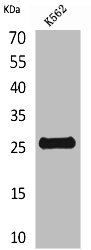
The antibody against KLRB1 was raised in rabbit using the Synthesized peptide derived from the Internal region of Human CD161. as the immunogen. This antibody exists as a non-conjugated isotype IgG. The antibody was affinity-purified from rabbit antiserum by affinity-chromatography using epitope-specific immunogen. This antibody has been validated on WB, ELISA.
$167.00
| Cat.No | ADC-37077A | Clonality | Polyclonal |
|---|---|---|---|
| Host Species | Rabbit | Target Name | KLRB1 |
| Form | Liquid | Species Reactivity | Human |
| Isotype | IgG | Storage Buffer | 0.5% BSA and 0.02% sodium azide., Liquid in PBS containing 50% glycerol |
| Purification Method | The antibody was affinity-purified from rabbit antiserum by affinity-chromatography using epitope-specific immunogen. | Conjugate | Non-conjugated |
| Application | ELISA, WB | Storage | Upon receipt |
| Immunogen Description | Synthesized peptide derived from the Internal region of Human CD161. | Target Species | Human |
|---|---|---|---|
| Immunogen Sequence | Complete sequences for the immunogen, target protein, and peptides are available upon request. | Uniprot ID | Q12918 |
Uniprot Id
Q12918
Target Species
Human
Target Name
KLRB1
Target Full Name
Killer cell lectin-like receptor subfamily B member 1
Target Function
Plays an inhibitory role on natural killer (NK) cells cytotoxicity. Activation results in specific acid sphingomyelinase/SMPD1 stimulation with subsequent marked elevation of intracellular ceramide. Activation also leads to AKT1/PKB and RPS6KA1/RSK1 kinases stimulation as well as markedly enhanced T-cell proliferation induced by anti-CD3. Acts as a lectin that binds to the terminal carbohydrate Gal-alpha(1,3)Gal epitope as well as to the N-acetyllactosamine epitope. Binds also to CLEC2D/LLT1 as a ligand and inhibits NK cell-mediated cytotoxicity as well as interferon-gamma secretion in target cells.
Target Subcellular Location
Membrane; Single-pass type II membrane protein.
Target Tissue Specificity
Expressed in a subset of NK cells predominantly in intestinal epithelium and liver. Detected in peripheral blood T-cells and preferentially in adult T-cells with a memory antigenic phenotype.
Target Synonyms
C-type lectin domain family 5 member B; CD161; CLEC5B; HNKR-P1a; Killer Cell Lectin like Receptor Subfamily B Member 1; Killer cell lectin-like receptor subfamily B member 1; KLRB1; KLRB1_HUMAN; Natural killer cell surface protein P1A; NKR; NKR P1; NKR-P1A; NKRP1; NKRP1A
Target Background
Natural killer (NK) cells are lymphocytes that mediate cytotoxicity and secrete cytokines after immune stimulation. Several genes of the C-type lectin superfamily, including the rodent NKRP1 family of glycoproteins, are expressed by NK cells and may be involved in the regulation of NK cell function. The KLRB1 protein contains an extracellular domain with several motifs characteristic of C-type lectins, a transmembrane domain, and a cytoplasmic domain. The KLRB1 protein is classified as a type II membrane protein because it has an external C terminus.
Notification