-
Chinese (Simplified)
-
English
-
German
-
Korean
-
Spanish
Chinese (Simplified)
English
German
Korean
Spanish
Sign up for an account to enjoy easy online shopping and instant order tracking.
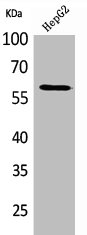
The antibody against HEXA was raised in rabbit using the Synthesized peptide derived from the Internal region of Human HEXA. as the immunogen. This antibody exists as a non-conjugated isotype IgG. The antibody was affinity-purified from rabbit antiserum by affinity-chromatography using epitope-specific immunogen. This antibody has been validated on WB, ELISA.
$167.00
| Cat.No | ADC-37117A | Clonality | Polyclonal |
|---|---|---|---|
| Host Species | Rabbit | Target Name | HEXA |
| Form | Liquid | Species Reactivity | Human, Mouse, Rat |
| Isotype | IgG | Storage Buffer | 0.5% BSA and 0.02% sodium azide., Liquid in PBS containing 50% glycerol |
| Purification Method | The antibody was affinity-purified from rabbit antiserum by affinity-chromatography using epitope-specific immunogen. | Conjugate | Non-conjugated |
| Application | ELISA, WB | Storage | Upon receipt |
| Immunogen Description | Synthesized peptide derived from the Internal region of Human HEXA. | Target Species | Human |
|---|---|---|---|
| Immunogen Sequence | Complete sequences for the immunogen, target protein, and peptides are available upon request. | Uniprot ID | P06865 |
Uniprot Id
P06865
Target Species
Human
Target Name
HEXA
Target Full Name
Beta-hexosaminidase subunit alpha
Target Function
Hydrolyzes the non-reducing end N-acetyl-D-hexosamine and/or sulfated N-acetyl-D-hexosamine of glycoconjugates, such as the oligosaccharide moieties from proteins and neutral glycolipids, or from certain mucopolysaccharides. The isozyme S is as active as the isozyme A on the anionic bis-sulfated glycans, the chondroitin-6-sulfate trisaccharide (C6S-3), and the dermatan sulfate pentasaccharide, and the sulfated glycosphingolipid SM2. The isozyme B does not hydrolyze each of these substrates, however hydrolyzes efficiently neutral oligosaccharide. Only the isozyme A is responsible for the degradation of GM2 gangliosides in the presence of GM2A.
Target Involvement
GM2-gangliosidosis 1 (GM2G1)
Target Subcellular Location
Lysosome.
Target Protein Families
Glycosyl hydrolase 20 family
Target Synonyms
Beta hexosaminidase alpha chain precursor ; Beta hexosaminidase subunit alpha; Beta N acetylhexosaminidase; Beta N acetylhexosaminidase subunit alpha; Beta-hexosaminidase A; Beta-hexosaminidase subunit alpha; Beta-N-acetylhexosaminidase subunit alpha; Hexa; HEXA_HUMAN; Hexosaminidase A (alpha polypeptide); Hexosaminidase A alpha polypeptide; Hexosaminidase A; Hexosaminidase subunit A; MGC99608; N acetyl beta glucosaminidase; N acetyl beta glucosaminidase subunit alpha; N-acetyl-beta-glucosaminidase subunit alpha; TSD
Target Background
This gene encodes a member of the glycosyl hydrolase 20 family of proteins. The encoded preproprotein is proteolytically processed to generate the alpha subunit of the lysosomal enzyme beta-hexosaminidase. This enzyme, together with the cofactor GM2 activator protein, catalyzes the degradation of the ganglioside GM2, and other molecules containing terminal N-acetyl hexosamines. Mutations in this gene lead to an accumulation of GM2 ganglioside in neurons, the underlying cause of neurodegenerative disorders termed the GM2 gangliosidoses, including Tay-Sachs disease (GM2-gangliosidosis type I). Alternative splicing results in multiple transcript variants, at least one of which encodes a preproprotein that is proteolytically processed.
Notification