-
Chinese (Simplified)
-
English
-
German
-
Korean
-
Spanish
Chinese (Simplified)
English
German
Korean
Spanish
Sign up for an account to enjoy easy online shopping and instant order tracking.
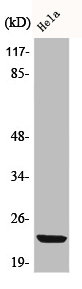
The antibody against BCL2L11 was raised in rabbit using the Synthesized peptide derived from the N-terminal region of Human Bim. as the immunogen. This antibody exists as a non-conjugated isotype IgG. The antibody was affinity-purified from rabbit antiserum by affinity-chromatography using epitope-specific immunogen. This antibody has been validated on WB, IHC, ELISA.
$167.00
| Cat.No | ADC-39223A | Clonality | Polyclonal |
|---|---|---|---|
| Host Species | Rabbit | Target Name | BCL2L11 |
| Form | Liquid | Species Reactivity | Human, Mouse, Rat, Monkey |
| Isotype | IgG | Storage Buffer | 0.5% BSA and 0.02% sodium azide., Liquid in PBS containing 50% glycerol |
| Purification Method | The antibody was affinity-purified from rabbit antiserum by affinity-chromatography using epitope-specific immunogen. | Conjugate | Non-conjugated |
| Application | ELISA, IHC, WB | Storage | Upon receipt |
| Immunogen Description | Synthesized peptide derived from the N-terminal region of Human Bim. | Target Species | Human |
|---|---|---|---|
| Immunogen Sequence | Complete sequences for the immunogen, target protein, and peptides are available upon request. | Uniprot ID | O43521 |
Uniprot Id
O43521
Target Species
Human
Target Name
BCL2L11
Target Full Name
Bcl-2-like protein 11
Target Function
Induces apoptosis and anoikis. Isoform BimL is more potent than isoform BimEL. Isoform Bim-alpha1, isoform Bim-alpha2 and isoform Bim-alpha3 induce apoptosis, although less potent than isoform BimEL, isoform BimL and isoform BimS. Isoform Bim-gamma induces apoptosis. Isoform Bim-alpha3 induces apoptosis possibly through a caspase-mediated pathway. Isoform BimAC and isoform BimABC lack the ability to induce apoptosis.
Target Subcellular Location
Endomembrane system; Peripheral membrane protein.; [Isoform BimEL]: Mitochondrion. Note=Translocates from microtubules to mitochondria on loss of cell adherence.; [Isoform BimL]: Mitochondrion.; [Isoform BimS]: Mitochondrion.; [Isoform Bim-alpha1]: Mitochondrion.
Target Protein Families
Bcl-2 family
Target Tissue Specificity
Isoform BimEL, isoform BimL and isoform BimS are the predominant isoforms and are widely expressed with tissue-specific variation. Isoform Bim-gamma is most abundantly expressed in small intestine and colon, and in lower levels in spleen, prostate, testis
Target Research Area
Cancer
Target Synonyms
BCL2 like 11 ; B2L11_HUMAN; BAM; Bcl 2 interacting protein Bim; Bcl 2 related ovarian death agonist; Bcl-2-like protein 11; BCL2 interacting mediator of cell death ; BCL2 like 11 (apoptosis facilitator); BCL2 like protein 11 ; Bcl2-interacting mediator of cell death; Bcl2-L-11; Bcl2l11; BIM alpha6; BIM; BIM beta6; BIM beta7; BimEL; BimL; BOD
Target Background
The protein encoded by this gene belongs to the BCL-2 protein family. BCL-2 family members form hetero- or homodimers and act as anti- or pro-apoptotic regulators that are involved in a wide variety of cellular activities. The protein encoded by this gene contains a Bcl-2 homology domain 3 (BH3). It has been shown to interact with other members of the BCL-2 protein family and to act as an apoptotic activator. The expression of this gene can be induced by nerve growth factor (NGF), as well as by the forkhead transcription factor FKHR-L1, which suggests a role of this gene in neuronal and lymphocyte apoptosis. Transgenic studies of the mouse counterpart suggested that this gene functions as an essential initiator of apoptosis in thymocyte-negative selection. Several alternatively spliced transcript variants of this gene have been identified.
Notification