• Contact info@abtriva.com for inquiries and orders.
  • Chinese (Simplified)

  • English

  • German

  • Korean

  • Spanish

United States (English / $ USD)

Rabbit anti-Human Acetyl-E2F4 (K96) Polyclonal Antibody

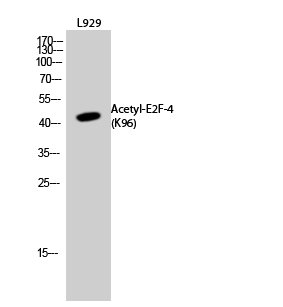
The antibody against E2F4 was raised in rabbit using the Synthesized peptide derived from the Human E2F-4 around the acetylation site of K96. as the immunogen. This antibody exists as a non-conjugated isotype IgG. The antibody was affinity-purified from rabbit antiserum by affinity-chromatography using epitope-specific immunogen. This antibody has been validated on WB, ELISA.

ADC-39875A

The antibody against E2F4 was raised in rabbit using the Synthesized peptide derived from the Human E2F-4 around the acetylation site of K96. as the immunogen. This antibody exists as a non-conjugated isotype IgG. The antibody was affinity-purified from rabbit antiserum by affinity-chromatography using epitope-specific immunogen. This antibody has been validated on WB, ELISA.

$167.00

Number
Order Exclusive Products Now

Request a Quote
High Purity LevelsPrecision and ReliabilityCustomization Options

Specifications


Cat.No ADC-39875A ClonalityPolyclonal
Host SpeciesRabbitTarget NameE2F4
FormLiquidSpecies ReactivityHuman, Mouse, Rat
IsotypeIgGStorage Buffer0.5% BSA and 0.02% sodium azide., Liquid in PBS containing 50% glycerol
Purification MethodThe antibody was affinity-purified from rabbit antiserum by affinity-chromatography using epitope-specific immunogen.ConjugateNon-conjugated
ApplicationELISA, WBStorageUpon receipt

Immunogen Information


Immunogen DescriptionSynthesized peptide derived from the Human E2F-4 around the acetylation site of K96.Target SpeciesHuman
Immunogen SequenceComplete sequences for the immunogen, target protein, and peptides are available upon request.Uniprot IDQ16254
Background Information
  • Uniprot Id

    Q16254

  • Target Species

    Human

  • Target Name

    E2F4

  • Target Full Name

    Transcription factor E2F4

  • Target Function

    Transcription activator that binds DNA cooperatively with DP proteins through the E2 recognition site, 5'-TTTC[CG]CGC-3' found in the promoter region of a number of genes whose products are involved in cell cycle regulation or in DNA replication. The DRTF1/E2F complex functions in the control of cell-cycle progression from G1 to S phase. E2F4 binds with high affinity to RBL1 and RBL2. In some instances can also bind RB1. Specifically required for multiciliate cell differentiation: together with MCIDAS and E2F5, binds and activate genes required for centriole biogenesis.

  • Target Subcellular Location

    Nucleus.

  • Target Protein Families

    E2F/DP family

  • Target Tissue Specificity

    Found in all tissue examined including heart, brain, placenta, lung, liver, skeletal muscle, kidney and pancreas.

  • Target Synonyms

    E2F 4; E2F transcription factor 4; E2F transcription factor 4 p107/p130 binding; E2F-4; E2F4; E2F4_HUMAN; p107/p130 binding protein ; Transcription factor E2F 4; Transcription factor E2F4

  • Target Background

    The protein encoded by this gene is a member of the E2F family of transcription factors. The E2F family plays a crucial role in the control of cell cycle and action of tumor suppressor proteins and is also a target of the transforming proteins of small DNA tumor viruses. The E2F proteins contain several evolutionally conserved domains found in most members of the family. These domains include a DNA binding domain, a dimerization domain which determines interaction with the differentiation regulated transcription factor proteins (DP), a transactivation domain enriched in acidic amino acids, and a tumor suppressor protein association domain which is embedded within the transactivation domain. This protein binds to all three of the tumor suppressor proteins pRB, p107 and p130, but with higher affinity to the last two. It plays an important role in the suppression of proliferation-associated genes, and its gene mutation and increased expression may be associated with human cancer.

Inquire Rabbit anti-Human Acetyl-E2F4 (K96) Polyclonal Antibody Now


AbTriva respects your privacy and protects your personal data in accordance with AbTriva. For more information, please see our data protection statement. *

Notification