• Contact info@abtriva.com for inquiries and orders.
  • Chinese (Simplified)

  • English

  • German

  • Korean

  • Spanish

United States (English / $ USD)

Rabbit anti-Human CCAR2 Polyclonal Antibody

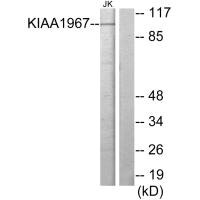
The antibody against CCAR2 was raised in rabbit using the Synthesized peptide derived from internal of Human KIAA1967. as the immunogen. The antibody was affinity-purified from rabbit antiserum by affinity-chromatography using epitope-specific immunogen. This antibody has been validated on ELISA, WB.

ADC-41893A

The antibody against CCAR2 was raised in rabbit using the Synthesized peptide derived from internal of Human KIAA1967. as the immunogen. The antibody was affinity-purified from rabbit antiserum by affinity-chromatography using epitope-specific immunogen. This antibody has been validated on ELISA, WB.

$297.00

Number
Order Exclusive Products Now

Request a Quote
High Purity LevelsPrecision and ReliabilityCustomization Options

Specifications


Cat.No ADC-41893A ClonalityPolyclonal
Host SpeciesRabbitTarget NameCCAR2
FormLiquidSpecies ReactivityHuman
Storage BufferPH 7.4, 0.02% sodium azide and 50% glycerol., 150mM NaCl, Rabbit IgG in phosphate buffered saline (without Mg2+ and Ca2+)Purification MethodThe antibody was affinity-purified from rabbit antiserum by affinity-chromatography using epitope-specific immunogen.
ApplicationELISA, WBStorageUpon receipt

Immunogen Information


Immunogen DescriptionSynthesized peptide derived from internal of Human KIAA1967.Target SpeciesHuman
Immunogen SequenceComplete sequences for the immunogen, target protein, and peptides are available upon request.Uniprot IDQ8N163
Background Information
  • Uniprot Id

    Q8N163

  • Target Species

    Human

  • Target Name

    CCAR2

  • Target Full Name

    Cell cycle and apoptosis regulator protein 2

  • Target Function

    Core component of the DBIRD complex, a multiprotein complex that acts at the interface between core mRNP particles and RNA polymerase II (RNAPII) and integrates transcript elongation with the regulation of alternative splicing: the DBIRD complex affects local transcript elongation rates and alternative splicing of a large set of exons embedded in (A + T)-rich DNA regions. Inhibits SIRT1 deacetylase activity leading to increasing levels of p53/TP53 acetylation and p53-mediated apoptosis. Inhibits SUV39H1 methyltransferase activity. Mediates ligand-dependent transcriptional activation by nuclear hormone receptors. Plays a critical role in maintaining genomic stability and cellular integrity following UV-induced genotoxic stress. Regulates the circadian expression of the core clock components NR1D1 and ARNTL/BMAL1. Enhances the transcriptional repressor activity of NR1D1 through stabilization of NR1D1 protein levels by preventing its ubiquitination and subsequent degradation. Represses the ligand-dependent transcriptional activation function of ESR2. Acts as a regulator of PCK1 expression and gluconeogenesis by a mechanism that involves, at least in part, both NR1D1 and SIRT1. Negatively regulates the deacetylase activity of HDAC3 and can alter its subcellular localization. Positively regulates the beta-catenin pathway (canonical Wnt signaling pathway) and is required for MCC-mediated repression of the beta-catenin pathway. Represses ligand-dependent transcriptional activation function of NR1H2 and NR1H3 and inhibits the interaction of SIRT1 with NR1H3. Plays an important role in tumor suppression through p53/TP53 regulation; stabilizes p53/TP53 by affecting its interaction with ubiquitin ligase MDM2. Represses the transcriptional activator activity of BRCA1. Inhibits SIRT1 in a CHEK2 and PSEM3-dependent manner and inhibits the activity of CHEK2 in vitro.

  • Target Subcellular Location

    Nucleus. Cytoplasm. Cytoplasm, cytoskeleton, spindle.

  • Target Tissue Specificity

    Expressed in gastric carcinoma tissue and the expression gradually increases with the progression of the carcinoma (at protein level). Expressed ubiquitously in normal tissues. Expressed in 84 to 100% of neoplastic breast, lung, and colon tissues.

  • Target Synonyms

    CCAR2; DBC1; KIAA1967Cell cycle and apoptosis regulator protein 2; Cell division cycle and apoptosis regulator protein 2; DBIRD complex subunit KIAA1967; Deleted in breast cancer gene 1 protein; DBC-1; DBC.1; NET35; p30 DBC

  • Target Background

    Enables RNA polymerase II complex binding activity and enzyme inhibitor activity. Involved in several processes, including regulation of cellular protein metabolic process; regulation of signal transduction; and regulation of transcription, DNA-templated. Located in several cellular components, including mitochondrial matrix; nucleoplasm; and spindle. Part of DBIRD complex.

Inquire Rabbit anti-Human CCAR2 Polyclonal Antibody Now


AbTriva respects your privacy and protects your personal data in accordance with AbTriva. For more information, please see our data protection statement. *

Notification