-
Chinese (Simplified)
-
English
-
German
-
Korean
-
Spanish
Chinese (Simplified)
English
German
Korean
Spanish
Sign up for an account to enjoy easy online shopping and instant order tracking.
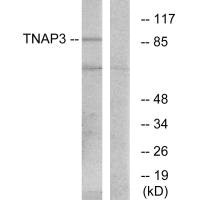
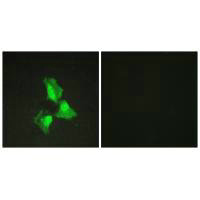
The antibody against TNFAIP3 was raised in rabbit using the Synthesized peptide derived from internal of Human TNAP3. as the immunogen. The antibody was affinity-purified from rabbit antiserum by affinity-chromatography using epitope-specific immunogen. This antibody has been validated on ELISA, WB, IF.
$297.00
| Cat.No | ADC-42115A | Clonality | Polyclonal |
|---|---|---|---|
| Host Species | Rabbit | Target Name | TNFAIP3 |
| Target Synonyms | alpha-induced protein 3 antibody; Zinc finger protein A20 antibody | Form | Liquid |
| Species Reactivity | Human, Mouse | Storage Buffer | PH 7.4, 0.02% sodium azide and 50% glycerol., 150mM NaCl, Rabbit IgG in phosphate buffered saline (without Mg2+ and Ca2+) |
| Purification Method | The antibody was affinity-purified from rabbit antiserum by affinity-chromatography using epitope-specific immunogen. | Application | ELISA, IF, WB |
| Storage | Upon receipt |
| Immunogen Description | Synthesized peptide derived from internal of Human TNAP3. | Target Species | Human |
|---|---|---|---|
| Immunogen Sequence | Complete sequences for the immunogen, target protein, and peptides are available upon request. | Uniprot ID | P21580 |
Uniprot Id
P21580
Target Species
Human
Target Name
TNFAIP3
Target Full Name
Tumor necrosis factor alpha-induced protein 3
Target Function
Ubiquitin-editing enzyme that contains both ubiquitin ligase and deubiquitinase activities. Involved in immune and inflammatory responses signaled by cytokines, such as TNF-alpha and IL-1 beta, or pathogens via Toll-like receptors (TLRs) through terminating NF-kappa-B activity. Essential component of a ubiquitin-editing protein complex, comprising also RNF11, ITCH and TAX1BP1, that ensures the transient nature of inflammatory signaling pathways. In cooperation with TAX1BP1 promotes disassembly of E2-E3 ubiquitin protein ligase complexes in IL-1R and TNFR-1 pathways; affected are at least E3 ligases TRAF6, TRAF2 and BIRC2, and E2 ubiquitin-conjugating enzymes UBE2N and UBE2D3. In cooperation with TAX1BP1 promotes ubiquitination of UBE2N and proteasomal degradation of UBE2N and UBE2D3. Upon TNF stimulation, deubiquitinates 'Lys-63'-polyubiquitin chains on RIPK1 and catalyzes the formation of 'Lys-48'-polyubiquitin chains. This leads to RIPK1 proteasomal degradation and consequently termination of the TNF- or LPS-mediated activation of NF-kappa-B. Deubiquitinates TRAF6 probably acting on 'Lys-63'-linked polyubiquitin. Upon T-cell receptor (TCR)-mediated T-cell activation, deubiquitinates 'Lys-63'-polyubiquitin chains on MALT1 thereby mediating disassociation of the CBM (CARD11:BCL10:MALT1) and IKK complexes and preventing sustained IKK activation. Deubiquitinates NEMO/IKBKG; the function is facilitated by TNIP1 and leads to inhibition of NF-kappa-B activation. Upon stimulation by bacterial peptidoglycans, probably deubiquitinates RIPK2. Can also inhibit I-kappa-B-kinase (IKK) through a non-catalytic mechanism which involves polyubiquitin; polyubiquitin promotes association with IKBKG and prevents IKK MAP3K7-mediated phosphorylation. Targets TRAF2 for lysosomal degradation. In vitro able to deubiquitinate 'Lys-11'-, 'Lys-48'- and 'Lys-63' polyubiquitin chains. Inhibitor of programmed cell death. Has a role in the function of the lymphoid system. Required for LPS-induced production of proinflammatory cytokines and IFN beta in LPS-tolerized macrophages.
Target Involvement
Autoinflammatory syndrome, familial, Behcet-like (AISBL)
Target Subcellular Location
Cytoplasm. Nucleus. Lysosome.; [A20p50]: Cytoplasm.
Target Protein Families
Peptidase C64 family
Target Synonyms
A20; AISBL; MGC104522; MGC138687; MGC138688; OTU domain containing protein 7C; OTU domain-containing protein 7C; OTUD7C; Putative DNA binding protein A20; Putative DNA-binding protein A20; TNAP3_HUMAN; TNF alpha-induced protein 3; TNFA1P2; TNFAIP 3; TNFAIP3 (A20); TNFAIP3; Tumor necrosis factor alpha induced protein 3; Tumor necrosis factor alpha-induced protein 3; Tumor necrosis factor induced protein 3; Tumor necrosis factor inducible protein A20; tumor necrosis factor, alpha-induced protein 3; Zinc finger protein A20
Target Background
This gene was identified as a gene whose expression is rapidly induced by the tumor necrosis factor (TNF). The protein encoded by this gene is a zinc finger protein and ubiqitin-editing enzyme, and has been shown to inhibit NF-kappa B activation as well as TNF-mediated apoptosis. The encoded protein, which has both ubiquitin ligase and deubiquitinase activities, is involved in the cytokine-mediated immune and inflammatory responses. Several transcript variants encoding the same protein have been found for this gene.
Notification