• Contact info@abtriva.com for inquiries and orders.
  • Chinese (Simplified)

  • English

  • German

  • Korean

  • Spanish

United States (English / $ USD)

Rabbit anti-Human VTN Polyclonal Antibody

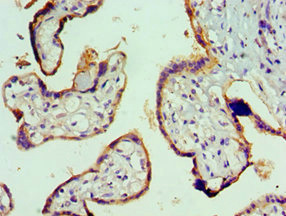
The antibody against VTN was raised in rabbit using the Recombinant Human Vitronectin protein (364-478AA) as the immunogen. This antibody exists as a non-conjugated isotype IgG, Antigen affinity purified. This antibody has been validated on ELISA, IHC.

ADC-44464A

The antibody against VTN was raised in rabbit using the Recombinant Human Vitronectin protein (364-478AA) as the immunogen. This antibody exists as a non-conjugated isotype IgG, Antigen affinity purified. This antibody has been validated on ELISA, IHC.

$299.00

Number
Order Exclusive Products Now

Request a Quote
High Purity LevelsPrecision and ReliabilityCustomization Options

Specifications


Cat.No ADC-44464A ClonalityPolyclonal
Host SpeciesRabbitTarget NameVTN
FormLiquidSpecies ReactivityHuman
IsotypeIgGStorage Buffer50% Glycerol, PBS with 0.02% sodium azide, pH7.3.
Purification MethodAntigen affinity purifiedConjugateNon-conjugated
ApplicationELISA, IHCStorageUpon receipt

Immunogen Information


Immunogen DescriptionRecombinant Human Vitronectin protein (364-478AA)Target SpeciesHuman
Immunogen SequenceComplete sequences for the immunogen, target protein, and peptides are available upon request.Uniprot IDP04004
Background Information
  • Uniprot Id

    P04004

  • Target Species

    Human

  • Target Name

    VTN

  • Target Full Name

    Vitronectin

  • Target Function

    Vitronectin is a cell adhesion and spreading factor found in serum and tissues. Vitronectin interact with glycosaminoglycans and proteoglycans. Is recognized by certain members of the integrin family and serves as a cell-to-substrate adhesion molecule. Inhibitor of the membrane-damaging effect of the terminal cytolytic complement pathway.; Somatomedin-B is a growth hormone-dependent serum factor with protease-inhibiting activity.

  • Target Subcellular Location

    Secreted, extracellular space.; Parasitophorous vacuole.

  • Target Tissue Specificity

    Expressed in the retina pigment epithelium (at protein level). Expressed in plasma (at protein level). Expressed in serum (at protein level).

  • Target Research Area

    Cardiovascular

  • Target Synonyms

    Complement S Protein; Epibolin; S Protein; S-protein; Serum Spreading Factor; Serum-spreading factor; Somatomedin B; Somatomedin-B; V75; Vitronectin; Vitronectin V10 subunit; Vitronectin V65 subunit; VN; VNT; VTN; VTNC_HUMAN

  • Target Background

    The protein encoded by this gene functions in part as an adhesive glycoprotein. Differential expression of this protein can promote either cell adhesion or migration as it links cells to the extracellular matrix through a variety of ligands. These ligands include integrins, plasminogen activator inhibitor-1, and urokinase plasminogen activator receptor. This secreted protein can be present in the plasma as a monomer or dimer and forms a multimer in the extracellular matrix of several tissues. This protein also inhibits the membrane-damaging effect of the terminal cytolytic complement pathway and binds to several serpin serine protease inhibitors. This protein can also promote extracellular matrix degradation and thus plays a role in tumorigenesis. It is involved in a variety of other biological processes such as the regulation of the coagulation pathway, wound healing, and tissue remodeling. The heparin-binding domain of this protein give it anti-microbial properties. It is also a lipid binding protein that forms a principal component of high density lipoprotein.

Inquire Rabbit anti-Human VTN Polyclonal Antibody Now


AbTriva respects your privacy and protects your personal data in accordance with AbTriva. For more information, please see our data protection statement. *

Notification