• Contact info@abtriva.com for inquiries and orders.
  • Chinese (Simplified)

  • English

  • German

  • Korean

  • Spanish

United States (English / $ USD)

Rabbit anti-Human BRCC3 Polyclonal Antibody

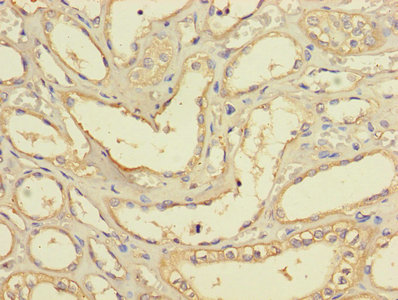
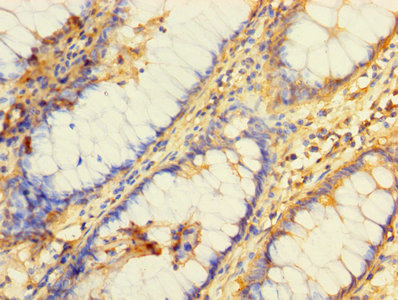
The antibody against BRCC3 was raised in rabbit using the Recombinant Human Lys-63-specific deubiquitinase BRCC36 protein (14-316AA) as the immunogen. This antibody exists as a non-conjugated isotype IgG, purified by protein G with a purity greater than 95%. This antibody has been validated on ELISA, WB, IHC.

ADC-50156A

The antibody against BRCC3 was raised in rabbit using the Recombinant Human Lys-63-specific deubiquitinase BRCC36 protein (14-316AA) as the immunogen. This antibody exists as a non-conjugated isotype IgG, purified by protein G with a purity greater than 95%. This antibody has been validated on ELISA, WB, IHC.

$299.00

Number
Order Exclusive Products Now

Request a Quote
High Purity LevelsPrecision and ReliabilityCustomization Options

Specifications


Cat.No ADC-50156A ClonalityPolyclonal
Host SpeciesRabbitTarget NameBRCC3
FormLiquidSpecies ReactivityHuman
IsotypeIgGStorage Buffer0.01M PBS, 0.03% Proclin 300; Constituents: 50% Glycerol, PH 7.4
Purification Method>95%, Protein G purifiedConjugateNon-conjugated
ApplicationELISA, IHC, WBStorageUpon receipt

Immunogen Information


Immunogen DescriptionRecombinant Human Lys-63-specific deubiquitinase BRCC36 protein (14-316AA)Target SpeciesHuman
Immunogen SequenceComplete sequences for the immunogen, target protein, and peptides are available upon request.Uniprot IDP46736
Background Information
  • Uniprot Id

    P46736

  • Target Species

    Human

  • Target Name

    BRCC3

  • Target Full Name

    Lys-63-specific deubiquitinase BRCC36

  • Target Function

    Metalloprotease that specifically cleaves 'Lys-63'-linked polyubiquitin chains. Does not have activity toward 'Lys-48'-linked polyubiquitin chains. Component of the BRCA1-A complex, a complex that specifically recognizes 'Lys-63'-linked ubiquitinated histones H2A and H2AX at DNA lesions sites, leading to target the BRCA1-BARD1 heterodimer to sites of DNA damage at double-strand breaks (DSBs). In the BRCA1-A complex, it specifically removes 'Lys-63'-linked ubiquitin on histones H2A and H2AX, antagonizing the RNF8-dependent ubiquitination at double-strand breaks (DSBs). Catalytic subunit of the BRISC complex, a multiprotein complex that specifically cleaves 'Lys-63'-linked ubiquitin in various substrates. Mediates the specific 'Lys-63'-specific deubiquitination associated with the COP9 signalosome complex (CSN), via the interaction of the BRISC complex with the CSN complex. The BRISC complex is required for normal mitotic spindle assembly and microtubule attachment to kinetochores via its role in deubiquitinating NUMA1. Plays a role in interferon signaling via its role in the deubiquitination of the interferon receptor IFNAR1; deubiquitination increases IFNAR1 activity by enhancing its stability and cell surface expression. Down-regulates the response to bacterial lipopolysaccharide (LPS) via its role in IFNAR1 deubiquitination.

  • Target Involvement

    A chromosomal aberration involving BRCC3 is a cause of pro-lymphocytic T-cell leukemia (T-PLL). Translocation t(X;14)(q28;q11) with TCRA.

  • Target Subcellular Location

    Nucleus. Cytoplasm. Cytoplasm, cytoskeleton, spindle pole.

  • Target Protein Families

    Peptidase M67A family, BRCC36 subfamily

  • Target Tissue Specificity

    Heart, brain, placenta, lung, liver, skeletal muscle, kidney and pancreas. Aberrantly expressed in the vast majority of breast tumors.

  • Target Research Area

    Epigenetics and Nuclear Signaling

  • Target Synonyms

    BRCA1-A complex subunit BRCC36; BRCA1/BRCA2 containing complex subunit 3; BRCA1/BRCA2 containing complex subunit 36; BRCA1/BRCA2-containing complex subunit 3; BRCA1/BRCA2-containing complex subunit 36; Brcc3; BRCC3_HUMAN; BRCC36; BRISC complex subunit BRCC36; C6.1A ; Chromosome X open reading frame 53; CXorf53; Lys-63-specific deubiquitinase BRCC36; OTTHUMP00000061450

  • Target Background

    This gene encodes a subunit of the BRCA1-BRCA2-containing complex (BRCC), which is an E3 ubiquitin ligase. This complex plays a role in the DNA damage response, where it is responsible for the stable accumulation of BRCA1 at DNA break sites. The component encoded by this gene can specifically cleave Lys 63-linked polyubiquitin chains, and it regulates the abundance of these polyubiquitin chains in chromatin. The loss of this gene results in abnormal angiogenesis and is associated with syndromic moyamoya, a cerebrovascular angiopathy. Alternative splicing results in multiple transcript variants. A related pseudogene has been identified on chromosome 5.

Inquire Rabbit anti-Human BRCC3 Polyclonal Antibody Now


AbTriva respects your privacy and protects your personal data in accordance with AbTriva. For more information, please see our data protection statement. *

Notification