-
Chinese (Simplified)
-
English
-
German
-
Korean
-
Spanish
Chinese (Simplified)
English
German
Korean
Spanish
Sign up for an account to enjoy easy online shopping and instant order tracking.
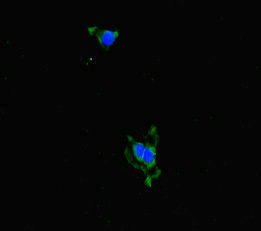
The antibody against ALDH16A1 was raised in rabbit using the Recombinant Human Aldehyde dehydrogenase family 16 member A1 protein (1-220AA) as the immunogen. This antibody exists as a non-conjugated isotype IgG, purified by protein G with a purity greater than 95%. This antibody has been validated on ELISA, IF.
$299.00
| Cat.No | ADC-15241A | Clonality | Polyclonal |
|---|---|---|---|
| Host Species | Rabbit | Target Name | ALDH16A1 |
| Target Synonyms | ALDH16A1Aldehyde dehydrogenase family 16 member A1 antibody | Form | Liquid |
| Species Reactivity | Human | Isotype | IgG |
| Storage Buffer | 0.01M PBS, 0.03% Proclin 300; Constituents: 50% Glycerol, PH 7.4 | Purification Method | >95%, Protein G purified |
| Conjugate | Non-conjugated | Application | ELISA, IF |
| Storage | Upon receipt |
| Immunogen Description | Recombinant Human Aldehyde dehydrogenase family 16 member A1 protein (1-220AA) | Target Species | Human |
|---|---|---|---|
| Immunogen Sequence | Complete sequences for the immunogen, target protein, and peptides are available upon request. | Uniprot ID | Q8IZ83 |
Uniprot Id
Q8IZ83
Target Species
Human
Target Name
ALDH16A1
Target Full Name
Aldehyde dehydrogenase family 16 member A1
Target Synonyms
ALDH16A1Aldehyde dehydrogenase family 16 member A1
Target Background
This gene encodes a member of the aldehyde dehydrogenase superfamily. The family members act on aldehyde substrates and use nicotinamide adenine dinucleotide phosphate (NADP) as a cofactor. This gene is conserved in chimpanzee, dog, cow, mouse, rat, and zebrafish. The protein encoded by this gene interacts with maspardin, a protein that when truncated is responsible for Mast syndrome. Alternatively spliced transcript variants encoding different isoforms have been found for this gene.
Notification