• Contact info@abtriva.com for inquiries and orders.
  • Chinese (Simplified)

  • English

  • German

  • Korean

  • Spanish

United States (English / $ USD)

Rabbit anti-Human ANGPTL4 Polyclonal Antibody

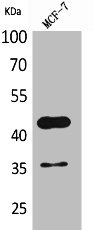
The antibody against ANGPTL4 was raised in rabbit using the Synthesized peptide derived from the Internal region of Human Angptl4. as the immunogen. This antibody exists as a non-conjugated isotype IgG. The antibody was affinity-purified from rabbit antiserum by affinity-chromatography using epitope-specific immunogen. This antibody has been validated on WB, ELISA.

ADC-37175A

The antibody against ANGPTL4 was raised in rabbit using the Synthesized peptide derived from the Internal region of Human Angptl4. as the immunogen. This antibody exists as a non-conjugated isotype IgG. The antibody was affinity-purified from rabbit antiserum by affinity-chromatography using epitope-specific immunogen. This antibody has been validated on WB, ELISA.

$167.00

Number
Order Exclusive Products Now

Request a Quote
High Purity LevelsPrecision and ReliabilityCustomization Options

Specifications


Cat.No ADC-37175A ClonalityPolyclonal
Host SpeciesRabbitTarget NameANGPTL4
FormLiquidSpecies ReactivityHuman, Mouse, Rat
IsotypeIgGStorage Buffer0.5% BSA and 0.02% sodium azide., Liquid in PBS containing 50% glycerol
Purification MethodThe antibody was affinity-purified from rabbit antiserum by affinity-chromatography using epitope-specific immunogen.ConjugateNon-conjugated
ApplicationELISA, WBStorageUpon receipt

Immunogen Information


Immunogen DescriptionSynthesized peptide derived from the Internal region of Human Angptl4.Target SpeciesHuman
Immunogen SequenceComplete sequences for the immunogen, target protein, and peptides are available upon request.Uniprot IDQ9BY76
Background Information
  • Uniprot Id

    Q9BY76

  • Target Species

    Human

  • Target Name

    ANGPTL4

  • Target Full Name

    Angiopoietin-related protein 4

  • Target Function

    Mediates inactivation of the lipoprotein lipase LPL, and thereby plays a role in the regulation of triglyceride clearance from the blood serum and in lipid metabolism. May also play a role in regulating glucose homeostasis and insulin sensitivity (Probable). Inhibits proliferation, migration, and tubule formation of endothelial cells and reduces vascular leakage. Upon heterologous expression, inhibits the adhesion of endothelial cell to the extracellular matrix (ECM), and inhibits the reorganization of the actin cytoskeleton, formation of actin stress fibers and focal adhesions in endothelial cells that have adhered to ANGPTL4-containing ECM (in vitro). Depending on context, may modulate tumor-related angiogenesis.; Mediates inactivation of the lipoprotein lipase LPL, and thereby plays an important role in the regulation of triglyceride clearance from the blood serum and in lipid metabolism. Has higher activity in LPL inactivation than the uncleaved protein.

  • Target Subcellular Location

    Secreted. Secreted, extracellular space, extracellular matrix.

  • Target Tissue Specificity

    Detected in blood plasma (at protein level). Detected in liver. Detected in white fat tissue and placenta. Expressed at high levels in the placenta, heart, liver, muscle, pancreas and lung but expressed poorly in the brain and kidney.

  • Target Research Area

    Cardiovascular

  • Target Synonyms

    Angiopoietin like 4; Angiopoietin related protein 4; Angiopoietin-like protein 4; Angiopoietin-related protein 4; ANGL4_HUMAN; ANGPT L2; ANGPT L4; ANGPTL2; Angptl4; ARP4; Fasting induced adipose factor; FIAF; HARP; Hepatic angiopoietin related protein; Hepatic fibrinogen/angiopoietin related protein; Hepatic fibrinogen/angiopoietin-related protein; HFARP; NL2; Peroxisome proliferator-activated receptor (PPAR) gamma induced angiopoietin related protein; PGAR; pp1158; PPARG angiopoietin related protein; PSEC0166; TGQTL; UNQ171; Weakly similar to angiopoietin 1 [H.sapiens]

  • Target Background

    This gene encodes a glycosylated, secreted protein containing a C-terminal fibrinogen domain. The encoded protein is induced by peroxisome proliferation activators and functions as a serum hormone that regulates glucose homeostasis, lipid metabolism, and insulin sensitivity. This protein can also act as an apoptosis survival factor for vascular endothelial cells and can prevent metastasis by inhibiting vascular growth and tumor cell invasion. The C-terminal domain may be proteolytically-cleaved from the full-length secreted protein. Decreased expression of this gene has been associated with type 2 diabetes. Alternative splicing results in multiple transcript variants. This gene was previously referred to as ANGPTL2 but has been renamed ANGPTL4.

Inquire Rabbit anti-Human ANGPTL4 Polyclonal Antibody Now


AbTriva respects your privacy and protects your personal data in accordance with AbTriva. For more information, please see our data protection statement. *

Notification