-
Chinese (Simplified)
-
English
-
German
-
Korean
-
Spanish

Chinese (Simplified)
English
German
Korean
Spanish
Sign up for an account to enjoy easy online shopping and instant order tracking.
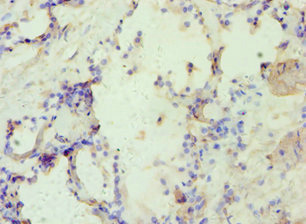
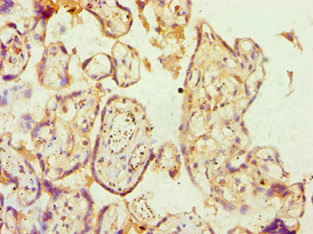
The antibody against AP2A1 was raised in rabbit using the Recombinant Human AP-2 complex subunit alpha-1 protein (1-260AA) as the immunogen. This antibody exists as a non-conjugated isotype IgG, Antigen affinity purified. This antibody has been validated on ELISA, IHC.
$299.00
| Cat.No | ADC-44450A | Clonality | Polyclonal |
|---|---|---|---|
| Host Species | Rabbit | Target Name | AP2A1 |
| Target Synonyms | alpha 1 antibody; Plasma membrane adaptor HA 2/AP 2 adaptin alpha A subunit antibody; Plasma membrane adaptor HA2/AP2 adaptin alpha A subunit antibody, large | Form | Liquid |
| Species Reactivity | Human | Isotype | IgG |
| Storage Buffer | 50% Glycerol, PBS with 0.02% sodium azide, pH7.3. | Purification Method | Antigen affinity purified |
| Conjugate | Non-conjugated | Application | ELISA, IHC |
| Storage | Upon receipt |
| Immunogen Description | Recombinant Human AP-2 complex subunit alpha-1 protein (1-260AA) | Target Species | Human |
|---|---|---|---|
| Immunogen Sequence | Complete sequences for the immunogen, target protein, and peptides are available upon request. | Uniprot ID | O95782 |
Uniprot Id
O95782
Target Species
Human
Target Name
AP2A1
Target Full Name
AP-2 complex subunit alpha-1
Target Function
Component of the adaptor protein complex 2 (AP-2). Adaptor protein complexes function in protein transport via transport vesicles in different membrane traffic pathways. Adaptor protein complexes are vesicle coat components and appear to be involved in cargo selection and vesicle formation. AP-2 is involved in clathrin-dependent endocytosis in which cargo proteins are incorporated into vesicles surrounded by clathrin (clathrin-coated vesicles, CCVs) which are destined for fusion with the early endosome. The clathrin lattice serves as a mechanical scaffold but is itself unable to bind directly to membrane components. Clathrin-associated adaptor protein (AP) complexes which can bind directly to both the clathrin lattice and to the lipid and protein components of membranes are considered to be the major clathrin adaptors contributing the CCV formation. AP-2 also serves as a cargo receptor to selectively sort the membrane proteins involved in receptor-mediated endocytosis. AP-2 seems to play a role in the recycling of synaptic vesicle membranes from the presynaptic surface. AP-2 recognizes Y-X-X-[FILMV] (Y-X-X-Phi) and [ED]-X-X-X-L-[LI] endocytosis signal motifs within the cytosolic tails of transmembrane cargo molecules. AP-2 may also play a role in maintaining normal post-endocytic trafficking through the ARF6-regulated, non-clathrin pathway. During long-term potentiation in hippocampal neurons, AP-2 is responsible for the endocytosis of ADAM10. The AP-2 alpha subunit binds polyphosphoinositide-containing lipids, positioning AP-2 on the membrane. The AP-2 alpha subunit acts via its C-terminal appendage domain as a scaffolding platform for endocytic accessory proteins. The AP-2 alpha and AP-2 sigma subunits are thought to contribute to the recognition of the [ED]-X-X-X-L-[LI] motif.
Target Subcellular Location
Cell membrane. Membrane, coated pit; Peripheral membrane protein; Cytoplasmic side.
Target Protein Families
Adaptor complexes large subunit family
Target Tissue Specificity
Expressed in the brain (at protein level). Isoform A: Expressed in forebrain, skeletal muscle, spinal cord, cerebellum, salivary gland, heart and colon. Isoform B: Widely expressed in tissues and also in breast cancer and in prostate carcinoma cells.
Target Synonyms
100 kDa coated vesicle protein A; Adapter-related protein complex 2 alpha-1 subunit; adapter-related protein complex 2 subunit alpha-1; Adaptin alpha A; Adaptin alpha; Adaptor protein complex AP 2 alpha 1 subunit; adaptor protein complex AP 2 subunit alpha 1; Adaptor protein complex AP-2 subunit alpha-1; Adaptor protein complex AP2 alpha 1 subunit; adaptor protein complex AP2 subunit alpha 1; Adaptor related protein complex 2 alpha 1 subunit; Adaptor related protein complex AP 2 alpha 1 subunit; Adaptor related protein complex AP2 alpha 1 subunit; ADTAA; Alpha A adaptin; Alpha adaptin A; Alpha-adaptin A; alpha1 adaptin; Alpha1-adaptin; AP 2 alpha; AP 2 complex subunit alpha 1; AP-2 complex subunit alpha-1; AP2 complex subunit alpha 1; AP2-ALPHA; Ap2a1; AP2A1_HUMAN; CLAPA 1; CLAPA1; Clathrin adaptor complex AP2. alpha subunit; Clathrin assembly protein complex 2 alpha A large chain; Clathrin assembly protein complex 2 alpha-A large chain; Clathrin associated / assembly / adaptor protein large alpha 1; clathrin associated assembly adaptor protein large alpha 1; clathrin associated/assembly/adaptor protein, large, alpha 1; Plasma membrane adaptor HA 2/AP 2 adaptin alpha A subunit; Plasma membrane adaptor HA2/AP2 adaptin alpha A subunit
Target Background
This gene encodes the alpha 1 adaptin subunit of the adaptor protein 2 (AP-2) complex found in clathrin coated vesicles. The AP-2 complex is a heterotetramer consisting of two large adaptins (alpha or beta), a medium adaptin (mu), and a small adaptin (sigma). The complex is part of the protein coat on the cytoplasmic face of coated vesicles which links clathrin to receptors in vesicles. Alternative splicing of this gene results in two transcript variants encoding two different isoforms. A third transcript variant has been described, but its full length nature has not been determined.
Notification