-
Chinese (Simplified)
-
English
-
German
-
Korean
-
Spanish

Chinese (Simplified)
English
German
Korean
Spanish
Sign up for an account to enjoy easy online shopping and instant order tracking.
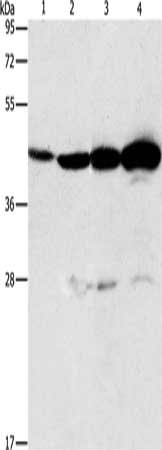
The antibody against APOBEC3D was raised in rabbit using the Synthetic peptide of Human APOBEC3D as the immunogen. This antibody exists as a non-conjugated isotype IgG, Antigen affinity purified. This antibody has been validated on ELISA, WB, IHC.
$299.00
| Cat.No | ADC-27254A | Clonality | Polyclonal |
|---|---|---|---|
| Host Species | Rabbit | Target Name | APOBEC3D |
| Form | Liquid | Species Reactivity | Human, Mouse |
| Isotype | IgG | Storage Buffer | 0.05% NaN3, 40% Glycerol., pH7.4 PBS |
| Purification Method | Antigen affinity purified | Conjugate | Non-conjugated |
| Application | ELISA, IHC, WB | Storage | Upon receipt |
| Immunogen Description | Synthetic peptide of Human APOBEC3D | Target Species | Human |
|---|---|---|---|
| Immunogen Sequence | Complete sequences for the immunogen, target protein, and peptides are available upon request. | Uniprot ID | Q96AK3 |
Uniprot Id
Q96AK3
Target Species
Human
Target Name
APOBEC3D
Target Full Name
DNA dC->dU-editing enzyme APOBEC-3D
Target Function
DNA deaminase (cytidine deaminase) which acts as an inhibitor of retrovirus replication and retrotransposon mobility via deaminase-dependent and -independent mechanisms. Exhibits antiviral activity against Vif-deficient HIV-1. After the penetration of retroviral nucleocapsids into target cells of infection and the initiation of reverse transcription, it can induce the conversion of cytosine to uracil in the minus-sense single-strand viral DNA, leading to G-to-A hypermutations in the subsequent plus-strand viral DNA. The resultant detrimental levels of mutations in the proviral genome, along with a deamination-independent mechanism that works prior to the proviral integration, together exert efficient antiretroviral effects in infected target cells. Selectively targets single-stranded DNA and does not deaminate double-stranded DNA or single- or double-stranded RNA. May inhibit the mobility of LTR and non-LTR retrotransposons.
Target Subcellular Location
Cytoplasm. Cytoplasm, P-body.
Target Protein Families
Cytidine and deoxycytidylate deaminase family
Target Tissue Specificity
Expressed in lymphoid organs. Also detected in non-lymphoid tissues including lung.
Target Synonyms
A3D; ABC3D_HUMAN; APOBEC3D; APOBEC3DE; APOBEC3E; Apolipoprotein B mRNA editing enzyme catalytic polypeptide like 3D; Apolipoprotein B mRNA editing enzyme catalytic polypeptide like 3E pseudogene; ARP6; bK150C2.9; BK150C2.9 protein; DNA dC >dU editing enzyme APOBEC 3D; DNA dC->dU-editing enzyme APOBEC-3D; hCG_41704; HCG41704; isoform CRA_b; Probable DNA dC->dU-editing enzyme APOBEC-3D
Target Background
This gene is a member of the cytidine deaminase gene family. It is one of a group of related genes found in a cluster, thought to result from gene duplication, on chromosome 22. Members of the cluster encode proteins that are structurally and functionally related to the C to U RNA-editing cytidine deaminase APOBEC1 and inhibit retroviruses, such as HIV, by deaminating cytosine residues in nascent retroviral cDNA.
Notification