-
Chinese (Simplified)
-
English
-
German
-
Korean
-
Spanish
Chinese (Simplified)
English
German
Korean
Spanish
Sign up for an account to enjoy easy online shopping and instant order tracking.
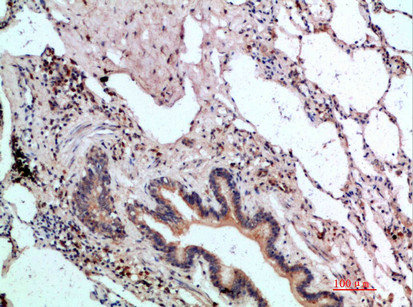
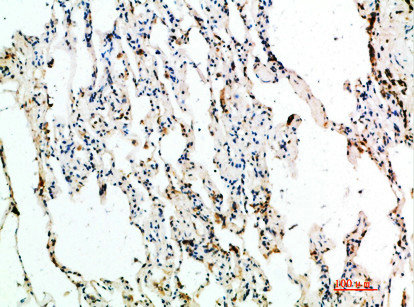
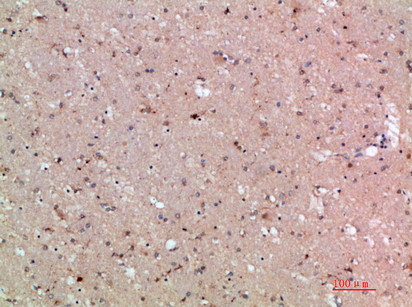
The antibody against ASCL1 was raised in rabbit using the Synthetic peptide from Human protein at AA range: 190-236 as the immunogen. This antibody exists as a non-conjugated antibody. The antibody was affinity-purified from rabbit serum by affinity-chromatography using specific immunogen. This antibody has been validated on IHC, ELISA.
$167.00
| Cat.No | ADC-13024A | Clonality | Polyclonal |
|---|---|---|---|
| Host Species | Rabbit | Target Name | ASCL1 |
| Form | Liquid | Species Reactivity | Human, Mouse, Rat |
| Storage Buffer | PH 7.4, containing 0.02% sodium azide as Preservative and 50% Glycerol., PBS | Purification Method | The antibody was affinity-purified from rabbit serum by affinity-chromatography using specific immunogen. |
| Conjugate | Non-conjugated | Application | ELISA, IHC |
| Storage | Upon receipt |
| Immunogen Description | Synthetic peptide from Human protein at AA range: 190-236 | Target Species | Human |
|---|---|---|---|
| Immunogen Sequence | Complete sequences for the immunogen, target protein, and peptides are available upon request. | Uniprot ID | P50553 |
Uniprot Id
P50553
Target Species
Human
Target Name
ASCL1
Target Full Name
Achaete-scute homolog 1
Target Function
Transcription factor that plays a key role in neuronal differentiation: acts as a pioneer transcription factor, accessing closed chromatin to allow other factors to bind and activate neural pathways. Directly binds the E box motif (5'-CANNTG-3') on promoters and promotes transcription of neuronal genes. The combination of three transcription factors, ASCL1, POU3F2/BRN2 and MYT1L, is sufficient to reprogram fibroblasts and other somatic cells into induced neuronal (iN) cells in vitro. Plays a role at early stages of development of specific neural lineages in most regions of the CNS, and of several lineages in the PNS. Essential for the generation of olfactory and autonomic neurons. Acts synergistically with FOXN4 to specify the identity of V2b neurons rather than V2a from bipotential p2 progenitors during spinal cord neurogenesis, probably through DLL4-NOTCH signaling activation. Involved in the regulation of neuroendocrine cell development in the glandular stomach.
Target Subcellular Location
Nucleus.
Target Research Area
Neuroscience
Target Synonyms
Achaete scute complex homolog 1; Achaete scute complex homolog like 1; Achaete scute complex homologue 1; Achaete scute complex homologue like 1; Achaete scute complex like 1; Achaete scute family bHLH transcription factor 1; Achaete scute protein; Achaete-scute homolog 1; Ascl 1; ascl1; ASCL1_HUMAN; Ash 1; ASH-1; Ash1; bHLHa46; Class A basic helix-loop-helix protein 46; Hash 1; HASH1; Mammalian achaete scute homolog 1; Mammalian achaete scute homologue 1; Mash 1; Mash1
Target Background
This gene encodes a member of the basic helix-loop-helix (BHLH) family of transcription factors. The protein activates transcription by binding to the E box (5'-CANNTG-3'). Dimerization with other BHLH proteins is required for efficient DNA binding. This protein plays a role in the neuronal commitment and differentiation and in the generation of olfactory and autonomic neurons. Mutations in this gene may contribute to the congenital central hypoventilation syndrome (CCHS) phenotype in rare cases.
Notification