• Contact info@abtriva.com for inquiries and orders.
  • Chinese (Simplified)

  • English

  • German

  • Korean

  • Spanish

United States (English / $ USD)

Rabbit anti-Human ATG3 Polyclonal Antibody

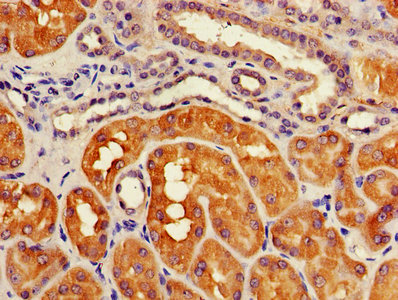
The antibody against ATG3 was raised in rabbit using the Recombinant Human Ubiquitin-like-conjugating enzyme ATG3 protein (1-314AA) as the immunogen. This antibody exists as a non-conjugated isotype IgG, purified by protein G with a purity greater than 95%. This antibody has been validated on ELISA, WB, IHC, IF.

ADC-49618A

The antibody against ATG3 was raised in rabbit using the Recombinant Human Ubiquitin-like-conjugating enzyme ATG3 protein (1-314AA) as the immunogen. This antibody exists as a non-conjugated isotype IgG, purified by protein G with a purity greater than 95%. This antibody has been validated on ELISA, WB, IHC, IF.

$299.00

Number
Order Exclusive Products Now

Request a Quote
High Purity LevelsPrecision and ReliabilityCustomization Options

Specifications


Cat.No ADC-49618A ClonalityPolyclonal
Host SpeciesRabbitTarget NameATG3
Target Synonyms2610016C12Rik antibody; Apg 3 antibody; APG3 antibody; APG3 autophagy 3 like antibody; APG3 like antibody; APG3, S. cerevisiaeFormLiquid
Species ReactivityHumanIsotypeIgG
Storage Buffer0.01M PBS, 0.03% Proclin 300; Constituents: 50% Glycerol, PH 7.4Purification Method>95%, Protein G purified
ConjugateNon-conjugatedApplicationELISA, IF, IHC, WB
StorageUpon receipt

Immunogen Information


Immunogen DescriptionRecombinant Human Ubiquitin-like-conjugating enzyme ATG3 protein (1-314AA)Target SpeciesHuman
Immunogen SequenceComplete sequences for the immunogen, target protein, and peptides are available upon request.Uniprot IDQ9NT62
Background Information
  • Uniprot Id

    Q9NT62

  • Target Species

    Human

  • Target Name

    ATG3

  • Target Full Name

    Ubiquitin-like-conjugating enzyme ATG3

  • Target Function

    E2 conjugating enzyme required for the cytoplasm to vacuole transport (Cvt), autophagy, and mitochondrial homeostasis. Responsible for the E2-like covalent binding of phosphatidylethanolamine to the C-terminal Gly of ATG8-like proteins (GABARAP, GABARAPL1, GABARAPL2 or MAP1LC3A). The ATG12-ATG5 conjugate plays a role of an E3 and promotes the transfer of ATG8-like proteins from ATG3 to phosphatidylethanolamine (PE). This step is required for the membrane association of ATG8-like proteins. The formation of the ATG8-phosphatidylethanolamine conjugates is essential for autophagy and for the cytoplasm to vacuole transport (Cvt). Preferred substrate is MAP1LC3A. Also acts as an autocatalytic E2-like enzyme, catalyzing the conjugation of ATG12 to itself, ATG12 conjugation to ATG3 playing a role in mitochondrial homeostasis but not in autophagy. ATG7 (E1-like enzyme) facilitates this reaction by forming an E1-E2 complex with ATG3. Promotes primary ciliogenesis by removing OFD1 from centriolar satellites via the autophagic pathway.

  • Target Subcellular Location

    Cytoplasm.

  • Target Protein Families

    ATG3 family

  • Target Tissue Specificity

    Widely expressed, with a highest expression in heart, skeletal muscle, kidney, liver and placenta.

  • Target Research Area

    Apoptosis

  • Target Synonyms

    2610016C12Rik; Apg 3; APG3; APG3 autophagy 3 like; APG3 like; APG3, S. cerevisiae, homolog of; APG3-like; APG3L; Apg3p; ATG 3; ATG3; ATG3 autophagy related 3 homolog; ATG3 autophagy related 3 homolog (S. cerevisiae); ATG3_HUMAN; Autophagy 3, S. cerevisiae, homolog of; Autophagy Apg3p/Aut1p like; autophagy related 3; Autophagy related protein 3; Autophagy-related protein 3; DKFZp564M1178; FLJ22125; hApg3; MGC15201; OTTHUMP00000214547; OTTHUMP00000214548; PC3 96; Protein PC3-96; Ubiquitin-like-conjugating enzyme ATG3

  • Target Background

    This gene encodes a ubiquitin-like-conjugating enzyme and is a component of ubiquitination-like systems involved in autophagy, the process of degradation, turnover and recycling of cytoplasmic constituents in eukaryotic cells. This protein is known to play a role in regulation of autophagy during cell death. A pseudogene of this gene is located on chromosome 20. Alternative splicing results in multiple transcript variants encoding different isoforms.

Inquire Rabbit anti-Human ATG3 Polyclonal Antibody Now


AbTriva respects your privacy and protects your personal data in accordance with AbTriva. For more information, please see our data protection statement. *

Notification