-
Chinese (Simplified)
-
English
-
German
-
Korean
-
Spanish
Chinese (Simplified)
English
German
Korean
Spanish
Sign up for an account to enjoy easy online shopping and instant order tracking.
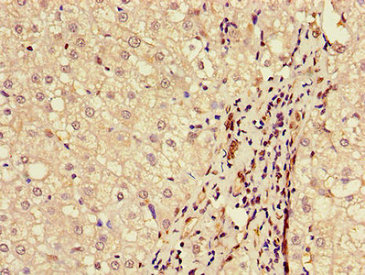
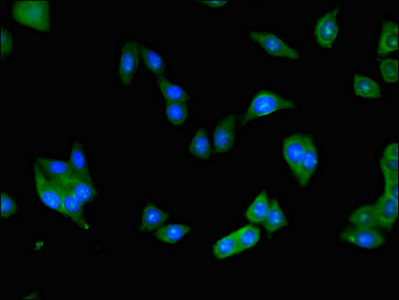
The antibody against BAAT was raised in rabbit using the Recombinant Human Bile acid-CoA:amino acid N-acyltransferase protein (313-400AA) as the immunogen. This antibody exists as a non-conjugated isotype IgG, purified by protein G with a purity greater than 95%. This antibody has been validated on ELISA, IHC, IF.
$299.00
| Cat.No | ADC-14365A | Clonality | Polyclonal |
|---|---|---|---|
| Host Species | Rabbit | Target Name | BAAT |
| Form | Liquid | Species Reactivity | Human |
| Isotype | IgG | Storage Buffer | 0.01M PBS, 0.03% Proclin 300; Constituents: 50% Glycerol, PH 7.4 |
| Purification Method | >95%, Protein G purified | Conjugate | Non-conjugated |
| Application | ELISA, IF, IHC | Storage | Upon receipt |
| Immunogen Description | Recombinant Human Bile acid-CoA:amino acid N-acyltransferase protein (313-400AA) | Target Species | Human |
|---|---|---|---|
| Immunogen Sequence | Complete sequences for the immunogen, target protein, and peptides are available upon request. | Uniprot ID | Q14032 |
Uniprot Id
Q14032
Target Species
Human
Target Name
BAAT
Target Full Name
Bile acid-CoA:amino acid N-acyltransferase
Target Function
Catalyzes the amidation of bile acids (BAs) with the amino acids taurine and glycine. More than 95% of the BAs are N-acyl amidates with glycine and taurine. Amidation of BAs in the liver with glycine or taurine prior to their excretion into bile is an important biochemical event in bile acid metabolism. This conjugation (or amidation) plays several important biological roles in that it promotes the secretion of BAs and cholesterol into bile and increases the detergent properties of BAs in the intestine, which facilitates lipid and vitamin absorption. May also act as an acyl-CoA thioesterase that regulates intracellular levels of free fatty acids. In vitro, catalyzes the hydrolysis of long- and very long-chain saturated acyl-CoAs to the free fatty acid and coenzyme A (CoASH), and conjugates glycine to these acyl-CoAs.
Target Involvement
Familial hypercholanemia (FHCA)
Target Subcellular Location
Cytoplasm, cytosol. Peroxisome.
Target Protein Families
C/M/P thioester hydrolase family
Target Tissue Specificity
Expressed in liver, gallbladder mucosa and pancreas.
Target Synonyms
FLJ20300; BAAT; BAAT_HUMAN; BACAT; BAT; Bile acid CoA: amino acid N-acyltransferase (glycine N-choloyltransferase); Bile acid CoA:amino acid N acyltransferase; Bile acid Coenzyme A amino acid N acyltransferase glycine N choloyltransferase; Bile acid Coenzyme A: amino acid N acyltransferase; Bile acid-CoA:amino acid N-acyltransferase; Glycine N choloyltransferase; Glycine N-choloyltransferase; Long chain fatty acyl CoA hydrolase; Long-chain fatty-acyl-CoA hydrolase; MGC104432
Target Background
The protein encoded by this gene is a liver enzyme that catalyzes the transfer of C24 bile acids from the acyl-CoA thioester to either glycine or taurine, the second step in the formation of bile acid-amino acid conjugates. The bile acid conjugates then act as a detergent in the gastrointestinal tract, which enhances lipid and fat-soluble vitamin absorption. Defects in this gene are a cause of familial hypercholanemia (FHCA). Two transcript variants encoding the same protein have been found for this gene.
Notification