• Contact info@abtriva.com for inquiries and orders.
  • Chinese (Simplified)

  • English

  • German

  • Korean

  • Spanish

United States (English / $ USD)

Rabbit anti-Human BCL6 Polyclonal Antibody

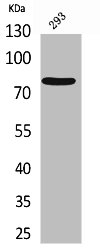
The antibody against BCL6 was raised in rabbit using the Synthesized peptide derived from the Internal region of Human Bcl-6. as the immunogen. This antibody exists as a non-conjugated isotype IgG. The antibody was affinity-purified from rabbit antiserum by affinity-chromatography using epitope-specific immunogen. This antibody has been validated on WB, ELISA.

ADC-37043A

The antibody against BCL6 was raised in rabbit using the Synthesized peptide derived from the Internal region of Human Bcl-6. as the immunogen. This antibody exists as a non-conjugated isotype IgG. The antibody was affinity-purified from rabbit antiserum by affinity-chromatography using epitope-specific immunogen. This antibody has been validated on WB, ELISA.

$167.00

Number
Order Exclusive Products Now

Request a Quote
High Purity LevelsPrecision and ReliabilityCustomization Options

Specifications


Cat.No ADC-37043A ClonalityPolyclonal
Host SpeciesRabbitTarget NameBCL6
FormLiquidSpecies ReactivityHuman, Mouse, Rat
IsotypeIgGStorage Buffer0.5% BSA and 0.02% sodium azide., Liquid in PBS containing 50% glycerol
Purification MethodThe antibody was affinity-purified from rabbit antiserum by affinity-chromatography using epitope-specific immunogen.ConjugateNon-conjugated
ApplicationELISA, WBStorageUpon receipt

Immunogen Information


Immunogen DescriptionSynthesized peptide derived from the Internal region of Human Bcl-6.Target SpeciesHuman
Immunogen SequenceComplete sequences for the immunogen, target protein, and peptides are available upon request.Uniprot IDP41182
Background Information
  • Uniprot Id

    P41182

  • Target Species

    Human

  • Target Name

    BCL6

  • Target Full Name

    B-cell lymphoma 6 protein

  • Target Function

    Transcriptional repressor mainly required for germinal center (GC) formation and antibody affinity maturation which has different mechanisms of action specific to the lineage and biological functions. Forms complexes with different corepressors and histone deacetylases to repress the transcriptional expression of different subsets of target genes. Represses its target genes by binding directly to the DNA sequence 5'-TTCCTAGAA-3' (BCL6-binding site) or indirectly by repressing the transcriptional activity of transcription factors. In GC B-cells, represses genes that function in differentiation, inflammation, apoptosis and cell cycle control, also autoregulates its transcriptional expression and up-regulates, indirectly, the expression of some genes important for GC reactions, such as AICDA, through the repression of microRNAs expression, like miR155. An important function is to allow GC B-cells to proliferate very rapidly in response to T-cell dependent antigens and tolerate the physiological DNA breaks required for immunglobulin class switch recombination and somatic hypermutation without inducing a p53/TP53-dependent apoptotic response. In follicular helper CD4(+) T-cells (T(FH) cells), promotes the expression of T(FH)-related genes but inhibits the differentiation of T(H)1, T(H)2 and T(H)17 cells. Also required for the establishment and maintenance of immunological memory for both T- and B-cells. Suppresses macrophage proliferation through competition with STAT5 for STAT-binding motifs binding on certain target genes, such as CCL2 and CCND2. In response to genotoxic stress, controls cell cycle arrest in GC B-cells in both p53/TP53-dependedent and -independent manners. Besides, also controls neurogenesis through the alteration of the composition of NOTCH-dependent transcriptional complexes at selective NOTCH targets, such as HES5, including the recruitment of the deacetylase SIRT1 and resulting in an epigenetic silencing leading to neuronal differentiation.

  • Target Involvement

    Chromosomal aberrations involving BCL6 are a cause of B-cell non-Hodgkin lymphomas (B-cell NHL), including diffuse large B-cell lymphoma and follicular lymphoma. Approximately 40% of diffuse large B-cell lymphomas and 5 to 10% of follicular lymphomas are associated with chromosomal translocations that deregulate expression of BCL6 by juxtaposing heterologous promoters to the BCL6 coding domain. Translocation t(3;14)(q27;q32). Translocation t(3;22)(q27;q11) with immunoglobulin gene regions. Translocation t(3;7)(q27;p12) with IKZF1 gene 5'non-coding region. Translocation t(3;6)(q27;p21) with Histone H4. Translocation t(3;16)(q27;p11) with IL21R. Translocation t(3;13)(q27;q14) with LCP1.; DISEASE: Note=A chromosomal aberration involving BCL6 may be a cause of a form of B-cell leukemia. Translocation t(3;11)(q27;q23) with POU2AF1/OBF1.; DISEASE: Note=A chromosomal aberration involving BCL6 may be a cause of lymphoma. Translocation t(3;4)(q27;p11) with ARHH/TTF.

  • Target Subcellular Location

    Nucleus.

  • Target Tissue Specificity

    Expressed in germinal center T- and B-cells and in primary immature dendritic cells.

  • Target Research Area

    Epigenetics and Nuclear Signaling

  • Target Synonyms

    B cell CLL/lymphoma 6; B cell lymphoma 6 protein; B-cell lymphoma 5 protein; B-cell lymphoma 6 protein; BCL 5; Bcl 6; BCL-5; BCL-6; BCL5; BCL6; BCL6_HUMAN; BCL6A; cys his2 zinc finger transcription factor; cys-his2 zinc finger transcription factor; LAZ 3; LAZ 3 protein; LAZ3; Lymphoma Associated Zinc Finger Gene On Chromosome 3 (LAZ3); Lymphoma associated zinc finger gene on chromosome 3; Protein LAZ-3; ZBTB 27; ZBTB27; Zinc finger and BTB domain containing protein 27; Zinc finger and BTB domain-containing protein 27 (ZBTB27); Zinc finger and BTB domain-containing protein 27; Zinc Finger Protein 51 (ZNF51); Zinc finger protein 51; zinc finger transcription factor BCL6S; ZNF 51; ZNF51

  • Target Background

    The protein encoded by this gene is a zinc finger transcription factor and contains an N-terminal POZ domain. This protein acts as a sequence-specific repressor of transcription, and has been shown to modulate the transcription of STAT-dependent IL-4 responses of B cells. This protein can interact with a variety of POZ-containing proteins that function as transcription corepressors. This gene is found to be frequently translocated and hypermutated in diffuse large-cell lymphoma (DLCL), and may be involved in the pathogenesis of DLCL. Alternatively spliced transcript variants encoding different protein isoforms have been found for this gene.

Inquire Rabbit anti-Human BCL6 Polyclonal Antibody Now


AbTriva respects your privacy and protects your personal data in accordance with AbTriva. For more information, please see our data protection statement. *

Notification