• Contact info@abtriva.com for inquiries and orders.
  • Chinese (Simplified)

  • English

  • German

  • Korean

  • Spanish

United States (English / $ USD)

Rabbit anti-Human CADM1 Polyclonal Antibody

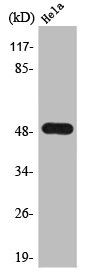
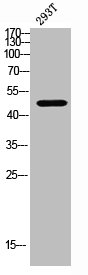
The antibody against CADM1 was raised in rabbit using the Synthesized peptide derived from the C-terminal region of Human TSLC1. as the immunogen. This antibody exists as a non-conjugated isotype IgG. The antibody was affinity-purified from rabbit antiserum by affinity-chromatography using epitope-specific immunogen. This antibody has been validated on WB, IF, ELISA.

ADC-37422A

The antibody against CADM1 was raised in rabbit using the Synthesized peptide derived from the C-terminal region of Human TSLC1. as the immunogen. This antibody exists as a non-conjugated isotype IgG. The antibody was affinity-purified from rabbit antiserum by affinity-chromatography using epitope-specific immunogen. This antibody has been validated on WB, IF, ELISA.

$167.00

Number
Order Exclusive Products Now

Request a Quote
High Purity LevelsPrecision and ReliabilityCustomization Options

Specifications


Cat.No ADC-37422A ClonalityPolyclonal
Host SpeciesRabbitTarget NameCADM1
FormLiquidSpecies ReactivityHuman, Mouse
IsotypeIgGStorage Buffer0.5% BSA and 0.02% sodium azide., Liquid in PBS containing 50% glycerol
Purification MethodThe antibody was affinity-purified from rabbit antiserum by affinity-chromatography using epitope-specific immunogen.ConjugateNon-conjugated
ApplicationELISA, IF, WBStorageUpon receipt

Immunogen Information


Immunogen DescriptionSynthesized peptide derived from the C-terminal region of Human TSLC1.Target SpeciesHuman
Immunogen SequenceComplete sequences for the immunogen, target protein, and peptides are available upon request.Uniprot IDQ9BY67
Background Information
  • Uniprot Id

    Q9BY67

  • Target Species

    Human

  • Target Name

    CADM1

  • Target Full Name

    Cell adhesion molecule 1

  • Target Function

    Mediates homophilic cell-cell adhesion in a Ca(2+)-independent manner. Also mediates heterophilic cell-cell adhesion with CADM3 and NECTIN3 in a Ca(2+)-independent manner. Interaction with CRTAM promotes natural killer (NK) cell cytotoxicity and interferon-gamma (IFN-gamma) secretion by CD8+ cells in vitro as well as NK cell-mediated rejection of tumors expressing CADM1 in vivo. In mast cells, may mediate attachment to and promote communication with nerves. CADM1, together with MITF, is essential for development and survival of mast cells in vivo. By interacting with CRTAM and thus promoting the adhesion between CD8+ T-cells and CD8+ dendritic cells, regulates the retention of activated CD8+ T-cell within the draining lymph node. Required for the intestinal retention of intraepithelial CD4+ CD8+ T-cells and, to a lesser extent, intraepithelial and lamina propria CD8+ T-cells and CD4+ T-cells. Interaction with CRTAM promotes the adhesion to gut-associated CD103+ dendritic cells, which may facilitate the expression of gut-homing and adhesion molecules on T-cells and the conversion of CD4+ T-cells into CD4+ CD8+ T-cells. Acts as a synaptic cell adhesion molecule and plays a role in the formation of dendritic spines and in synapse assembly. May be involved in neuronal migration, axon growth, pathfinding, and fasciculation on the axons of differentiating neurons. May play diverse roles in the spermatogenesis including in the adhesion of spermatocytes and spermatids to Sertoli cells and for their normal differentiation into mature spermatozoa. Acts as a tumor suppressor in non-small-cell lung cancer (NSCLC) cells. May contribute to the less invasive phenotypes of lepidic growth tumor cells.

  • Target Subcellular Location

    Cell membrane; Single-pass type I membrane protein. Cell junction, synapse.

  • Target Protein Families

    Nectin family

  • Target Synonyms

    BL2; Cadm1; CADM1_HUMAN; Cell adhesion molecule 1; DKFZp686F1789; IgSF4; IGSF4A; Immunoglobulin superfamily member 4; MGC149785; MGC51880; NECL-2; NECL2; Nectin like 2; Nectin-like protein 2; RA175; SgIGSF; Spermatogenic immunoglobulin superfamily; ST17; sTSLC 1; Synaptic cell adhesion molecule; SynCAM; SynCAM1; TSLC-1; TSLC1; Tumor suppressor in lung cancer 1

  • Target Background

    Enables signaling receptor binding activity. Involved in several processes, including cell recognition; positive regulation of cytokine production; and susceptibility to natural killer cell mediated cytotoxicity. Located in plasma membrane. Implicated in breast carcinoma and prostate cancer. Biomarker of cervix uteri carcinoma in situ.

Inquire Rabbit anti-Human CADM1 Polyclonal Antibody Now


AbTriva respects your privacy and protects your personal data in accordance with AbTriva. For more information, please see our data protection statement. *

Notification