-
Chinese (Simplified)
-
English
-
German
-
Korean
-
Spanish
Chinese (Simplified)
English
German
Korean
Spanish
Sign up for an account to enjoy easy online shopping and instant order tracking.
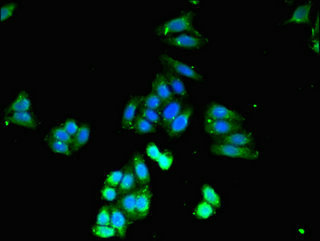
The antibody against CASP4 was raised in rabbit using the Recombinant Human Caspase-4 protein (82-226AA) as the immunogen. This antibody exists as a non-conjugated isotype IgG, purified by protein G with a purity greater than 95%. This antibody has been validated on ELISA, WB, IHC, IF.
$299.00
| Cat.No | ADC-13622A | Clonality | Polyclonal |
|---|---|---|---|
| Host Species | Rabbit | Target Name | CASP4 |
| Form | Liquid | Species Reactivity | Human, Mouse |
| Isotype | IgG | Storage Buffer | 0.01M PBS, 0.03% Proclin 300; Constituents: 50% Glycerol, PH 7.4 |
| Purification Method | >95%, Protein G purified | Conjugate | Non-conjugated |
| Application | ELISA, IF, IHC, WB | Storage | Upon receipt |
| Immunogen Description | Recombinant Human Caspase-4 protein (82-226AA) | Target Species | Human |
|---|---|---|---|
| Immunogen Sequence | Complete sequences for the immunogen, target protein, and peptides are available upon request. | Uniprot ID | P49662 |
Uniprot Id
P49662
Target Species
Human
Target Name
CASP4
Target Full Name
Caspase-4
Target Function
Inflammatory caspase that acts as an essential effector of NLRP3 inflammasome-dependent CASP1 activation and IL1B and IL18 secretion in response to non-canonical activators, such as UVB radiation, cholera enterotoxin subunit B and cytosolic LPS. Thiol protease that cleaves a tetrapeptide after an Asp residue at position P1. Independently of NLRP3 inflammasome and CASP1, promotes pyroptosis, through GSDMD cleavage and activation, followed by IL1A, IL18 and HMGB1 release in response to non-canonical inflammasome activators. Plays a crucial role in the restriction of Salmonella typhimurium replication in colonic epithelial cells during infection: in later stages of the infection, LPS from cytosolic Salmonella triggers CASP4 activation, which catalyzes cleavage of GSDMD, resulting in pyroptosis of infected cells and their extrusion into the gut lumen, as well as in IL18 secretion. Cleavage of GSDMD is not strictly dependent on the consensus cleavage site but depends on an exosite interface on CASP4 that recognizes and binds the Gasdermin-D, C-terminal (GSDMD-CT) part. Pyroptosis limits bacterial replication, while cytokine secretion promotes the recruitment and activation of immune cells and triggers mucosal inflammation. Involved in LPS-induced IL6 secretion; this activity may not require caspase enzymatic activity. Involved in cell death induced by endoplasmic reticulum stress and by treatment with cytotoxic APP peptides found Alzheimer's patient brains. Activated by direct binding to LPS without the need of an upstream sensor. Does not directly process IL1B. During non-canonical inflammasome activation, cuts CGAS and may play a role in the regulation of antiviral innate immune activation.
Target Subcellular Location
Cytoplasm, cytosol. Endoplasmic reticulum membrane; Peripheral membrane protein; Cytoplasmic side. Mitochondrion. Inflammasome. Secreted.
Target Protein Families
Peptidase C14A family
Target Tissue Specificity
Widely expressed, including in keratinocytes and colonic and small intestinal epithelial cells (at protein level). Not detected in brain.
Target Research Area
Cancer
Target Synonyms
Apoptotic cysteine protease Mih1/TX; CASP-4; CASP4; CASP4_HUMAN; Caspase 4 apoptosis related cysteine peptidase; Caspase-4 subunit 2; Caspase4; ICE(rel)-II; ICE(rel)II; ICEREL II; ICH2; Mih1/TX; Protease ICH-2; Protease TX; TX
Target Background
This gene encodes a protein that is a member of the cysteine-aspartic acid protease (caspase) family. Sequential activation of caspases plays a central role in the execution-phase of cell apoptosis. Caspases exist as inactive proenzymes composed of a prodomain and a large and small protease subunit. Activation of caspases requires proteolytic processing at conserved internal aspartic residues to generate a heterodimeric enzyme consisting of the large and small subunits. This caspase is able to cleave and activate its own precursor protein, as well as caspase 1 precursor. When overexpressed, this gene induces cell apoptosis. Alternative splicing results in transcript variants encoding distinct isoforms.
Notification