-
Chinese (Simplified)
-
English
-
German
-
Korean
-
Spanish
Chinese (Simplified)
English
German
Korean
Spanish
Sign up for an account to enjoy easy online shopping and instant order tracking.
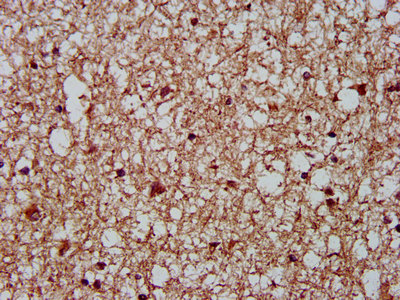
The antibody against CKAP5 was raised in rabbit using the Recombinant Human Cytoskeleton-associated protein 5 protein (1802-2019AA) as the immunogen. This antibody exists as a non-conjugated isotype IgG, purified by protein G with a purity greater than 95%. This antibody has been validated on ELISA, WB, IHC, IF.
$299.00
| Cat.No | ADC-05745A | Clonality | Polyclonal |
|---|---|---|---|
| Host Species | Rabbit | Target Name | CKAP5 |
| Target Synonyms | CKAP5 antibody; KIAA0097Cytoskeleton-associated protein 5 antibody; Colonic and hepatic tumor overexpressed gene protein antibody; Ch-TOG antibody | Form | Liquid |
| Species Reactivity | Human, Rat | Isotype | IgG |
| Storage Buffer | 0.01M PBS, 0.03% Proclin 300; Constituents: 50% Glycerol, PH 7.4 | Purification Method | >95%, Protein G purified |
| Conjugate | Non-conjugated | Application | ELISA, IF, IHC, WB |
| Storage | Upon receipt |
| Immunogen Description | Recombinant Human Cytoskeleton-associated protein 5 protein (1802-2019AA) | Target Species | Human |
|---|---|---|---|
| Immunogen Sequence | Complete sequences for the immunogen, target protein, and peptides are available upon request. | Uniprot ID | Q14008 |
Uniprot Id
Q14008
Target Species
Human
Target Name
CKAP5
Target Full Name
Cytoskeleton-associated protein 5
Target Function
Binds to the plus end of microtubules and regulates microtubule dynamics and microtubule organization. Acts as processive microtubule polymerase. Promotes cytoplasmic microtubule nucleation and elongation. Plays a major role in organizing spindle poles. In spindle formation protects kinetochore microtubules from depolymerization by KIF2C and has an essential role in centrosomal microtubule assembly independently of KIF2C activity. Contributes to centrosome integrity. Acts as component of the TACC3/ch-TOG/clathrin complex proposed to contribute to stabilization of kinetochore fibers of the mitotic spindle by acting as inter-microtubule bridge. The TACC3/ch-TOG/clathrin complex is required for the maintenance of kinetochore fiber tension. Enhances the strength of NDC80 complex-mediated kinetochore-tip microtubule attachments.
Target Subcellular Location
Cytoplasm, cytoskeleton, microtubule organizing center, centrosome. Cytoplasm, cytoskeleton, spindle pole. Cytoplasm, cytoskeleton, spindle. Chromosome, centromere, kinetochore.
Target Protein Families
TOG/XMAP215 family
Target Tissue Specificity
Overexpressed in hepatomas and colonic tumors. Also expressed in skeletal muscle, brain, heart, placenta, lung, liver, kidney and pancreas. Expression is elevated in the brain; highly expressed in the Purkinje cell bodies of the cerebellum.
Target Synonyms
CKAP5; KIAA0097Cytoskeleton-associated protein 5; Colonic and hepatic tumor overexpressed gene protein; Ch-TOG
Target Background
This gene encodes a cytoskeleton-associated protein which belongs to the TOG/XMAP215 family. The N-terminal half of this protein contains a microtubule-binding domain and the C-terminal half contains a KXGS motif for binding tubulin dimers. This protein has two distinct roles in spindle formation; it protects kinetochore microtubules from depolymerization and plays an essential role in centrosomal microtubule assembly. This protein may be necessary for the proper interaction of microtubules with the cell cortex for directional cell movement. It also plays a role in translation of the myelin basic protein (MBP) mRNA by interacting with heterogeneous nuclear ribonucleoprotein (hnRNP) A2, which associates with MBP. Alternatively spliced transcript variants encoding different isoforms have been identified.
Notification