-
Chinese (Simplified)
-
English
-
German
-
Korean
-
Spanish

Chinese (Simplified)
English
German
Korean
Spanish
Sign up for an account to enjoy easy online shopping and instant order tracking.
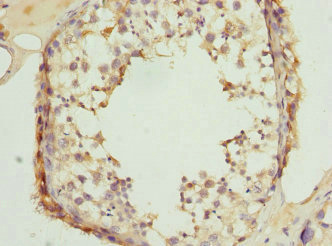
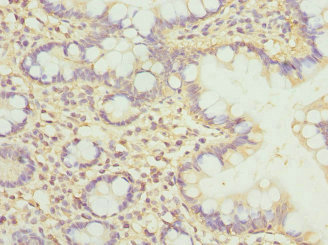
The antibody against CLASP1 was raised in rabbit using the Recombinant Human CLIP-associating protein 1 protein (1389-1538AA) as the immunogen. This antibody exists as a non-conjugated isotype IgG, Antigen affinity purified. This antibody has been validated on ELISA, IHC.
$299.00
| Cat.No | ADC-17303A | Clonality | Polyclonal |
|---|---|---|---|
| Host Species | Rabbit | Target Name | CLASP1 |
| Form | Liquid | Species Reactivity | Human |
| Isotype | IgG | Storage Buffer | 50% Glycerol, PBS with 0.02% sodium azide, pH7.3. |
| Purification Method | Antigen affinity purified | Conjugate | Non-conjugated |
| Application | ELISA, IHC | Storage | Upon receipt |
| Immunogen Description | Recombinant Human CLIP-associating protein 1 protein (1389-1538AA) | Target Species | Human |
|---|---|---|---|
| Immunogen Sequence | Complete sequences for the immunogen, target protein, and peptides are available upon request. | Uniprot ID | Q7Z460 |
Uniprot Id
Q7Z460
Target Species
Human
Target Name
CLASP1
Target Full Name
CLIP-associating protein 1
Target Function
Microtubule plus-end tracking protein that promotes the stabilization of dynamic microtubules. Involved in the nucleation of noncentrosomal microtubules originating from the trans-Golgi network (TGN). Required for the polarization of the cytoplasmic microtubule arrays in migrating cells towards the leading edge of the cell. May act at the cell cortex to enhance the frequency of rescue of depolymerizing microtubules by attaching their plus-ends to cortical platforms composed of ERC1 and PHLDB2. This cortical microtubule stabilizing activity is regulated at least in part by phosphatidylinositol 3-kinase signaling. Also performs a similar stabilizing function at the kinetochore which is essential for the bipolar alignment of chromosomes on the mitotic spindle.
Target Subcellular Location
Cytoplasm, cytoskeleton. Cytoplasm, cytoskeleton, microtubule organizing center, centrosome. Chromosome, centromere, kinetochore. Cytoplasm, cytoskeleton, spindle. Golgi apparatus, trans-Golgi network. Note=Localizes to microtubule plus ends. Localizes to centrosomes, kinetochores and the mitotic spindle from prometaphase. Subsequently localizes to the spindle midzone from anaphase and to the midbody from telophase. In migrating cells localizes to the plus ends of microtubules within the cell body and to the entire microtubule lattice within the lamella. Localizes to the cell cortex and this requires ERC1 and PHLDB2.
Target Protein Families
CLASP family
Target Synonyms
1700030C23Rik; 5730583A19Rik; B130045P17Rik; CLAP1_HUMAN; clasp1; CLIP associating protein 1; CLIP associating protein CLASP1; CLIP-associating protein 1; Cytoplasmic linker associated protein 1; Cytoplasmic linker-associated protein 1; DKFZp686D1968; DKFZp686H2039; FLJ33821; FLJ41222; hOrbit1; KIAA0622; MAST1; MGC131895; mKIAA0622; Multiple asters 1; Multiple asters homolog 1; Protein Orbit homolog 1
Target Background
CLASPs, such as CLASP1, are nonmotor microtubule-associated proteins that interact with CLIPs (e.g., CLIP170; MIM 179838). CLASP1 is involved in the regulation of microtubule dynamics at the kinetochore and throughout the spindle (Maiato et al., 2003 [PubMed 12837247]).
Notification