-
Chinese (Simplified)
-
English
-
German
-
Korean
-
Spanish
Chinese (Simplified)
English
German
Korean
Spanish
Sign up for an account to enjoy easy online shopping and instant order tracking.
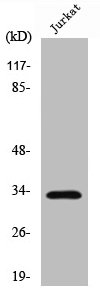
The antibody against CTSA was raised in rabbit using the Synthesized peptide derived from the Internal region of Human Cathepsin A 32k. as the immunogen. This antibody exists as a non-conjugated isotype IgG. The antibody was affinity-purified from rabbit antiserum by affinity-chromatography using epitope-specific immunogen. This antibody has been validated on WB, ELISA.
$167.00
| Cat.No | ADC-39949A | Clonality | Polyclonal |
|---|---|---|---|
| Host Species | Rabbit | Target Name | CTSA |
| Form | Liquid | Species Reactivity | Human, Mouse |
| Isotype | IgG | Storage Buffer | 0.5% BSA and 0.02% sodium azide., Liquid in PBS containing 50% glycerol |
| Purification Method | The antibody was affinity-purified from rabbit antiserum by affinity-chromatography using epitope-specific immunogen. | Conjugate | Non-conjugated |
| Application | ELISA, WB | Storage | Upon receipt |
| Immunogen Description | Synthesized peptide derived from the Internal region of Human Cathepsin A 32k. | Target Species | Human |
|---|---|---|---|
| Immunogen Sequence | Complete sequences for the immunogen, target protein, and peptides are available upon request. | Uniprot ID | P10619 |
Uniprot Id
P10619
Target Species
Human
Target Name
CTSA
Target Full Name
Lysosomal protective protein
Target Function
Protective protein appears to be essential for both the activity of beta-galactosidase and neuraminidase, it associates with these enzymes and exerts a protective function necessary for their stability and activity. This protein is also a carboxypeptidase and can deamidate tachykinins.
Target Involvement
Galactosialidosis (GSL)
Target Subcellular Location
Lysosome.
Target Protein Families
Peptidase S10 family
Target Synonyms
beta galactosidase 2; BETA GALACTOSIDASE PROTECTIVE PROTEIN; beta-galactosidase 2; beta-galactosidase protective protein; betagalactosidase 2; Carboxypeptidase C; Carboxypeptidase L; carboxypeptidase Y-like kininase; Cathepsin A; Ctsa; deamidase; EC 3.4.16.5; Glactosialidosis; GLB2; Goldberg Syndrome; GSL; lysosomal carboxypeptidase A; Lysosomal protective protein 20 kDa chain; Lysosomal protective protein; Lysosomal protective protein deficiency; NEURAMINIDASE BETA GALACTOSIDASE EXPRESSION; NGBE; Neuraminidase deficiency with beta-galactosidase deficiency; NGBE; OTTHUMP00000031778; OTTHUMP00000031781 ; PPCA; PPCA deficiency; PPGB; PPGB_HUMAN; Protective protein cathepsin A; Protective protein for beta galactosidase ; Protective protein for beta-galactosidase; Protective protein/cathepsin A deficiency; urinary kininase
Target Background
This gene encodes a member of the peptidase S10 family of serine carboxypeptidases. Alternative splicing results in multiple transcript variants, at least one of which encodes a preproprotein that is proteolytically processed to generate two chains that comprise the heterodimeric active enzyme. This enzyme possesses deamidase, esterase and carboxypeptidase activities and acts as a scaffold in the lysosomal multienzyme complex. Mutations in this gene are associated with galactosialidosis.
Notification