-
Chinese (Simplified)
-
English
-
German
-
Korean
-
Spanish
Chinese (Simplified)
English
German
Korean
Spanish
Sign up for an account to enjoy easy online shopping and instant order tracking.
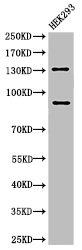
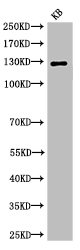
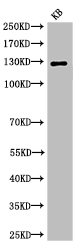
The antibody against NOTCH2 was raised in rabbit using the Synthesized peptide derived from the Internal region of Human Notch 2. as the immunogen. This antibody exists as a non-conjugated isotype IgG. The antibody was affinity-purified from rabbit antiserum by affinity-chromatography using epitope-specific immunogen. This antibody has been validated on WB, IHC, ELISA.
$167.00
| Cat.No | ADC-39922A | Clonality | Polyclonal |
|---|---|---|---|
| Host Species | Rabbit | Target Name | NOTCH2 |
| Form | Liquid | Species Reactivity | Human, Mouse, Rat |
| Isotype | IgG | Storage Buffer | 0.5% BSA and 0.02% sodium azide., Liquid in PBS containing 50% glycerol |
| Purification Method | The antibody was affinity-purified from rabbit antiserum by affinity-chromatography using epitope-specific immunogen. | Conjugate | Non-conjugated |
| Application | ELISA, IHC, WB | Storage | Upon receipt |
| Immunogen Description | Synthesized peptide derived from the Internal region of Human Notch 2. | Target Species | Human |
|---|---|---|---|
| Immunogen Sequence | Complete sequences for the immunogen, target protein, and peptides are available upon request. | Uniprot ID | Q04721 |
Uniprot Id
Q04721
Target Species
Human
Target Name
NOTCH2
Target Full Name
Neurogenic locus notch homolog protein 2
Target Function
Functions as a receptor for membrane-bound ligands Jagged-1 (JAG1), Jagged-2 (JAG2) and Delta-1 (DLL1) to regulate cell-fate determination. Upon ligand activation through the released notch intracellular domain (NICD) it forms a transcriptional activator complex with RBPJ/RBPSUH and activates genes of the enhancer of split locus. Affects the implementation of differentiation, proliferation and apoptotic programs. Involved in bone remodeling and homeostasis. In collaboration with RELA/p65 enhances NFATc1 promoter activity and positively regulates RANKL-induced osteoclast differentiation. Positively regulates self-renewal of liver cancer cells.
Target Involvement
Alagille syndrome 2 (ALGS2); Hajdu-Cheney syndrome (HJCYS)
Target Subcellular Location
[Notch 2 extracellular truncation]: Cell membrane; Single-pass type I membrane protein.; [Notch 2 intracellular domain]: Nucleus. Cytoplasm.
Target Protein Families
NOTCH family
Target Tissue Specificity
Expressed in the brain, heart, kidney, lung, skeletal muscle and liver. Ubiquitously expressed in the embryo.
Target Synonyms
AGS2; hN2; Motch B; N2; N2ECD; N2ICD; neurogenic locus notch homolog protein 2; NOTC2_HUMAN; Notch 2; Notch 2 intracellular domain; Notch Drosophila homolog 2; Notch homolog 2; Notch homolog 2 Drosophila; Notch2
Target Background
This gene encodes a member of the Notch family. Members of this Type 1 transmembrane protein family share structural characteristics including an extracellular domain consisting of multiple epidermal growth factor-like (EGF) repeats, and an intracellular domain consisting of multiple, different domain types. Notch family members play a role in a variety of developmental processes by controlling cell fate decisions. The Notch signaling network is an evolutionarily conserved intercellular signaling pathway which regulates interactions between physically adjacent cells. In Drosophilia, notch interaction with its cell-bound ligands (delta, serrate) establishes an intercellular signaling pathway that plays a key role in development. Homologues of the notch-ligands have also been identified in human, but precise interactions between these ligands and the human notch homologues remain to be determined. This protein is cleaved in the trans-Golgi network, and presented on the cell surface as a heterodimer. This protein functions as a receptor for membrane bound ligands, and may play a role in vascular, renal and hepatic development. Two transcript variants encoding different isoforms have been found for this gene.
Notification