• Contact info@abtriva.com for inquiries and orders.
  • Chinese (Simplified)

  • English

  • German

  • Korean

  • Spanish

United States (English / $ USD)

Rabbit anti-Human CLEC7A Polyclonal Antibody

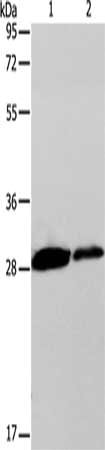
The antibody against CLEC7A was raised in rabbit using the Fusion protein of Human CLEC7A as the immunogen. This antibody exists as a non-conjugated isotype IgG, Antigen affinity purified. This antibody has been validated on ELISA, WB, IHC.

ADC-32158A

The antibody against CLEC7A was raised in rabbit using the Fusion protein of Human CLEC7A as the immunogen. This antibody exists as a non-conjugated isotype IgG, Antigen affinity purified. This antibody has been validated on ELISA, WB, IHC.

$299.00

Number
Order Exclusive Products Now

Request a Quote
High Purity LevelsPrecision and ReliabilityCustomization Options

Specifications


Cat.No ADC-32158A ClonalityPolyclonal
Host SpeciesRabbitTarget NameCLEC7A
FormLiquidSpecies ReactivityHuman, Mouse
IsotypeIgGStorage Buffer0.05% NaN3, 40% Glycerol., pH7.4 PBS
Purification MethodAntigen affinity purifiedConjugateNon-conjugated
ApplicationELISA, IHC, WBStorageUpon receipt

Immunogen Information


Immunogen DescriptionFusion protein of Human CLEC7ATarget SpeciesHuman
Immunogen SequenceComplete sequences for the immunogen, target protein, and peptides are available upon request.Uniprot IDQ9BXN2
Background Information
  • Uniprot Id

    Q9BXN2

  • Target Species

    Human

  • Target Name

    CLEC7A

  • Target Full Name

    C-type lectin domain family 7 member A

  • Target Function

    Lectin that functions as pattern recognizing receptor (PRR) specific for beta-1,3-linked and beta-1,6-linked glucans, which constitute cell wall constituents from pathogenic bacteria and fungi. Necessary for the TLR2-mediated inflammatory response and activation of NF-kappa-B: upon beta-glucan binding, recruits SYK via its ITAM motif and promotes a signaling cascade that activates some CARD domain-BCL10-MALT1 (CBM) signalosomes, leading to the activation of NF-kappa-B and MAP kinase p38 (MAPK11, MAPK12, MAPK13 and/or MAPK14) pathways which stimulate expression of genes encoding pro-inflammatory cytokines and chemokines. Enhances cytokine production in macrophages and dendritic cells. Mediates production of reactive oxygen species in the cell. Mediates phagocytosis of C.albicans conidia. Binds T-cells in a way that does not involve their surface glycans and plays a role in T-cell activation. Stimulates T-cell proliferation. Induces phosphorylation of SCIMP after binding beta-glucans.

  • Target Involvement

    Candidiasis, familial, 4 (CANDF4)

  • Target Subcellular Location

    Cell membrane; Single-pass type II membrane protein.; [Isoform 5]: Cytoplasm.; [Isoform 6]: Cytoplasm.; [Isoform 7]: Cytoplasm.

  • Target Tissue Specificity

    Highly expressed in peripheral blood leukocytes and dendritic cells. Detected in spleen, bone marrow, lung, muscle, stomach and placenta.

  • Target Synonyms

    Beta GR; Beta-glucan receptor; BGR; C type calcium dependent carbohydrate recognition domain lectin superfamily member 12; C type lectin domain family 7 member a; C-type lectin domain family 7 member A; C-type lectin superfamily member 12; CANDF4; CLC7A_HUMAN; CLEC7A; CLEC7A protein; Clecsf12; DC-associated C-type lectin 1; Dectin 1; DECTIN 1 receptor; Dectin-1; Dectin1; Dendritic cell associated C type lectin 1; Dendritic cell-associated C-type lectin 1; Lectin like receptor 1; Putative transmembrane protein dectin 1

  • Target Background

    This gene encodes a member of the C-type lectin/C-type lectin-like domain (CTL/CTLD) superfamily. The encoded glycoprotein is a small type II membrane receptor with an extracellular C-type lectin-like domain fold and a cytoplasmic domain with an immunoreceptor tyrosine-based activation motif. It functions as a pattern-recognition receptor that recognizes a variety of beta-1, 3-linked and beta-1, 6-linked glucans from fungi and plants, and in this way plays a role in innate immune response. Alternate transcriptional splice variants, encoding different isoforms, have been characterized. This gene is closely linked to other CTL/CTLD superfamily members on chromosome 12p13 in the natural killer gene complex region.

Inquire Rabbit anti-Human CLEC7A Polyclonal Antibody Now


AbTriva respects your privacy and protects your personal data in accordance with AbTriva. For more information, please see our data protection statement. *

Notification