-
Chinese (Simplified)
-
English
-
German
-
Korean
-
Spanish

Chinese (Simplified)
English
German
Korean
Spanish
Sign up for an account to enjoy easy online shopping and instant order tracking.
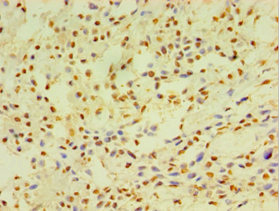
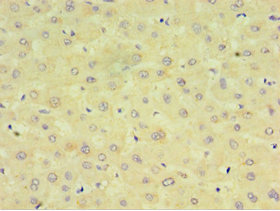
The antibody against CYP2J2 was raised in rabbit using the Recombinant Human Cytochrome P450 2J2 protein (328-502AA) as the immunogen. This antibody exists as a non-conjugated isotype IgG, Antigen affinity purified. This antibody has been validated on ELISA, WB, IHC.
$299.00
| Cat.No | ADC-40261A | Clonality | Polyclonal |
|---|---|---|---|
| Host Species | Rabbit | Target Name | CYP2J2 |
| Form | Liquid | Species Reactivity | Human, Mouse, Rat |
| Isotype | IgG | Storage Buffer | 50% Glycerol, PBS with 0.02% sodium azide, pH7.3. |
| Purification Method | Antigen affinity purified | Conjugate | Non-conjugated |
| Application | ELISA, IHC, WB | Storage | Upon receipt |
| Immunogen Description | Recombinant Human Cytochrome P450 2J2 protein (328-502AA) | Target Species | Human |
|---|---|---|---|
| Immunogen Sequence | Complete sequences for the immunogen, target protein, and peptides are available upon request. | Uniprot ID | P51589 |
Uniprot Id
P51589
Target Species
Human
Target Name
CYP2J2
Target Full Name
Cytochrome P450 2J2
Target Function
A cytochrome P450 monooxygenase involved in the metabolism of polyunsaturated fatty acids (PUFA) in the cardiovascular system. Mechanistically, uses molecular oxygen inserting one oxygen atom into a substrate, and reducing the second into a water molecule, with two electrons provided by NADPH via cytochrome P450 reductase (NADPH--hemoprotein reductase). Catalyzes the epoxidation of double bonds of PUFA. Converts arachidonic acid to four regioisomeric epoxyeicosatrienoic acids (EpETrE), likely playing a major role in the epoxidation of endogenous cardiac arachidonic acid pools. In endothelial cells, participates in eicosanoids metabolism by converting hydroperoxide species into hydroxy epoxy metabolites. In combination with 15-lipoxygenase metabolizes arachidonic acid and converts hydroperoxyicosatetraenoates (HpETEs) into hydroxy epoxy eicosatrienoates (HEETs), which are precursors of vasodilatory trihydroxyicosatrienoic acids (THETAs). This hydroperoxide isomerase activity is NADPH- and O2-independent. Catalyzes the monooxygenation of a various xenobiotics, such as danazol, amiodarone, terfenadine, astemizole, thioridazine, tamoxifen, cyclosporin A and nabumetone. Catalyzes hydroxylation of the anthelmintics albendazole and fenbendazole. Catalyzes the sulfoxidation of fenbedazole.
Target Subcellular Location
Endoplasmic reticulum membrane; Peripheral membrane protein. Microsome membrane; Peripheral membrane protein.
Target Protein Families
Cytochrome P450 family
Target Tissue Specificity
Highly expressed in heart, present at lower levels in liver, kidney and skeletal muscle (at protein level).
Target Research Area
Cardiovascular
Target Synonyms
Arachidonic acid epoxygenase; CP2J2_HUMAN; CPJ2; CYP2J2; CYPIIJ2; Cytochrome P450 2J2; Cytochrome P450 family 2 subfamily J polypeptide 2; Cytochrome P450 subfamily IIJ (arachidonic acid epoxygenase) polypeptide 2; Cytochrome P450 subfamily IIJ polypeptide 2; Flavoprotein linked monooxygenase; Microsomal monooxygenase; OTTHUMP00000010550
Target Background
This gene encodes a member of the cytochrome P450 superfamily of enzymes. The cytochrome P450 proteins are monooxygenases which catalyze many reactions involved in drug metabolism and synthesis of cholesterol, steroids and other lipids. This protein localizes to the endoplasmic reticulum and is thought to be the predominant enzyme responsible for epoxidation of endogenous arachidonic acid in cardiac tissue. Multiple transcript variants have been found for this gene.
Notification