-
Chinese (Simplified)
-
English
-
German
-
Korean
-
Spanish

Chinese (Simplified)
English
German
Korean
Spanish
Sign up for an account to enjoy easy online shopping and instant order tracking.
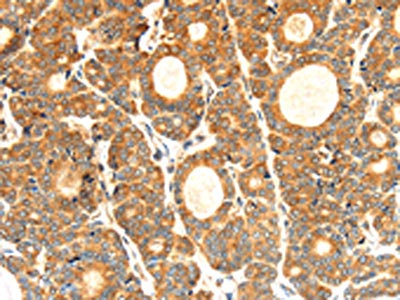
The antibody against CYP7A1 was raised in rabbit using the Synthetic peptide of Human CYP7A1 as the immunogen. This antibody exists as a non-conjugated isotype IgG, Antigen affinity purified. This antibody has been validated on ELISA, WB, IHC.
$299.00
| Cat.No | ADC-26362A | Clonality | Polyclonal |
|---|---|---|---|
| Host Species | Rabbit | Target Name | CYP7A1 |
| Form | Liquid | Species Reactivity | Human, Mouse |
| Isotype | IgG | Storage Buffer | 0.05% NaN3, 40% Glycerol., pH7.4 PBS |
| Purification Method | Antigen affinity purified | Conjugate | Non-conjugated |
| Application | ELISA, IHC, WB | Storage | Upon receipt |
| Immunogen Description | Synthetic peptide of Human CYP7A1 | Target Species | Human |
|---|---|---|---|
| Immunogen Sequence | Complete sequences for the immunogen, target protein, and peptides are available upon request. | Uniprot ID | P22680 |
Uniprot Id
P22680
Target Species
Human
Target Name
CYP7A1
Target Full Name
Cytochrome P450 7A1
Target Function
A cytochrome P450 monooxygenase involved in the metabolism of endogenous cholesterol and its oxygenated derivatives (oxysterols). Mechanistically, uses molecular oxygen inserting one oxygen atom into a substrate, and reducing the second into a water molecule, with two electrons provided by NADPH via cytochrome P450 reductase (CPR; NADPH-ferrihemoprotein reductase). Functions as a critical regulatory enzyme of bile acid biosynthesis and cholesterol homeostasis. Catalyzes the hydroxylation of carbon hydrogen bond at 7-alpha position of cholesterol, a rate-limiting step in cholesterol catabolism and bile acid biosynthesis. 7-alpha hydroxylates several oxysterols, including 4beta-hydroxycholesterol and 24-hydroxycholesterol. Catalyzes the oxidation of the 7,8 double bond of 7-dehydrocholesterol and lathosterol with direct and predominant formation of the 7-keto derivatives.
Target Subcellular Location
Endoplasmic reticulum membrane; Single-pass membrane protein. Microsome membrane; Single-pass membrane protein.
Target Protein Families
Cytochrome P450 family
Target Tissue Specificity
Detected in liver.
Target Research Area
Cancer
Target Synonyms
Cholesterol 7 alpha hydroxylase; Cholesterol 7 alpha monooxygenase; Cholesterol 7-alpha-hydroxylase; Cholesterol 7-alpha-monooxygenase; CP7A; CP7A1_HUMAN; CYP 7; CYP7; CYP7A1; CYPVII; Cytochrome P450 7A1; Cytochrome P450; family 7; subfamily A; polypeptide 1; Cytochrome P450; subfamily VIIA (cholesterol 7 alpha monooxygenase),; Cytochrome P450; subfamily VIIA (cholesterol 7 alpha-monooxygenase); polypeptide 1; MGC126826; MGC138389
Target Background
This gene encodes a member of the cytochrome P450 superfamily of enzymes. The cytochrome P450 proteins are monooxygenases which catalyze many reactions involved in drug metabolism and synthesis of cholesterol, steroids and other lipids. This endoplasmic reticulum membrane protein catalyzes the first reaction in the cholesterol catabolic pathway in the liver, which converts cholesterol to bile acids. This reaction is the rate limiting step and the major site of regulation of bile acid synthesis, which is the primary mechanism for the removal of cholesterol from the body. Polymorphisms in the promoter of this gene are associated with defects in bile acid synthesis.
Notification