• Contact info@abtriva.com for inquiries and orders.
  • Chinese (Simplified)

  • English

  • German

  • Korean

  • Spanish

United States (English / $ USD)

Rabbit anti-Human DKC1 Polyclonal Antibody

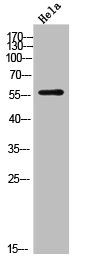
The antibody against DKC1 was raised in rabbit using the Synthesized peptide derived from the Internal region of Human Dyskerin. as the immunogen. This antibody exists as a non-conjugated isotype IgG. The antibody was affinity-purified from rabbit antiserum by affinity-chromatography using epitope-specific immunogen. This antibody has been validated on WB, IHC, IF, ELISA.

ADC-36123A

The antibody against DKC1 was raised in rabbit using the Synthesized peptide derived from the Internal region of Human Dyskerin. as the immunogen. This antibody exists as a non-conjugated isotype IgG. The antibody was affinity-purified from rabbit antiserum by affinity-chromatography using epitope-specific immunogen. This antibody has been validated on WB, IHC, IF, ELISA.

$167.00

Number
Order Exclusive Products Now

Request a Quote
High Purity LevelsPrecision and ReliabilityCustomization Options

Specifications


Cat.No ADC-36123A ClonalityPolyclonal
Host SpeciesRabbitTarget NameDKC1
FormLiquidSpecies ReactivityHuman, Mouse, Rat
IsotypeIgGStorage Buffer0.5% BSA and 0.02% sodium azide., Liquid in PBS containing 50% glycerol
Purification MethodThe antibody was affinity-purified from rabbit antiserum by affinity-chromatography using epitope-specific immunogen.ConjugateNon-conjugated
ApplicationELISA, IF, IHC, WBStorageUpon receipt

Immunogen Information


Immunogen DescriptionSynthesized peptide derived from the Internal region of Human Dyskerin.Target SpeciesHuman
Immunogen SequenceComplete sequences for the immunogen, target protein, and peptides are available upon request.Uniprot IDO60832
Background Information
  • Uniprot Id

    O60832

  • Target Species

    Human

  • Target Name

    DKC1

  • Target Full Name

    H/ACA ribonucleoprotein complex subunit DKC1

  • Target Function

    Catalytic subunit of H/ACA small nucleolar ribonucleoprotein (H/ACA snoRNP) complex, which catalyzes pseudouridylation of rRNA. This involves the isomerization of uridine such that the ribose is subsequently attached to C5, instead of the normal N1. Each rRNA can contain up to 100 pseudouridine ('psi') residues, which may serve to stabilize the conformation of rRNAs. Required for ribosome biogenesis and telomere maintenance. Also required for correct processing or intranuclear trafficking of TERC, the RNA component of the telomerase reverse transcriptase (TERT) holoenzyme.; Promotes cell to cell and cell to substratum adhesion, increases the cell proliferation rate and leads to cytokeratin hyper-expression.

  • Target Involvement

    Dyskeratosis congenita, X-linked (DKCX); Hoyeraal-Hreidarsson syndrome (HHS)

  • Target Subcellular Location

    [Isoform 1]: Nucleus, nucleolus. Nucleus, Cajal body.; [Isoform 3]: Cytoplasm.

  • Target Protein Families

    Pseudouridine synthase TruB family

  • Target Tissue Specificity

    Ubiquitously expressed.

  • Target Synonyms

    CBF5; CBF5 homolog; Cbf5p homolog; DKC 1; DKC; Dkc1; DKC1_HUMAN; DKCX; Dyskeratosis congenita 1; Dyskeratosis congenita 1 dyskerin; Dyskerin; H/ACA ribonucleoprotein complex subunit 4; NAP 57; NAP57; NOLA 4; NOLA4; Nopp140 associated protein of 57 kDa; Nopp140-associated protein of 57 kDa; Nucleolar protein family A member 4; Nucleolar protein NAP57; snoRNP protein DKC1; XAP 101; XAP101

  • Target Background

    This gene functions in two distinct complexes. It plays an active role in telomerase stabilization and maintenance, as well as recognition of snoRNAs containing H/ACA sequences which provides stability during biogenesis and assembly into H/ACA small nucleolar RNA ribonucleoproteins (snoRNPs). This gene is highly conserved and widely expressed, and may play additional roles in nucleo-cytoplasmic shuttling, DNA damage response, and cell adhesion. Mutations have been associated with X-linked dyskeratosis congenita. Alternative splicing results in multiple transcript variants.

Inquire Rabbit anti-Human DKC1 Polyclonal Antibody Now


AbTriva respects your privacy and protects your personal data in accordance with AbTriva. For more information, please see our data protection statement. *

Notification