• Contact info@abtriva.com for inquiries and orders.
  • Chinese (Simplified)

  • English

  • German

  • Korean

  • Spanish

United States (English / $ USD)

Rabbit anti-Human EED Polyclonal Antibody

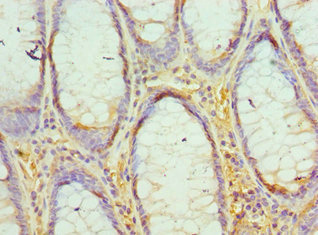
The antibody against EED was raised in rabbit using the Recombinant Human Polycomb protein EED protein (1-300AA) as the immunogen. This antibody exists as a non-conjugated isotype IgG, Antigen affinity purified. This antibody has been validated on ELISA, WB, IHC.

ADC-44964A

The antibody against EED was raised in rabbit using the Recombinant Human Polycomb protein EED protein (1-300AA) as the immunogen. This antibody exists as a non-conjugated isotype IgG, Antigen affinity purified. This antibody has been validated on ELISA, WB, IHC.

$299.00

Number
Order Exclusive Products Now

Request a Quote
High Purity LevelsPrecision and ReliabilityCustomization Options

Specifications


Cat.No ADC-44964A ClonalityPolyclonal
Host SpeciesRabbitTarget NameEED
FormLiquidSpecies ReactivityHuman
IsotypeIgGStorage Buffer50% Glycerol, PBS with 0.02% sodium azide, pH7.3.
Purification MethodAntigen affinity purifiedConjugateNon-conjugated
ApplicationELISA, IHC, WBStorageUpon receipt

Immunogen Information


Immunogen DescriptionRecombinant Human Polycomb protein EED protein (1-300AA)Target SpeciesHuman
Immunogen SequenceComplete sequences for the immunogen, target protein, and peptides are available upon request.Uniprot IDO75530
Background Information
  • Uniprot Id

    O75530

  • Target Species

    Human

  • Target Name

    EED

  • Target Full Name

    Polycomb protein EED

  • Target Function

    Polycomb group (PcG) protein. Component of the PRC2/EED-EZH2 complex, which methylates 'Lys-9' and 'Lys-27' of histone H3, leading to transcriptional repression of the affected target gene. Also recognizes 'Lys-26' trimethylated histone H1 with the effect of inhibiting PRC2 complex methyltransferase activity on nucleosomal histone H3 'Lys-27', whereas H3 'Lys-27' recognition has the opposite effect, enabling the propagation of this repressive mark. The PRC2/EED-EZH2 complex may also serve as a recruiting platform for DNA methyltransferases, thereby linking two epigenetic repression systems. Genes repressed by the PRC2/EED-EZH2 complex include HOXC8, HOXA9, MYT1 and CDKN2A.

  • Target Involvement

    Cohen-Gibson syndrome (COGIS)

  • Target Subcellular Location

    Nucleus. Chromosome. Note=Transiently colocalizes with XIST at inactive X chromosomes.

  • Target Protein Families

    WD repeat ESC family

  • Target Tissue Specificity

    Expressed in brain, colon, heart, kidney, liver, lung, muscle, ovary, peripheral blood leukocytes, pancreas, placenta, prostate, spleen, small intestine, testis, thymus and uterus. Appears to be overexpressed in breast and colon cancer.

  • Target Synonyms

    eed; EED protein; EED; mouse; homolog of; EED_HUMAN; Embryonic ectoderm development; Embryonic ectoderm development isoform a; Embryonic ECTODERM development protein homolog; Embryonic ectoderm development protein; mouse; homolog of; hEED; OTTHUMP00000235483; OTTHUMP00000235484; OTTHUMP00000235485; Polycomb protein eed; WAIT 1; WAIT-1; WAIT1; WD protein associating with integrin cytoplasmic tails 1

  • Target Background

    This gene encodes a member of the Polycomb-group (PcG) family. PcG family members form multimeric protein complexes, which are involved in maintaining the transcriptional repressive state of genes over successive cell generations. This protein interacts with enhancer of zeste 2, the cytoplasmic tail of integrin beta7, immunodeficiency virus type 1 (HIV-1) MA protein, and histone deacetylase proteins. This protein mediates repression of gene activity through histone deacetylation, and may act as a specific regulator of integrin function. Two transcript variants encoding distinct isoforms have been identified for this gene.

Inquire Rabbit anti-Human EED Polyclonal Antibody Now


AbTriva respects your privacy and protects your personal data in accordance with AbTriva. For more information, please see our data protection statement. *

Notification