• Contact info@abtriva.com for inquiries and orders.
  • Chinese (Simplified)

  • English

  • German

  • Korean

  • Spanish

United States (English / $ USD)

Rabbit anti-Human F11R Polyclonal Antibody

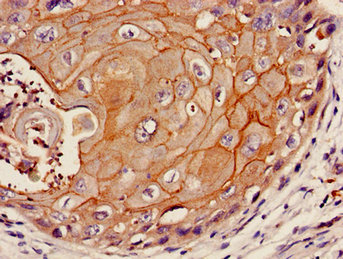
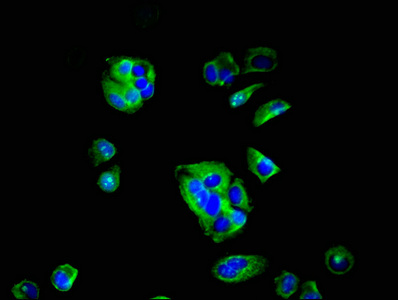
The antibody against F11R was raised in rabbit using the Recombinant Human Junctional adhesion molecule A protein (31-224AA) as the immunogen. This antibody exists as a non-conjugated isotype IgG, purified by protein G with a purity greater than 95%. This antibody has been validated on ELISA, IHC, IF.

ADC-09482A

The antibody against F11R was raised in rabbit using the Recombinant Human Junctional adhesion molecule A protein (31-224AA) as the immunogen. This antibody exists as a non-conjugated isotype IgG, purified by protein G with a purity greater than 95%. This antibody has been validated on ELISA, IHC, IF.

$299.00

Number
Order Exclusive Products Now

Request a Quote
High Purity LevelsPrecision and ReliabilityCustomization Options

Specifications


Cat.No ADC-09482A ClonalityPolyclonal
Host SpeciesRabbitTarget NameF11R
FormLiquidSpecies ReactivityHuman
IsotypeIgGStorage Buffer0.01M PBS, 0.03% Proclin 300; Constituents: 50% Glycerol, PH 7.4
Purification Method>95%, Protein G purifiedConjugateNon-conjugated
ApplicationELISA, IF, IHCStorageUpon receipt

Immunogen Information


Immunogen DescriptionRecombinant Human Junctional adhesion molecule A protein (31-224AA)Target SpeciesHuman
Immunogen SequenceComplete sequences for the immunogen, target protein, and peptides are available upon request.Uniprot IDQ9Y624
Background Information
  • Uniprot Id

    Q9Y624

  • Target Species

    Human

  • Target Name

    F11R

  • Target Full Name

    Junctional adhesion molecule A

  • Target Function

    Seems to play a role in epithelial tight junction formation. Appears early in primordial forms of cell junctions and recruits PARD3. The association of the PARD6-PARD3 complex may prevent the interaction of PARD3 with JAM1, thereby preventing tight junction assembly. Plays a role in regulating monocyte transmigration involved in integrity of epithelial barrier. Ligand for integrin alpha-L/beta-2 involved in memory T-cell and neutrophil transmigration. Involved in platelet activation.; (Microbial infection) Acts as a receptor for Mammalian reovirus sigma-1.; (Microbial infection) Acts as a receptor for Human Rotavirus strain Wa.

  • Target Subcellular Location

    Cell junction, tight junction. Cell membrane; Single-pass type I membrane protein.

  • Target Protein Families

    Immunoglobulin superfamily

  • Target Tissue Specificity

    Expressed in endothelium, epithelium and leukocytes (at protein level).

  • Target Synonyms

    CD 321; CD321; CD321 antigen; ESTM33; F11 receptor; F11R; JAM 1; JAM A; JAM; JAM-1; JAM-A; JAM1; JAM1_HUMAN; JAMA; JCAM; Jcam1; Junction adhesion molecule 1; Junction adhesion molecule; mouse; homolog of; Junctional adhesion molecule 1; Junctional adhesion molecule A; KAT; Ly106; PAM 1; PAM-1; PAM1; Platelet adhesion molecule 1; Platelet adhesion molecule; Platelet F11 receptor; PRO301; UNQ264

  • Target Background

    Tight junctions represent one mode of cell-to-cell adhesion in epithelial or endothelial cell sheets, forming continuous seals around cells and serving as a physical barrier to prevent solutes and water from passing freely through the paracellular space. The protein encoded by this immunoglobulin superfamily gene member is an important regulator of tight junction assembly in epithelia. In addition, the encoded protein can act as (1) a receptor for reovirus, (2) a ligand for the integrin LFA1, involved in leukocyte transmigration, and (3) a platelet receptor. Multiple 5' alternatively spliced variants, encoding the same protein, have been identified but their biological validity has not been established.

Inquire Rabbit anti-Human F11R Polyclonal Antibody Now


AbTriva respects your privacy and protects your personal data in accordance with AbTriva. For more information, please see our data protection statement. *

Notification