• Contact info@abtriva.com for inquiries and orders.
  • Chinese (Simplified)

  • English

  • German

  • Korean

  • Spanish

United States (English / $ USD)

Rabbit anti-Human FEN1 Polyclonal Antibody

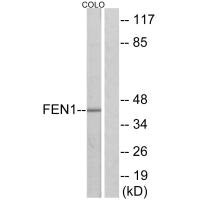
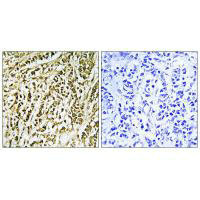
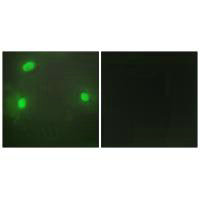
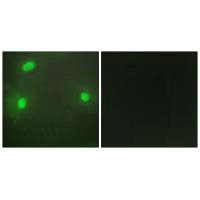
The antibody against FEN1 was raised in rabbit using the Synthesized peptide derived from internal of Human FEN1. as the immunogen. The antibody was affinity-purified from rabbit antiserum by affinity-chromatography using epitope-specific immunogen. This antibody has been validated on ELISA, WB, IHC, IF.

ADC-42071A

The antibody against FEN1 was raised in rabbit using the Synthesized peptide derived from internal of Human FEN1. as the immunogen. The antibody was affinity-purified from rabbit antiserum by affinity-chromatography using epitope-specific immunogen. This antibody has been validated on ELISA, WB, IHC, IF.

$297.00

Number
Order Exclusive Products Now

Request a Quote
High Purity LevelsPrecision and ReliabilityCustomization Options

Specifications


Cat.No ADC-42071A ClonalityPolyclonal
Host SpeciesRabbitTarget NameFEN1
FormLiquidSpecies ReactivityHuman, Mouse, Rat
Storage BufferPH 7.4, 0.02% sodium azide and 50% glycerol., 150mM NaCl, Rabbit IgG in phosphate buffered saline (without Mg2+ and Ca2+)Purification MethodThe antibody was affinity-purified from rabbit antiserum by affinity-chromatography using epitope-specific immunogen.
ApplicationELISA, IF, IHC, WBStorageUpon receipt

Immunogen Information


Immunogen DescriptionSynthesized peptide derived from internal of Human FEN1.Target SpeciesHuman
Immunogen SequenceComplete sequences for the immunogen, target protein, and peptides are available upon request.Uniprot IDP39748
Background Information
  • Uniprot Id

    P39748

  • Target Species

    Human

  • Target Name

    FEN1

  • Target Full Name

    Flap endonuclease 1

  • Target Function

    Structure-specific nuclease with 5'-flap endonuclease and 5'-3' exonuclease activities involved in DNA replication and repair. During DNA replication, cleaves the 5'-overhanging flap structure that is generated by displacement synthesis when DNA polymerase encounters the 5'-end of a downstream Okazaki fragment. It enters the flap from the 5'-end and then tracks to cleave the flap base, leaving a nick for ligation. Also involved in the long patch base excision repair (LP-BER) pathway, by cleaving within the apurinic/apyrimidinic (AP) site-terminated flap. Acts as a genome stabilization factor that prevents flaps from equilibrating into structurs that lead to duplications and deletions. Also possesses 5'-3' exonuclease activity on nicked or gapped double-stranded DNA, and exhibits RNase H activity. Also involved in replication and repair of rDNA and in repairing mitochondrial DNA.

  • Target Subcellular Location

    [Isoform 1]: Nucleus, nucleolus. Nucleus, nucleoplasm. Note=Resides mostly in the nucleoli and relocalizes to the nucleoplasm upon DNA damage.; [Isoform FENMIT]: Mitochondrion.

  • Target Protein Families

    XPG/RAD2 endonuclease family, FEN1 subfamily

  • Target Research Area

    Epigenetics and Nuclear Signaling

  • Target Synonyms

    DNase IV; FEN-1; FEN1; FEN1_HUMAN; Flap endonuclease 1; Flap structure specific endonuclease 1; Flap structure-specific endonuclease 1; hFEN-1; hFEN1; Maturation factor 1; MF1; Rad2

  • Target Background

    The protein encoded by this gene removes 5' overhanging flaps in DNA repair and processes the 5' ends of Okazaki fragments in lagging strand DNA synthesis. Direct physical interaction between this protein and AP endonuclease 1 during long-patch base excision repair provides coordinated loading of the proteins onto the substrate, thus passing the substrate from one enzyme to another. The protein is a member of the XPG/RAD2 endonuclease family and is one of ten proteins essential for cell-free DNA replication. DNA secondary structure can inhibit flap processing at certain trinucleotide repeats in a length-dependent manner by concealing the 5' end of the flap that is necessary for both binding and cleavage by the protein encoded by this gene. Therefore, secondary structure can deter the protective function of this protein, leading to site-specific trinucleotide expansions.

Inquire Rabbit anti-Human FEN1 Polyclonal Antibody Now


AbTriva respects your privacy and protects your personal data in accordance with AbTriva. For more information, please see our data protection statement. *

Notification