• Contact info@abtriva.com for inquiries and orders.
  • Chinese (Simplified)

  • English

  • German

  • Korean

  • Spanish

United States (English / $ USD)

Rabbit anti-Human FKBP4 Polyclonal Antibody

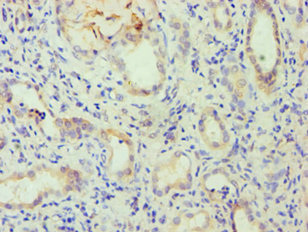
The antibody against FKBP4 was raised in rabbit using the Recombinant Human Peptidyl-prolyl cis-trans isomerase FKBP4 protein (220-459AA) as the immunogen. This antibody exists as a non-conjugated isotype IgG, Antigen affinity purified. This antibody has been validated on ELISA, WB, IHC, IP.

ADC-44379A

The antibody against FKBP4 was raised in rabbit using the Recombinant Human Peptidyl-prolyl cis-trans isomerase FKBP4 protein (220-459AA) as the immunogen. This antibody exists as a non-conjugated isotype IgG, Antigen affinity purified. This antibody has been validated on ELISA, WB, IHC, IP.

$299.00

Number
Order Exclusive Products Now

Request a Quote
High Purity LevelsPrecision and ReliabilityCustomization Options

Specifications


Cat.No ADC-44379A ClonalityPolyclonal
Host SpeciesRabbitTarget NameFKBP4
FormLiquidSpecies ReactivityHuman
IsotypeIgGStorage Buffer50% Glycerol, PBS with 0.02% sodium azide, pH7.3.
Purification MethodAntigen affinity purifiedConjugateNon-conjugated
ApplicationELISA, IHC, WB, IPStorageUpon receipt

Immunogen Information


Immunogen DescriptionRecombinant Human Peptidyl-prolyl cis-trans isomerase FKBP4 protein (220-459AA)Target SpeciesHuman
Immunogen SequenceComplete sequences for the immunogen, target protein, and peptides are available upon request.Uniprot IDQ02790
Background Information
  • Uniprot Id

    Q02790

  • Target Species

    Human

  • Target Name

    FKBP4

  • Target Full Name

    Peptidyl-prolyl cis-trans isomerase FKBP4

  • Target Function

    Immunophilin protein with PPIase and co-chaperone activities. Component of steroid receptors heterocomplexes through interaction with heat-shock protein 90 (HSP90). May play a role in the intracellular trafficking of heterooligomeric forms of steroid hormone receptors between cytoplasm and nuclear compartments. The isomerase activity controls neuronal growth cones via regulation of TRPC1 channel opening. Acts also as a regulator of microtubule dynamics by inhibiting MAPT/TAU ability to promote microtubule assembly. May have a protective role against oxidative stress in mitochondria.

  • Target Subcellular Location

    Cytoplasm, cytosol. Mitochondrion. Nucleus. Cytoplasm, cytoskeleton. Cell projection, axon.

  • Target Tissue Specificity

    Widely expressed.

  • Target Synonyms

    51 kDa FK506-binding protein; 52 kDa FK506 binding protein; 52 kDa FK506-binding protein; 52 kDa FKBP; 59 kDa immunophilin; FK506 binding protein 4; FK506-binding protein 4; FKBP 4; FKBP 52; FKBP 59; FKBP-4; FKBP-52; FKBP4; FKBP4_HUMAN; FKBP51; FKBP52 protein; FKBP59; HBI; Hsp 56; HSP binding immunophilin; HSP-binding immunophilin; Hsp56; Immunophilin FKBP52; N-terminally processed; p52; p59; p59 protein; Peptidyl prolyl cis trans isomerase; peptidyl-prolyl cis-trans isomerase; Peptidyl-prolyl cis-trans isomerase FKBP4; Peptidylprolyl cis trans isomerase; PPIase; PPIase FKBP4; Rotamase; T cell FK506 binding protein 59kD

  • Target Background

    The protein encoded by this gene is a member of the immunophilin protein family, which play a role in immunoregulation and basic cellular processes involving protein folding and trafficking. This encoded protein is a cis-trans prolyl isomerase that binds to the immunosuppressants FK506 and rapamycin. It has high structural and functional similarity to FK506-binding protein 1A (FKBP1A), but unlike FKBP1A, this protein does not have immunosuppressant activity when complexed with FK506. It interacts with interferon regulatory factor-4 and plays an important role in immunoregulatory gene expression in B and T lymphocytes. This encoded protein is known to associate with phytanoyl-CoA alpha-hydroxylase. It can also associate with two heat shock proteins (hsp90 and hsp70) and thus may play a role in the intracellular trafficking of hetero-oligomeric forms of the steroid hormone receptors. This protein correlates strongly with adeno-associated virus type 2 vectors (AAV) resulting in a significant increase in AAV-mediated transgene expression in human cell lines. Thus this encoded protein is thought to have important implications for the optimal use of AAV vectors in human gene therapy. The human genome contains several non-transcribed pseudogenes similar to this gene.

Inquire Rabbit anti-Human FKBP4 Polyclonal Antibody Now


AbTriva respects your privacy and protects your personal data in accordance with AbTriva. For more information, please see our data protection statement. *

Notification