• Contact info@abtriva.com for inquiries and orders.
  • Chinese (Simplified)

  • English

  • German

  • Korean

  • Spanish

United States (English / $ USD)

Rabbit anti-Human GLB1 Polyclonal Antibody

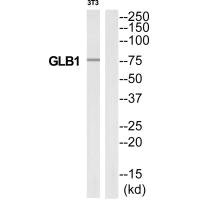
The antibody against GLB1 was raised in rabbit using the Synthesized peptide derived from internal of Human GLB1. as the immunogen. The antibody was affinity-purified from rabbit antiserum by affinity-chromatography using epitope-specific immunogen. This antibody has been validated on ELISA, WB.

ADC-41416A

The antibody against GLB1 was raised in rabbit using the Synthesized peptide derived from internal of Human GLB1. as the immunogen. The antibody was affinity-purified from rabbit antiserum by affinity-chromatography using epitope-specific immunogen. This antibody has been validated on ELISA, WB.

$297.00

Number
Order Exclusive Products Now

Request a Quote
High Purity LevelsPrecision and ReliabilityCustomization Options

Specifications


Cat.No ADC-41416A ClonalityPolyclonal
Host SpeciesRabbitTarget NameGLB1
FormLiquidSpecies ReactivityHuman
Storage BufferPH 7.4, 0.02% sodium azide and 50% glycerol., 150mM NaCl, Rabbit IgG in phosphate buffered saline (without Mg2+ and Ca2+)Purification MethodThe antibody was affinity-purified from rabbit antiserum by affinity-chromatography using epitope-specific immunogen.
ApplicationELISA, WBStorageUpon receipt

Immunogen Information


Immunogen DescriptionSynthesized peptide derived from internal of Human GLB1.Target SpeciesHuman
Immunogen SequenceComplete sequences for the immunogen, target protein, and peptides are available upon request.Uniprot IDP16278
Background Information
  • Uniprot Id

    P16278

  • Target Species

    Human

  • Target Name

    GLB1

  • Target Full Name

    Beta-galactosidase

  • Target Function

    Cleaves beta-linked terminal galactosyl residues from gangliosides, glycoproteins, and glycosaminoglycans.; Has no beta-galactosidase catalytic activity, but plays functional roles in the formation of extracellular elastic fibers (elastogenesis) and in the development of connective tissue. Seems to be identical to the elastin-binding protein (EBP), a major component of the non-integrin cell surface receptor expressed on fibroblasts, smooth muscle cells, chondroblasts, leukocytes, and certain cancer cell types. In elastin producing cells, associates with tropoelastin intracellularly and functions as a recycling molecular chaperone which facilitates the secretions of tropoelastin and its assembly into elastic fibers.

  • Target Involvement

    GM1-gangliosidosis 1 (GM1G1); GM1-gangliosidosis 2 (GM1G2); GM1-gangliosidosis 3 (GM1G3); Mucopolysaccharidosis 4B (MPS4B)

  • Target Subcellular Location

    [Isoform 1]: Lysosome.; [Isoform 2]: Cytoplasm, perinuclear region.

  • Target Protein Families

    Glycosyl hydrolase 35 family

  • Target Tissue Specificity

    Detected in placenta (at protein level). Detected in fibroblasts and testis.

  • Target Synonyms

    Acid beta galactosidase; Acid beta-galactosidase; Beta galactosidase 1; Beta galactosidase; Beta-galactosidase; BGAL_HUMAN; EBP; EBP; included; Elastin receptor 1 (67kD); Elastin receptor 1 67kDa; Elastin receptor 1; Elastin receptor 1; included; Elastin-binding protein; included; ELNR1; Galactosidase beta 1; GLB 1; GLB1; Lactase; MPS4B; S-GAL; included

  • Target Background

    This gene encodes a member of the glycosyl hydrolase 35 family of proteins. Alternative splicing results in multiple transcript variants, at least one of which encodes a preproprotein that is proteolytically processed to generate the mature lysosomal enzyme. This enzyme catalyzes the hydrolysis of a terminal beta-linked galactose residue from ganglioside substrates and other glycoconjugates. Mutations in this gene may result in GM1-gangliosidosis and Morquio B syndrome.

Inquire Rabbit anti-Human GLB1 Polyclonal Antibody Now


AbTriva respects your privacy and protects your personal data in accordance with AbTriva. For more information, please see our data protection statement. *

Notification