-
Chinese (Simplified)
-
English
-
German
-
Korean
-
Spanish
Chinese (Simplified)
English
German
Korean
Spanish
Sign up for an account to enjoy easy online shopping and instant order tracking.
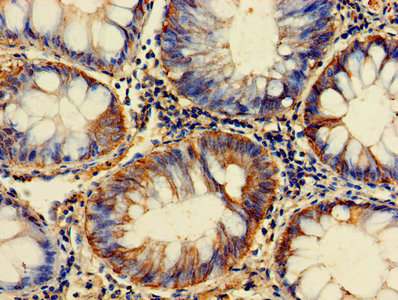
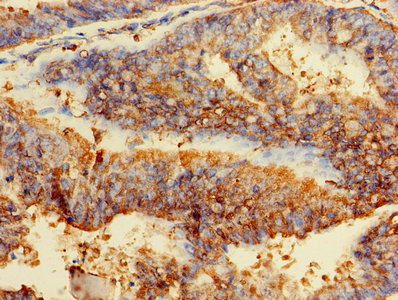
The antibody against GPI was raised in rabbit using the Recombinant Human Glucose-6-phosphate isomerase protein (2-554AA) as the immunogen. This antibody exists as a non-conjugated isotype IgG, purified by protein G with a purity greater than 95%. This antibody has been validated on ELISA, WB, IHC, IF, IP.
$299.00
| Cat.No | ADC-50489A | Clonality | Polyclonal |
|---|---|---|---|
| Host Species | Rabbit | Target Name | Gpi |
| Form | Liquid | Species Reactivity | Human, Mouse |
| Isotype | IgG | Storage Buffer | 0.01M PBS, 0.03% Proclin 300; Constituents: 50% Glycerol, PH 7.4 |
| Purification Method | >95%, Protein G purified | Conjugate | Non-conjugated |
| Application | ELISA, IF, IHC, WB, IP | Storage | Upon receipt |
| Immunogen Description | Recombinant Human Glucose-6-phosphate isomerase protein (2-554AA) | Target Species | Human |
|---|---|---|---|
| Immunogen Sequence | Complete sequences for the immunogen, target protein, and peptides are available upon request. | Uniprot ID | P06744 |
Uniprot Id
P06744
Target Species
Human
Target Name
GPI
Target Full Name
Glucose-6-phosphate isomerase
Target Function
In the cytoplasm, catalyzes the conversion of glucose-6-phosphate to fructose-6-phosphate, the second step in glycolysis, and the reverse reaction during gluconeogenesis. Besides it's role as a glycolytic enzyme, also acts as a secreted cytokine: acts as an angiogenic factor (AMF) that stimulates endothelial cell motility. Acts as a neurotrophic factor, neuroleukin, for spinal and sensory neurons. It is secreted by lectin-stimulated T-cells and induces immunoglobulin secretion.
Target Involvement
Hemolytic anemia, non-spherocytic, due to glucose phosphate isomerase deficiency (HA-GPID)
Target Subcellular Location
Cytoplasm. Secreted.
Target Protein Families
GPI family
Target Synonyms
AMF; Aurocrine motility factor; Autocrine motility factor; DKFZp686C13233; EC 5.3.1.9; G6PI_HUMAN; Glucose phosphate isomerase; Glucose-6-phosphate isomerase; GNPI; GPI; Gpi1; Hexose monophosphate isomerase; Hexosephosphate isomerase; Neuroleukin; NLK; Oxoisomerase; PGI; PHI; Phosphoglucose isomerase; Phosphohexomutase; Phosphohexose isomerase; Phosphosaccharomutase; SA 36; SA-36; SA36; Sperm antigen 36
Target Background
This gene encodes a member of the glucose phosphate isomerase protein family. The encoded protein has been identified as a moonlighting protein based on its ability to perform mechanistically distinct functions. In the cytoplasm, the gene product functions as a glycolytic enzyme (glucose-6-phosphate isomerase) that interconverts glucose-6-phosphate and fructose-6-phosphate. Extracellularly, the encoded protein (also referred to as neuroleukin) functions as a neurotrophic factor that promotes survival of skeletal motor neurons and sensory neurons, and as a lymphokine that induces immunoglobulin secretion. The encoded protein is also referred to as autocrine motility factor based on an additional function as a tumor-secreted cytokine and angiogenic factor. Defects in this gene are the cause of nonspherocytic hemolytic anemia and a severe enzyme deficiency can be associated with hydrops fetalis, immediate neonatal death and neurological impairment. Alternative splicing results in multiple transcript variants.
Notification