• Contact info@abtriva.com for inquiries and orders.
  • Chinese (Simplified)

  • English

  • German

  • Korean

  • Spanish

United States (English / $ USD)

Rabbit anti-Human GPS2 Polyclonal Antibody

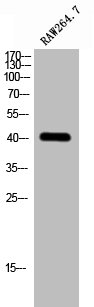
The antibody against GPS2 was raised in rabbit using the Synthesized peptide derived from the N-terminal region of Human GPS2. as the immunogen. This antibody exists as a non-conjugated isotype IgG. The antibody was affinity-purified from rabbit antiserum by affinity-chromatography using epitope-specific immunogen. This antibody has been validated on WB, ELISA.

ADC-35517A

The antibody against GPS2 was raised in rabbit using the Synthesized peptide derived from the N-terminal region of Human GPS2. as the immunogen. This antibody exists as a non-conjugated isotype IgG. The antibody was affinity-purified from rabbit antiserum by affinity-chromatography using epitope-specific immunogen. This antibody has been validated on WB, ELISA.

$167.00

Number
Order Exclusive Products Now

Request a Quote
High Purity LevelsPrecision and ReliabilityCustomization Options

Specifications


Cat.No ADC-35517A ClonalityPolyclonal
Host SpeciesRabbitTarget NameGPS2
Target SynonymsGPS2G protein pathway suppressor 2 antibody; GPS-2 antibodyFormLiquid
Species ReactivityHuman, Mouse, RatIsotypeIgG
Storage Buffer0.5% BSA and 0.02% sodium azide., Liquid in PBS containing 50% glycerolPurification MethodThe antibody was affinity-purified from rabbit antiserum by affinity-chromatography using epitope-specific immunogen.
ConjugateNon-conjugatedApplicationELISA, WB
StorageUpon receipt

Immunogen Information


Immunogen DescriptionSynthesized peptide derived from the N-terminal region of Human GPS2.Target SpeciesHuman
Immunogen SequenceComplete sequences for the immunogen, target protein, and peptides are available upon request.Uniprot IDQ13227
Background Information
  • Uniprot Id

    Q13227

  • Target Species

    Human

  • Target Name

    GPS2

  • Target Full Name

    G protein pathway suppressor 2

  • Target Function

    Key regulator of inflammation, lipid metabolism and mitochondrion homeostasis that acts by inhibiting the activity of the ubiquitin-conjugating enzyme UBE2N/Ubc13, thereby inhibiting 'Lys-63'-linked ubiquitination. In the nucleus, can both acts as a corepressor and coactivator of transcription, depending on the context. Acts as a transcription coactivator in adipocytes by promoting the recruitment of PPARG to promoters: acts by inhibiting the activity of the ubiquitin-conjugating enzyme UBE2N/Ubc13, leading to stabilization of KDM4A and subsequent histone H3 'Lys-9' (H3K9) demethylation. Promotes cholesterol efflux by acting as a transcription coactivator. Acts as a regulator of B-cell development by inhibiting UBE2N/Ubc13, thereby restricting the activation of Toll-like receptors (TLRs) and B-cell antigen receptors (BCRs) signaling pathways. Acts as a key mediator of mitochondrial stress response: in response to mitochondrial depolarization, relocates from the mitochondria to the nucleus following desumoylation and specifically promotes expression of nuclear-encoded mitochondrial genes. Promotes transcription of nuclear-encoded mitochondrial genes by inhibiting UBE2N/Ubc13. Can also act as a corepressor as part of the N-Cor repressor complex by repressing active PPARG. Plays an anti-inflammatory role in macrophages and is required for insulin sensitivity by acting as a corepressor. Plays an anti-inflammatory role during the hepatic acute phase response by interacting with sumoylated NR1H2 and NR5A2 proteins, thereby preventing N-Cor corepressor complex dissociation. In the cytosol, also plays a non-transcriptional role by regulating insulin signaling and pro-inflammatory pathways. In the cytoplasm, acts as a negative regulator of inflammation by inhibiting the proinflammatory TNF-alpha pathway; acts by repressing UBE2N/Ubc13 activity. In the cytoplasm of adipocytes, restricts the activation of insulin signaling via inhibition of UBE2N/Ubc13-mediated ubiquitination of AKT. Able to suppress G-protein- and mitogen-activated protein kinase-mediated signal transduction. Acts as a tumor-suppressor in liposarcoma.; (Microbial infection) Required for efficient replication of hepatitis C virus (HCV) by promoting the interaction between VAPA and HCV virus protein NS5A.

  • Target Subcellular Location

    Nucleus. Mitochondrion. Cytoplasm, cytosol.

  • Target Tissue Specificity

    Widely expressed.

  • Target Synonyms

    GPS2G protein pathway suppressor 2; GPS-2

Inquire Rabbit anti-Human GPS2 Polyclonal Antibody Now


AbTriva respects your privacy and protects your personal data in accordance with AbTriva. For more information, please see our data protection statement. *

Notification