• Contact info@abtriva.com for inquiries and orders.
  • Chinese (Simplified)

  • English

  • German

  • Korean

  • Spanish

United States (English / $ USD)

Rabbit anti-Human GRIA3 Polyclonal Antibody

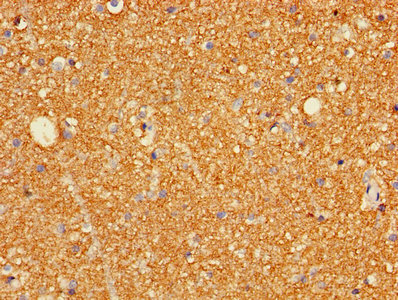
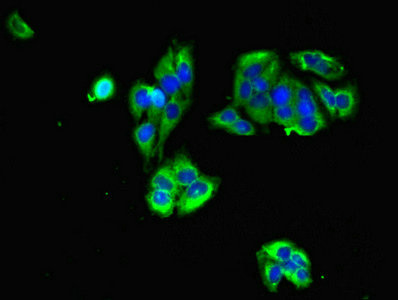
The antibody against GRIA3 was raised in rabbit using the Recombinant Human Glutamate receptor 3 protein (151-250AA) as the immunogen. This antibody exists as a non-conjugated isotype IgG, purified by protein G with a purity greater than 95%. This antibody has been validated on ELISA, IHC, IF.

ADC-43950A

The antibody against GRIA3 was raised in rabbit using the Recombinant Human Glutamate receptor 3 protein (151-250AA) as the immunogen. This antibody exists as a non-conjugated isotype IgG, purified by protein G with a purity greater than 95%. This antibody has been validated on ELISA, IHC, IF.

$299.00

Number
Order Exclusive Products Now

Request a Quote
High Purity LevelsPrecision and ReliabilityCustomization Options

Specifications


Cat.No ADC-43950A ClonalityPolyclonal
Host SpeciesRabbitTarget NameGRIA3
FormLiquidSpecies ReactivityHuman
IsotypeIgGStorage Buffer0.01M PBS, 0.03% Proclin 300; Constituents: 50% Glycerol, PH 7.4
Purification Method>95%, Protein G purifiedConjugateNon-conjugated
ApplicationELISA, IF, IHCStorageUpon receipt

Immunogen Information


Immunogen DescriptionRecombinant Human Glutamate receptor 3 protein (151-250AA)Target SpeciesHuman
Immunogen SequenceComplete sequences for the immunogen, target protein, and peptides are available upon request.Uniprot IDP42263
Background Information
  • Uniprot Id

    P42263

  • Target Species

    Human

  • Target Name

    GRIA3

  • Target Full Name

    Glutamate receptor 3

  • Target Function

    Receptor for glutamate that functions as ligand-gated ion channel in the central nervous system and plays an important role in excitatory synaptic transmission. L-glutamate acts as an excitatory neurotransmitter at many synapses in the central nervous system. Binding of the excitatory neurotransmitter L-glutamate induces a conformation change, leading to the opening of the cation channel, and thereby converts the chemical signal to an electrical impulse. The receptor then desensitizes rapidly and enters a transient inactive state, characterized by the presence of bound agonist. In the presence of CACNG4 or CACNG7 or CACNG8, shows resensitization which is characterized by a delayed accumulation of current flux upon continued application of glutamate.

  • Target Involvement

    Mental retardation, X-linked 94 (MRX94)

  • Target Subcellular Location

    Cell membrane; Multi-pass membrane protein. Cell junction, synapse, postsynaptic cell membrane; Multi-pass membrane protein.

  • Target Protein Families

    Glutamate-gated ion channel (TC 1.A.10.1) family, GRIA3 subfamily

  • Target Research Area

    Neuroscience

  • Target Synonyms

    AMPA 3; AMPA selective glutamate receptor 3; AMPA-selective glutamate receptor 3; dJ1171F9.1; GluA3; GLUK3; GluR 3; GLUR C; GLUR K3; GluR-3; GluR-C; GluR-K3; GLUR3; GLURC; Glutamate ionotropic receptor AMPA type subunit 3; Glutamate receptor 3; Glutamate receptor C; Glutamate receptor ionotrophic AMPA 3; Glutamate receptor ionotropic; Glutamate receptor subunit 3; Glutamate receptor; ionotropic; AMPA 3; GRIA 3; Gria3; GRIA3_HUMAN; Ionotrophic Glutamate Receptor; MRX94

  • Target Background

    Glutamate receptors are the predominant excitatory neurotransmitter receptors in the mammalian brain and are activated in a variety of normal neurophysiologic processes. These receptors are heteromeric protein complexes composed of multiple subunits, arranged to form ligand-gated ion channels. The classification of glutamate receptors is based on their activation by different pharmacologic agonists. The subunit encoded by this gene belongs to a family of AMPA (alpha-amino-3-hydroxy-5-methyl-4-isoxazole propionate)-sensitive glutamate receptors, and is subject to RNA editing (AGA->GGA; R->G). Alternative splicing at this locus results in different isoforms, which may vary in their signal transduction properties.

Inquire Rabbit anti-Human GRIA3 Polyclonal Antibody Now


AbTriva respects your privacy and protects your personal data in accordance with AbTriva. For more information, please see our data protection statement. *

Notification