• Contact info@abtriva.com for inquiries and orders.
  • Chinese (Simplified)

  • English

  • German

  • Korean

  • Spanish

United States (English / $ USD)

Rabbit anti-Human GRPR Polyclonal Antibody

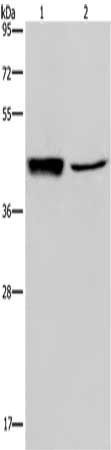
The antibody against GRPR was raised in rabbit using the Synthetic peptide of Human GRPR as the immunogen. This antibody exists as a non-conjugated isotype IgG, Antigen affinity purified. This antibody has been validated on ELISA, WB, IHC.

ADC-28448A

The antibody against GRPR was raised in rabbit using the Synthetic peptide of Human GRPR as the immunogen. This antibody exists as a non-conjugated isotype IgG, Antigen affinity purified. This antibody has been validated on ELISA, WB, IHC.

$299.00

Number
Order Exclusive Products Now

Request a Quote
High Purity LevelsPrecision and ReliabilityCustomization Options

Specifications


Cat.No ADC-28448A ClonalityPolyclonal
Host SpeciesRabbitTarget NameGRPR
FormLiquidSpecies ReactivityHuman, Mouse, Rat
IsotypeIgGStorage Buffer0.05% NaN3, 40% Glycerol., pH7.4 PBS
Purification MethodAntigen affinity purifiedConjugateNon-conjugated
ApplicationELISA, IHC, WBStorageUpon receipt

Immunogen Information


Immunogen DescriptionSynthetic peptide of Human GRPRTarget SpeciesHuman
Immunogen SequenceComplete sequences for the immunogen, target protein, and peptides are available upon request.Uniprot IDP30550
Background Information
  • Uniprot Id

    P30550

  • Target Species

    Human

  • Target Name

    GRPR

  • Target Full Name

    Gastrin-releasing peptide receptor

  • Target Function

    Receptor for gastrin-releasing peptide (GRP). Signals via association with G proteins that activate a phosphatidylinositol-calcium second messenger system, resulting in Akt phosphorylation. Contributes to the regulation of food intake. Contributes to the perception of prurient stimuli and transmission of itch signals in the spinal cord that promote scratching behavior, but does not play a role in the perception of pain. Contributes primarily to nonhistaminergic itch sensation. Contributes to long-term fear memory, but not normal spatial memory.

  • Target Subcellular Location

    Cell membrane; Multi-pass membrane protein.

  • Target Protein Families

    G-protein coupled receptor 1 family

  • Target Tissue Specificity

    Highly expressed in pancreas. Also expressed in stomach, adrenal cortex and brain.

  • Target Research Area

    Neuroscience

  • Target Synonyms

    BB2; Bombesin BB2 receptor; bombesin receptor 2; Gastrin Releasing Peptide Receptor; Gastrin-releasing peptide receptor; GRP preferring bombesin receptor; GRP R; GRP-preferring bombesin receptor; GRP-R; Grp/bombesin receptor; Grpr; GRPR_HUMAN

  • Target Background

    Gastrin-releasing peptide (GRP) regulates numerous functions of the gastrointestinal and central nervous systems, including release of gastrointestinal hormones, smooth muscle cell contraction, and epithelial cell proliferation and is a potent mitogen for neoplastic tissues. The effects of GRP are mediated through the gastrin-releasing peptide receptor. This receptor is a glycosylated, 7-transmembrane G-protein coupled receptor that activates the phospholipase C signaling pathway. The receptor is aberrantly expressed in numerous cancers such as those of the lung, colon, and prostate. An individual with autism and multiple exostoses was found to have a balanced translocation between chromosome 8 and a chromosome X breakpoint located within the gastrin-releasing peptide receptor gene.

Inquire Rabbit anti-Human GRPR Polyclonal Antibody Now


AbTriva respects your privacy and protects your personal data in accordance with AbTriva. For more information, please see our data protection statement. *

Notification