• Contact info@abtriva.com for inquiries and orders.
  • Chinese (Simplified)

  • English

  • German

  • Korean

  • Spanish

United States (English / $ USD)

Rabbit anti-Human GSDME Polyclonal Antibody

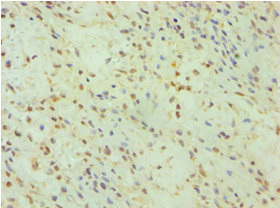
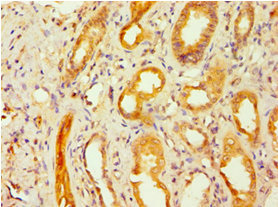
The antibody against GSDME was raised in rabbit using the Recombinant Human Gasdermin-E protein (1-260AA) as the immunogen. This antibody exists as a non-conjugated isotype IgG, Antigen affinity purified. This antibody has been validated on ELISA, WB, IHC.

ADC-44341A

The antibody against GSDME was raised in rabbit using the Recombinant Human Gasdermin-E protein (1-260AA) as the immunogen. This antibody exists as a non-conjugated isotype IgG, Antigen affinity purified. This antibody has been validated on ELISA, WB, IHC.

$299.00

Number
Order Exclusive Products Now

Request a Quote
High Purity LevelsPrecision and ReliabilityCustomization Options

Specifications


Cat.No ADC-44341A ClonalityPolyclonal
Host SpeciesRabbitTarget NameGSDME
Target Synonyms2310037D07Rik antibody; 4932441K13Rik antibody; Deafness, autosomal dominant 5 antibody; DeafnessFormLiquid
Species ReactivityHumanIsotypeIgG
Storage Buffer50% Glycerol, PBS with 0.02% sodium azide, pH7.3.Purification MethodAntigen affinity purified
ConjugateNon-conjugatedApplicationELISA, IHC, WB
StorageUpon receipt

Immunogen Information


Immunogen DescriptionRecombinant Human Gasdermin-E protein (1-260AA)Target SpeciesHuman
Immunogen SequenceComplete sequences for the immunogen, target protein, and peptides are available upon request.Uniprot IDO60443
Background Information
  • Uniprot Id

    O60443

  • Target Species

    Human

  • Target Name

    GSDME

  • Target Full Name

    Gasdermin-E

  • Target Function

    Precursor of a pore-forming protein that converts non-inflammatory apoptosis to pyroptosis. This form constitutes the precursor of the pore-forming protein: upon cleavage, the released N-terminal moiety (Gasdermin-E, N-terminal) binds to membranes and forms pores, triggering pyroptosis.; Pore-forming protein produced by cleavage by CASP3 or granzyme B (GZMB), which converts non-inflammatory apoptosis to pyroptosis or promotes granzyme-mediated pyroptosis, respectively. After cleavage, moves to the plasma membrane, homooligomerizes within the membrane and forms pores of 10-15 nanometers (nm) of inner diameter, triggering pyroptosis. Binds to inner leaflet lipids, bisphosphorylated phosphatidylinositols, such as phosphatidylinositol (4,5)-bisphosphate. Cleavage by CASP3 switches CASP3-mediated apoptosis induced by TNF or danger signals, such as chemotherapy drugs, to pyroptosis. Mediates secondary necrosis downstream of the mitochondrial apoptotic pathway and CASP3 activation as well as in response to viral agents. Exhibits bactericidal activity. Cleavage by GZMB promotes tumor suppressor activity by triggering robust anti-tumor immunity. Suppresses tumors by mediating granzyme-mediated pyroptosis in target cells of natural killer (NK) cells: cleavage by granzyme B (GZMB), delivered to target cells from NK-cells, triggers pyroptosis of tumor cells and tumor suppression. May play a role in the p53/TP53-regulated cellular response to DNA damage.

  • Target Involvement

    Deafness, autosomal dominant, 5 (DFNA5)

  • Target Subcellular Location

    [Gasdermin-E, N-terminal]: Cell membrane; Multi-pass membrane protein.; [Gasdermin-E]: Cytoplasm, cytosol.

  • Target Protein Families

    Gasdermin family

  • Target Tissue Specificity

    Expressed in cochlea. Low level of expression in heart, brain, placenta, lung, liver, skeletal muscle, kidney and pancreas, with highest expression in placenta.

  • Target Synonyms

    2310037D07Rik; 4932441K13Rik; Deafness, autosomal dominant 5; Deafness, autosomal dominant 5 protein; DFNA5; DFNA5 gene; DFNA5_HUMAN; Dfna5h; EG14210; Fin15; ICERE 1; ICERE-1; Inversely correlated with estrogen receptor expression 1; Non-syndromic hearing impairment protein 5; Nonsyndromic hearing impairment protein

  • Target Background

    Hearing impairment is a heterogeneous condition with over 40 loci described. The protein encoded by this gene is expressed in fetal cochlea, however, its function is not known. Nonsyndromic hearing impairment is associated with a mutation in this gene. Three transcript variants encoding two different isoforms have been found for this gene.

Inquire Rabbit anti-Human GSDME Polyclonal Antibody Now


AbTriva respects your privacy and protects your personal data in accordance with AbTriva. For more information, please see our data protection statement. *

Notification