• Contact info@abtriva.com for inquiries and orders.
  • Chinese (Simplified)

  • English

  • German

  • Korean

  • Spanish

United States (English / $ USD)

Rabbit anti-Human HCN1 Polyclonal Antibody

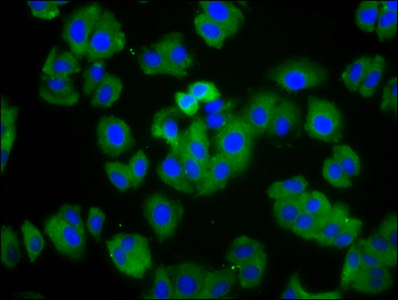
The antibody against HCN1 was raised in rabbit using the Recombinant Human Potassium/sodium hyperpolarization-activated cyclic nucleotide-gated channel 1 protein (784-887AA) as the immunogen. This antibody exists as a non-conjugated isotype IgG, purified by protein G with a purity greater than 95%. This antibody has been validated on ELISA, IHC, IF.

ADC-05158A

The antibody against HCN1 was raised in rabbit using the Recombinant Human Potassium/sodium hyperpolarization-activated cyclic nucleotide-gated channel 1 protein (784-887AA) as the immunogen. This antibody exists as a non-conjugated isotype IgG, purified by protein G with a purity greater than 95%. This antibody has been validated on ELISA, IHC, IF.

$299.00

Number
Order Exclusive Products Now

Request a Quote
High Purity LevelsPrecision and ReliabilityCustomization Options

Specifications


Cat.No ADC-05158A ClonalityPolyclonal
Host SpeciesRabbitTarget NameHCN1
FormLiquidSpecies ReactivityHuman
IsotypeIgGStorage Buffer0.01M PBS, 0.03% Proclin 300; Constituents: 50% Glycerol, PH 7.4
Purification Method>95%, Protein G purifiedConjugateNon-conjugated
ApplicationELISA, IF, IHCStorageUpon receipt

Immunogen Information


Immunogen DescriptionRecombinant Human Potassium/sodium hyperpolarization-activated cyclic nucleotide-gated channel 1 protein (784-887AA)Target SpeciesHuman
Immunogen SequenceComplete sequences for the immunogen, target protein, and peptides are available upon request.Uniprot IDO60741
Background Information
  • Uniprot Id

    O60741

  • Target Species

    Human

  • Target Name

    HCN1

  • Target Full Name

    Potassium/sodium hyperpolarization-activated cyclic nucleotide-gated channel 1

  • Target Function

    Hyperpolarization-activated ion channel exhibiting weak selectivity for potassium over sodium ions. Contributes to the native pacemaker currents in heart (If) and in neurons (Ih). May mediate responses to sour stimuli.

  • Target Involvement

    Epileptic encephalopathy, early infantile, 24 (EIEE24)

  • Target Subcellular Location

    Cell membrane; Multi-pass membrane protein.

  • Target Protein Families

    Potassium channel HCN family

  • Target Tissue Specificity

    Detected in brain, in particular in amygdala and hippocampus, while expression in caudate nucleus, corpus callosum, substantia nigra, subthalamic nucleus and thalamus is very low or not detectable. Detected at very low levels in muscle and pancreas.

  • Target Synonyms

    BCNG-1; BCNG1; Brain cyclic nucleotide gated channel 1; Brain cyclic nucleotide-gated channel 1; HAC 2; HAC2; HCN1; HCN1_HUMAN; Hyperpolarization activated cyclic nucleotide gated potassium channel 1; Potassium channel; voltage-gated; brain; 1; Potassium/sodium hyperpolarization activated cyclic nucleotide gated channel 1; Potassium/sodium hyperpolarization-activated cyclic nucleotide-gated channel 1

  • Target Background

    The membrane protein encoded by this gene is a hyperpolarization-activated cation channel that contributes to the native pacemaker currents in heart and neurons. The encoded protein can homodimerize or heterodimerize with other pore-forming subunits to form a potassium channel. This channel may act as a receptor for sour tastes.

Inquire Rabbit anti-Human HCN1 Polyclonal Antibody Now


AbTriva respects your privacy and protects your personal data in accordance with AbTriva. For more information, please see our data protection statement. *

Notification