-
Chinese (Simplified)
-
English
-
German
-
Korean
-
Spanish
Chinese (Simplified)
English
German
Korean
Spanish
Sign up for an account to enjoy easy online shopping and instant order tracking.
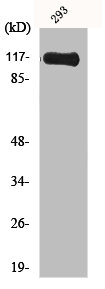
The antibody against HGS was raised in rabbit using the Synthesized peptide derived from the Internal region of Human Hrs. as the immunogen. This antibody exists as a non-conjugated isotype IgG. The antibody was affinity-purified from rabbit antiserum by affinity-chromatography using epitope-specific immunogen. This antibody has been validated on WB, IHC, IF, ELISA.
$167.00
| Cat.No | ADC-38455A | Clonality | Polyclonal |
|---|---|---|---|
| Host Species | Rabbit | Target Name | HGS |
| Form | Liquid | Species Reactivity | Human, Mouse, Rat |
| Isotype | IgG | Storage Buffer | 0.5% BSA and 0.02% sodium azide., Liquid in PBS containing 50% glycerol |
| Purification Method | The antibody was affinity-purified from rabbit antiserum by affinity-chromatography using epitope-specific immunogen. | Conjugate | Non-conjugated |
| Application | ELISA, IF, IHC, WB | Storage | Upon receipt |
| Immunogen Description | Synthesized peptide derived from the Internal region of Human Hrs. | Target Species | Human |
|---|---|---|---|
| Immunogen Sequence | Complete sequences for the immunogen, target protein, and peptides are available upon request. | Uniprot ID | O14964 |
Uniprot Id
O14964
Target Species
Human
Target Name
HGS
Target Full Name
Hepatocyte growth factor-regulated tyrosine kinase substrate
Target Function
Involved in intracellular signal transduction mediated by cytokines and growth factors. When associated with STAM, it suppresses DNA signaling upon stimulation by IL-2 and GM-CSF. Could be a direct effector of PI3-kinase in vesicular pathway via early endosomes and may regulate trafficking to early and late endosomes by recruiting clathrin. May concentrate ubiquitinated receptors within clathrin-coated regions. Involved in down-regulation of receptor tyrosine kinase via multivesicular body (MVBs) when complexed with STAM (ESCRT-0 complex). The ESCRT-0 complex binds ubiquitin and acts as sorting machinery that recognizes ubiquitinated receptors and transfers them to further sequential lysosomal sorting/trafficking processes. May contribute to the efficient recruitment of SMADs to the activin receptor complex. Involved in receptor recycling via its association with the CART complex, a multiprotein complex required for efficient transferrin receptor recycling but not for EGFR degradation.
Target Subcellular Location
Cytoplasm. Early endosome membrane; Peripheral membrane protein; Cytoplasmic side. Endosome, multivesicular body membrane; Peripheral membrane protein.
Target Tissue Specificity
Ubiquitous expression in adult and fetal tissues with higher expression in testis and peripheral blood leukocytes.
Target Synonyms
Hepatocyte growth factor regulated tyrosine kinase substrate; Hepatocyte growth factor-regulated tyrosine kinase substrate; HGF-regulated tyrosine kinase substrate; HGNC:4897; HGS; HGS_HUMAN; Hrs; Human growth factor regulated tyrosine kinase substrate; Protein pp110; ZFYVE8
Target Background
The protein encoded by this gene regulates endosomal sorting and plays a critical role in the recycling and degradation of membrane receptors. The encoded protein sorts monoubiquitinated membrane proteins into the multivesicular body, targeting these proteins for lysosome-dependent degradation.
Notification