• Contact info@abtriva.com for inquiries and orders.
  • Chinese (Simplified)

  • English

  • German

  • Korean

  • Spanish

United States (English / $ USD)

Rabbit anti-Human HSCB Polyclonal Antibody

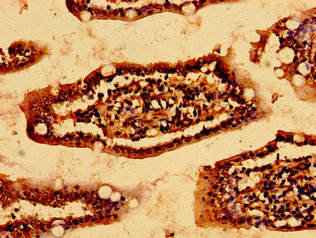
The antibody against HSCB was raised in rabbit using the Recombinant Human Iron-sulfur cluster co-chaperone protein HscB, mitochondrial protein (30-235AA) as the immunogen. This antibody exists as a non-conjugated isotype IgG, purified by protein G with a purity greater than 95%. This antibody has been validated on ELISA, WB, IHC.

ADC-09045A

The antibody against HSCB was raised in rabbit using the Recombinant Human Iron-sulfur cluster co-chaperone protein HscB, mitochondrial protein (30-235AA) as the immunogen. This antibody exists as a non-conjugated isotype IgG, purified by protein G with a purity greater than 95%. This antibody has been validated on ELISA, WB, IHC.

$299.00

Number
Order Exclusive Products Now

Request a Quote
High Purity LevelsPrecision and ReliabilityCustomization Options

Specifications


Cat.No ADC-09045A ClonalityPolyclonal
Host SpeciesRabbitTarget NameHSCB
Target SynonymsAI325508 antibody; AW049829 antibody; dJ366L4.2 antibody; DnaJ (Hsp40) homologFormLiquid
Species ReactivityHuman, RatIsotypeIgG
Storage Buffer0.01M PBS, 0.03% Proclin 300; Constituents: 50% Glycerol, PH 7.4Purification Method>95%, Protein G purified
ConjugateNon-conjugatedApplicationELISA, IHC, WB
StorageUpon receipt

Immunogen Information


Immunogen DescriptionRecombinant Human Iron-sulfur cluster co-chaperone protein HscB, mitochondrial protein (30-235AA)Target SpeciesHuman
Immunogen SequenceComplete sequences for the immunogen, target protein, and peptides are available upon request.Uniprot IDQ8IWL3
Background Information
  • Uniprot Id

    Q8IWL3

  • Target Species

    Human

  • Target Name

    HSCB

  • Target Full Name

    Iron-sulfur cluster co-chaperone protein HscB

  • Target Function

    Acts as a co-chaperone in iron-sulfur cluster assembly in both mitochondria and the cytoplasm. Required for incorporation of iron-sulfur clusters into SDHB, the iron-sulfur protein subunit of succinate dehydrogenase that is involved in complex II of the mitochondrial electron transport chain. Recruited to SDHB by interaction with SDHAF1 which first binds SDHB and then recruits the iron-sulfur transfer complex formed by HSC20, HSPA9 and ISCU through direct binding to HSC20. Also mediates complex formation between components of the cytosolic iron-sulfur biogenesis pathway and the CIA targeting complex composed of CIAO1, DIPK1B/FAM69B and MMS19 by binding directly to the scaffold protein ISCU and to CIAO1. This facilitates iron-sulfur cluster insertion into a number of cytoplasmic and nuclear proteins including POLD1, ELP3, DPYD and PPAT.

  • Target Subcellular Location

    [Iron-sulfur cluster co-chaperone protein HscB, cytoplasmic]: Cytoplasm.; [Iron-sulfur cluster co-chaperone protein HscB, mitochondrial]: Mitochondrion.

  • Target Protein Families

    HscB family

  • Target Tissue Specificity

    Expressed in lung, brain, stomach, spleen, ovary, testis, liver, muscle and heart.

  • Target Synonyms

    AI325508; AW049829; dJ366L4.2; DnaJ (Hsp40) homolog, subfamily C member 20; DnaJ homolog subfamily C member 20; DNAJC20; Hsc20; HSC20_HUMAN; hscB; HscB iron sulfur cluster co chaperone homolog; Iron sulfur cluster co chaperone protein HscB mitochondrial; Iron-sulfur cluster co-chaperone protein HscB; J type co chaperone HSC20; JAC1; mitochondrial; RGD1311005; RP3-366L4.2

  • Target Background

    This gene encodes a DnaJ-type co-chaperone and member of the heat shock cognate B (HscB) family of proteins. The encoded protein plays a role in the synthesis of iron-sulfur clusters, protein cofactors that are involved in the redox reactions of mitochondrial electron transport and other processes. Cells in which this gene is knocked down exhibit reduced activity of iron-sulfur cluster-dependent enzymes including succinate dehydrogenase and aconitase. The encoded protein may stimulate the ATPase activity of the mitochondrial stress-70 protein. Alternative splicing results in multiple transcript variants.

Inquire Rabbit anti-Human HSCB Polyclonal Antibody Now


AbTriva respects your privacy and protects your personal data in accordance with AbTriva. For more information, please see our data protection statement. *

Notification