-
Chinese (Simplified)
-
English
-
German
-
Korean
-
Spanish
Chinese (Simplified)
English
German
Korean
Spanish
Sign up for an account to enjoy easy online shopping and instant order tracking.
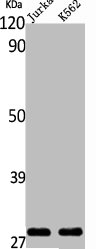
The antibody against ING4 was raised in rabbit using the Synthesized peptide derived from the Internal region of Human ING4. as the immunogen. This antibody exists as a non-conjugated isotype IgG. The antibody was affinity-purified from rabbit antiserum by affinity-chromatography using epitope-specific immunogen. This antibody has been validated on WB, ELISA.
$167.00
| Cat.No | ADC-37309A | Clonality | Polyclonal |
|---|---|---|---|
| Host Species | Rabbit | Target Name | ING4 |
| Form | Liquid | Species Reactivity | Human, Mouse, Rat |
| Isotype | IgG | Storage Buffer | 0.5% BSA and 0.02% sodium azide., Liquid in PBS containing 50% glycerol |
| Purification Method | The antibody was affinity-purified from rabbit antiserum by affinity-chromatography using epitope-specific immunogen. | Conjugate | Non-conjugated |
| Application | ELISA, WB | Storage | Upon receipt |
| Immunogen Description | Synthesized peptide derived from the Internal region of Human ING4. | Target Species | Human |
|---|---|---|---|
| Immunogen Sequence | Complete sequences for the immunogen, target protein, and peptides are available upon request. | Uniprot ID | Q9UNL4 |
Uniprot Id
Q9UNL4
Target Species
Human
Target Name
ING4
Target Full Name
Inhibitor of growth protein 4
Target Function
Component of HBO1 complexes, which specifically mediate acetylation of histone H3 at 'Lys-14' (H3K14ac), and have reduced activity toward histone H4. Through chromatin acetylation it may function in DNA replication. May inhibit tumor progression by modulating the transcriptional output of signaling pathways which regulate cell proliferation. Can suppress brain tumor angiogenesis through transcriptional repression of RELA/NFKB3 target genes when complexed with RELA. May also specifically suppress loss of contact inhibition elicited by activated oncogenes such as MYC. Represses hypoxia inducible factor's (HIF) activity by interacting with HIF prolyl hydroxylase 2 (EGLN1). Can enhance apoptosis induced by serum starvation in mammary epithelial cell line HC11.
Target Subcellular Location
Nucleus.
Target Protein Families
ING family
Target Synonyms
Brain my036 protein; Candidate tumor suppressor p33 ING 1 homolog; Candidate tumor suppressor p33 ING1 homolog; D6Wsu147e; D6Xrf92; ING 1 like protein; ING 4; ING1 like protein; ING4; ING4_HUMAN; Inhibitor of growth family member 4; Inhibitor of growth family member 4 long isoform; Inhibitor of growth protein 4; MGC12557; my036; p29 ING 4; p29 ING4; p29ING4
Target Background
This gene encodes a tumor suppressor protein that contains a PHD-finger, which is a common motif in proteins involved in chromatin remodeling. This protein can bind TP53 and EP300/p300, a component of the histone acetyl transferase complex, suggesting its involvement in the TP53-dependent regulatory pathway. Multiple alternatively spliced transcript variants have been observed that encode distinct proteins.
Notification