• Contact info@abtriva.com for inquiries and orders.
  • Chinese (Simplified)

  • English

  • German

  • Korean

  • Spanish

United States (English / $ USD)

Rabbit anti-Human JUP Polyclonal Antibody

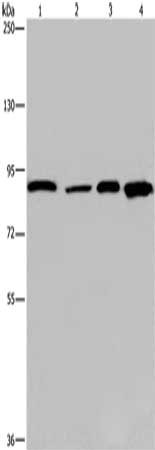
The antibody against JUP was raised in rabbit using the Fusion protein of Human JUP as the immunogen. This antibody exists as a non-conjugated isotype IgG, Antigen affinity purified. This antibody has been validated on ELISA, WB, IHC.

ADC-29802A

The antibody against JUP was raised in rabbit using the Fusion protein of Human JUP as the immunogen. This antibody exists as a non-conjugated isotype IgG, Antigen affinity purified. This antibody has been validated on ELISA, WB, IHC.

$299.00

Number
Order Exclusive Products Now

Request a Quote
High Purity LevelsPrecision and ReliabilityCustomization Options

Specifications


Cat.No ADC-29802A ClonalityPolyclonal
Host SpeciesRabbitTarget NameJUP
FormLiquidSpecies ReactivityHuman, Mouse, Rat
IsotypeIgGStorage Buffer0.05% NaN3, 40% Glycerol., pH7.4 PBS
Purification MethodAntigen affinity purifiedConjugateNon-conjugated
ApplicationELISA, IHC, WBStorageUpon receipt

Immunogen Information


Immunogen DescriptionFusion protein of Human JUPTarget SpeciesHuman
Immunogen SequenceComplete sequences for the immunogen, target protein, and peptides are available upon request.Uniprot IDP14923
Background Information
  • Uniprot Id

    P14923

  • Target Species

    Human

  • Target Name

    JUP

  • Target Full Name

    Junction plakoglobin

  • Target Function

    Common junctional plaque protein. The membrane-associated plaques are architectural elements in an important strategic position to influence the arrangement and function of both the cytoskeleton and the cells within the tissue. The presence of plakoglobin in both the desmosomes and in the intermediate junctions suggests that it plays a central role in the structure and function of submembranous plaques. Acts as a substrate for VE-PTP and is required by it to stimulate VE-cadherin function in endothelial cells. Can replace beta-catenin in E-cadherin/catenin adhesion complexes which are proposed to couple cadherins to the actin cytoskeleton.

  • Target Involvement

    Naxos disease (NXD); Arrhythmogenic right ventricular dysplasia, familial, 12 (ARVD12)

  • Target Subcellular Location

    Cell junction, adherens junction. Cell junction, desmosome. Cytoplasm, cytoskeleton. Membrane; Peripheral membrane protein. Note=Cytoplasmic in a soluble and membrane-associated form.

  • Target Protein Families

    Beta-catenin family

  • Target Synonyms

    ARVD 12; ARVD12; Catenin (cadherin associated protein); gamma 80kDa; catenin (cadherin-associated protein) gamma (80kD); Catenin gamma; CTNNG ; Desmoplakin 3; Desmoplakin III; Desmoplakin-3; Desmoplakin3; DesmoplakinIII; DP 3; DP III; DP3; DPIII ; gamma catenin; Junction plakoglobin; JUP; OTTHUMP00000164732; OTTHUMP00000164735; OTTHUMP00000164738; PDGB; PKGB; PLAK_HUMAN; PLAKOGLOBIN

  • Target Background

    This gene encodes a major cytoplasmic protein which is the only known constituent common to submembranous plaques of both desmosomes and intermediate junctions. This protein forms distinct complexes with cadherins and desmosomal cadherins and is a member of the catenin family since it contains a distinct repeating amino acid motif called the armadillo repeat. Mutation in this gene has been associated with Naxos disease. Alternative splicing occurs in this gene; however, not all transcripts have been fully described.

Inquire Rabbit anti-Human JUP Polyclonal Antibody Now


AbTriva respects your privacy and protects your personal data in accordance with AbTriva. For more information, please see our data protection statement. *

Notification