• Contact info@abtriva.com for inquiries and orders.
  • Chinese (Simplified)

  • English

  • German

  • Korean

  • Spanish

United States (English / $ USD)

Rabbit anti-Human KPNA4 Polyclonal Antibody

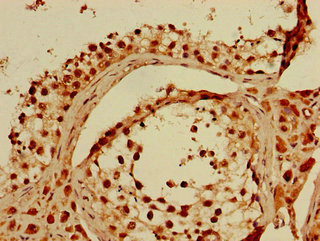
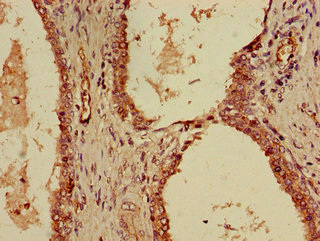
The antibody against KPNA4 was raised in rabbit using the Recombinant Human Importin subunit alpha-3 protein (51-239AA) as the immunogen. This antibody exists as a non-conjugated isotype IgG, purified by protein G with a purity greater than 95%. This antibody has been validated on ELISA, WB, IHC, IF.

ADC-13502A

The antibody against KPNA4 was raised in rabbit using the Recombinant Human Importin subunit alpha-3 protein (51-239AA) as the immunogen. This antibody exists as a non-conjugated isotype IgG, purified by protein G with a purity greater than 95%. This antibody has been validated on ELISA, WB, IHC, IF.

$299.00

Number
Order Exclusive Products Now

Request a Quote
High Purity LevelsPrecision and ReliabilityCustomization Options

Specifications


Cat.No ADC-13502A ClonalityPolyclonal
Host SpeciesRabbitTarget NameKPNA4
FormLiquidSpecies ReactivityHuman, Mouse
IsotypeIgGStorage Buffer0.01M PBS, 0.03% Proclin 300; Constituents: 50% Glycerol, PH 7.4
Purification Method>95%, Protein G purifiedConjugateNon-conjugated
ApplicationELISA, IF, IHC, WBStorageUpon receipt

Immunogen Information


Immunogen DescriptionRecombinant Human Importin subunit alpha-3 protein (51-239AA)Target SpeciesHuman
Immunogen SequenceComplete sequences for the immunogen, target protein, and peptides are available upon request.Uniprot IDO00629
Background Information
  • Uniprot Id

    O00629

  • Target Species

    Human

  • Target Name

    KPNA4

  • Target Full Name

    Importin subunit alpha-3

  • Target Function

    Functions in nuclear protein import as an adapter protein for nuclear receptor KPNB1. Binds specifically and directly to substrates containing either a simple or bipartite NLS motif. Docking of the importin/substrate complex to the nuclear pore complex (NPC) is mediated by KPNB1 through binding to nucleoporin FxFG repeats and the complex is subsequently translocated through the pore by an energy requiring, Ran-dependent mechanism. At the nucleoplasmic side of the NPC, Ran binds to importin-beta and the three components separate and importin-alpha and -beta are re-exported from the nucleus to the cytoplasm where GTP hydrolysis releases Ran from importin. The directionality of nuclear import is thought to be conferred by an asymmetric distribution of the GTP- and GDP-bound forms of Ran between the cytoplasm and nucleus. In vitro, mediates the nuclear import of human cytomegalovirus UL84 by recognizing a non-classical NLS. In vitro, mediates the nuclear import of human cytomegalovirus UL84 by recognizing a non-classical NLS.

  • Target Subcellular Location

    Cytoplasm. Nucleus.

  • Target Protein Families

    Importin alpha family

  • Target Tissue Specificity

    Highly expressed in testis, ovary, small intestine, heart, skeletal muscle, lung and pancreas, but barely detectable in kidney, thymus, colon and peripheral blood leukocytes.

  • Target Synonyms

    FLJ31113; IMA3_HUMAN; Importin alpha 3; Importin alpha 4 subunit; Importin alpha Q1; Importin subunit alpha 3; Importin subunit alpha-3; IPO A3; IPOA 3; IPOA3; Karyopherin alpha 4 (importin alpha 3); Karyopherin alpha 4; Karyopherin alpha 4 importin alpha 3; Karyopherin alpha 4 subunit; Karyopherin subunit alpha 4 ; Karyopherin subunit alpha-4; KPNA 4; Kpna4; MGC12217; MGC26703; OTTHUMP00000213880; QIP 1; Qip1; Qip1 protein; SRP 3; SRP3

  • Target Background

    The nuclear import of karyophilic proteins is directed by short amino acid sequences termed nuclear localization signals (NLSs). Karyopherins, or importins, are cytoplasmic proteins that recognize NLSs and dock NLS-containing proteins to the nuclear pore complex. The protein encoded by this gene shares the sequence similarity with Xenopus importin-alpha and Saccharomyces cerevisiae Srp1. This protein is found to interact with the NLSs of DNA helicase Q1 and SV40 T antigen.

Inquire Rabbit anti-Human KPNA4 Polyclonal Antibody Now


AbTriva respects your privacy and protects your personal data in accordance with AbTriva. For more information, please see our data protection statement. *

Notification