-
Chinese (Simplified)
-
English
-
German
-
Korean
-
Spanish
Chinese (Simplified)
English
German
Korean
Spanish
Sign up for an account to enjoy easy online shopping and instant order tracking.
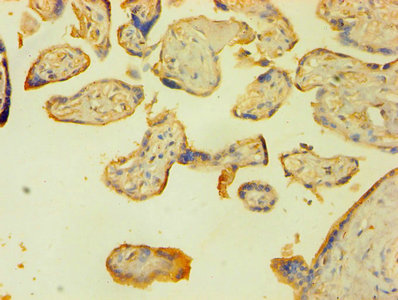
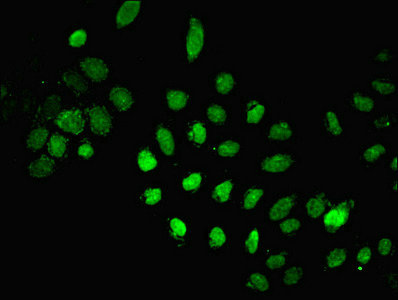
The antibody against LIG1 was raised in rabbit using the Recombinant Human DNA ligase 1 protein (1-919AA) as the immunogen. This antibody exists as a non-conjugated isotype IgG, purified by protein G with a purity greater than 95%. This antibody has been validated on ELISA, IHC, IF.
$299.00
| Cat.No | ADC-49657A | Clonality | Polyclonal |
|---|---|---|---|
| Host Species | Rabbit | Target Name | LIG1 |
| Form | Liquid | Species Reactivity | Human |
| Isotype | IgG | Storage Buffer | 0.01M PBS, 0.03% Proclin 300; Constituents: 50% Glycerol, PH 7.4 |
| Purification Method | >95%, Protein G purified | Conjugate | Non-conjugated |
| Application | ELISA, IF, IHC | Storage | Upon receipt |
| Immunogen Description | Recombinant Human DNA ligase 1 protein (1-919AA) | Target Species | Human |
|---|---|---|---|
| Immunogen Sequence | Complete sequences for the immunogen, target protein, and peptides are available upon request. | Uniprot ID | P18858 |
Uniprot Id
P18858
Target Species
Human
Target Name
LIG1
Target Full Name
DNA ligase 1
Target Function
DNA ligase that seals nicks in double-stranded DNA during DNA replication, DNA recombination and DNA repair.
Target Subcellular Location
Nucleus.
Target Protein Families
ATP-dependent DNA ligase family
Target Research Area
Cell Cycle
Target Synonyms
DNA ligase 1; DNA ligase I; DNLI1_HUMAN; LIG 1; lig1; Ligase I DNA ATP dependent; MGC117397; MGC130025; Polydeoxyribonucleotide synthase [ATP] 1
Target Background
This gene encodes a member of the ATP-dependent DNA ligase protein family. The encoded protein functions in DNA replication, recombination, and the base excision repair process. Mutations in this gene that lead to DNA ligase I deficiency result in immunodeficiency and increased sensitivity to DNA-damaging agents. Disruption of this gene may also be associated with a variety of cancers. Alternative splicing results in multiple transcript variants.
Notification