-
Chinese (Simplified)
-
English
-
German
-
Korean
-
Spanish
Chinese (Simplified)
English
German
Korean
Spanish
Sign up for an account to enjoy easy online shopping and instant order tracking.
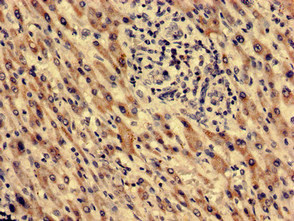
The antibody against MECR was raised in rabbit using the Recombinant Human Trans-2-enoyl-CoA reductase, mitochondrial protein (211-373AA) as the immunogen. This antibody exists as a non-conjugated isotype IgG, purified by protein G with a purity greater than 95%. This antibody has been validated on ELISA, WB, IHC.
$299.00
| Cat.No | ADC-32781A | Clonality | Polyclonal |
|---|---|---|---|
| Host Species | Rabbit | Target Name | MECR |
| Form | Liquid | Species Reactivity | Human, Rat |
| Isotype | IgG | Storage Buffer | 0.01M PBS, 0.03% Proclin 300; Constituents: 50% Glycerol, PH 7.4 |
| Purification Method | >95%, Protein G purified | Conjugate | Non-conjugated |
| Application | ELISA, IHC, WB | Storage | Upon receipt |
| Immunogen Description | Recombinant Human Trans-2-enoyl-CoA reductase, mitochondrial protein (211-373AA) | Target Species | Human |
|---|---|---|---|
| Immunogen Sequence | Complete sequences for the immunogen, target protein, and peptides are available upon request. | Uniprot ID | Q9BV79 |
Uniprot Id
Q9BV79
Target Species
Human
Target Name
MECR
Target Full Name
Enoyl-[acyl-carrier-protein] reductase, mitochondrial
Target Function
Catalyzes the NADPH-dependent reduction of trans-2-enoyl thioesters in mitochondrial fatty acid synthesis (fatty acid synthesis type II). Fatty acid chain elongation in mitochondria uses acyl carrier protein (ACP) as an acyl group carrier, but the enzyme accepts both ACP and CoA thioesters as substrates in vitro. Displays a preference for medium-chain over short- and long-chain substrates. May provide the octanoyl chain used for lipoic acid biosynthesis, regulating protein lipoylation and mitochondrial respiratory activity particularly in Purkinje cells.
Target Involvement
Dystonia, childhood-onset, with optic atrophy and basal ganglia abnormalities (DYTOABG)
Target Subcellular Location
[Isoform 1]: Mitochondrion.; [Isoform 2]: Cytoplasm. Nucleus.
Target Protein Families
Zinc-containing alcohol dehydrogenase family, Quinone oxidoreductase subfamily
Target Tissue Specificity
Highly expressed in skeletal and heart muscle. Expressed at lower level in placenta, liver, kidney and pancreas. Weakly or not expressed in lung.
Target Synonyms
AI195831; CGI 63; FASN2B; Homolog of yeast 2 enoyl thioester reductase; HsNrbf-1; HsNrbf1; mecr; MECR_HUMAN; Mitochondrial 2 enoyl thioester reductase; mitochondrial; NRBF 1; NRBF-1; NRBF1; Nuclear receptor binding factor 1; Nuclear receptor-binding factor 1; OTTMUSP00000009996; RP23-13A13.1; Trans 2 enoyl CoA reductase; mitochondrial; Trans-2-enoyl-CoA reductase
Target Background
The protein encoded by this gene is an oxidoreductase that catalyzes the last step in mitochondrial fatty acid synthesis. Defects in this gene are a cause of childhood-onset dystonia and optic atrophy.
Notification